This guide gives the datasets, the build steps, the tests that separate a strong project from a tutorial copy, the mistakes to avoid and the scope for each level.
- Start with CIFAKE: real and synthetic versions of CIFAR-10’s ten classes. Its authors reported 92.98% accuracy with a CNN.
- Same-generator accuracy is the easy number. Test on a generator your model never saw.
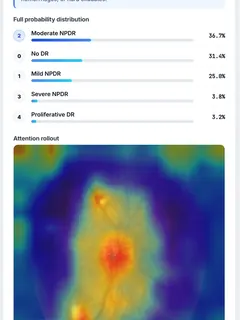
- Explain the decision. Grad-CAM shows which parts of the image the model used.
- Test robustness: JPEG compression, resizing and blur, which every shared image goes through.
- Never claim it catches every AI image. Show the failures too.
Which dataset should you use for AI-generated image detection?
| Dataset | What it holds | Use it for |
|---|---|---|
| CIFAKE | Real CIFAR-10 photographs and synthetic images of the same ten classes, generated with latent diffusion. Described in the paper by Bird and Lotfi | A first model that trains quickly on small images |
| GenImage | Over one million pairs of AI-generated and real images, made with diffusion models and GANs | Cross-generator tests: train on one generator, test on others. Take a subset; the full set is very large |
Details are from each dataset’s paper. Check the licence terms on the download page before you use either.
How do you build an AI image detector step by step?
- Train a small CNN on CIFAKE as the baseline, and confirm you land near the published accuracy.
- Try transfer learning. Fine-tune a pre-trained ResNet, EfficientNet or Vision Transformer and compare.
- Explain the model with Grad-CAM. The CIFAKE authors found their model looked at small imperfections in the background more than at the main subject.
- Test on an unseen generator, using a subset of GenImage or images you generate yourself with a different tool.
- Test robustness. Re-save the test images as JPEG at lower quality, resize them and blur them, then measure again.
- Build the demo: an upload page that returns real or AI-generated, the confidence and the heatmap, with a line saying the result is an estimate.
Which metrics should the project report?
- Accuracy, precision, recall and F1 on the same-generator test set.
- AUROC, which does not depend on one threshold.
- Cross-generator accuracy: one row per generator the model did not train on.
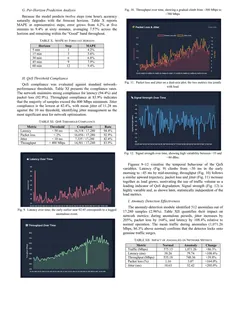
- Accuracy against JPEG quality and image size, as a chart.
Put the same-generator and cross-generator numbers side by side. The gap between them is your most important finding.
What mistakes cost marks in this project?
- A shortcut in the data. If real images are JPEG and fake ones PNG, or the two differ in size, the model learns the file format. Convert everything to one format and size first.
- Testing only on the training generator and calling the detector general.
- Skipping compression tests, when social media compresses every upload.
- Presenting the output as proof. It is a probability, and the demo should say so.
- Ignoring that detectors age. Say when your data was generated and with what.
How does the scope change for Diploma, B.Tech and M.Tech?
| Level | Scope | What to show |
|---|---|---|
| Diploma | A CNN on CIFAKE | An upload page that answers real or AI-generated |
| B.Tech / B.E. | A CNN against transfer learning, Grad-CAM and compression tests | A web app with the heatmap and a robustness chart |
| M.Tech / M.E. | Cross-generator generalisation on a GenImage subset, with one extension: frequency-domain features, features from a large pre-trained vision model, or degraded images | A base paper reproduced, an ablation table and a paper in IEEE format |
Two delivered M.Tech projects of ours show the same explanation idea on medical images: Grad-CAM on spiral drawings and attention heatmaps from a Vision Transformer ensemble. Our CSE list also has a deepfake face detector idea.
What goes in the report, and which viva questions come up?
Give the motivation, related work on synthetic image detection, the datasets, the models, both sets of results, the heatmaps and the limits. For the black book and slides, see our report and PPT help. Prepare these:
- What traces does a generator leave that a classifier can learn?
- Why does accuracy fall on a generator you did not train on?
- What does Grad-CAM show, and what did yours highlight?
- How does JPEG compression affect your detector?
- Could someone fool your detector on purpose?
Related guides: unknown class detection and toxic comment classification. More vision topics are in the computer vision project ideas.
This guide is a plan to discuss with your guide, and the figures in it come from the linked dataset pages and papers, not from our own work. Our 8 delivered case studies are M.Tech and M.E. projects, each shown with its real paper pages, screens and results.
Frequently asked questions
Which dataset is used for AI-generated image detection?
CIFAKE is the usual first choice. Its authors, Bird and Lotfi, generated synthetic images with latent diffusion to mirror the ten classes of CIFAR-10, giving real and fake versions of the same subjects. For larger and harder experiments, GenImage offers over one million pairs of AI-generated and real images.
How accurate is AI-generated image detection?
On CIFAKE, the dataset’s authors reported 92.98% accuracy with a convolutional network. That figure is for fake images from the same generator used in training. Accuracy usually falls on images from a different generator or after compression, which is why your project should test both.
Can a model detect images from any AI generator?
No detector can promise that. A model learns the traces left by the generators in its training data, and new generators leave different traces. An honest project reports results on at least one generator held out of training and says clearly where the detector fails.
Is AI-generated image detection the same as deepfake detection?
They overlap. Deepfake detection usually means manipulated faces in photos or video, such as face swaps. AI-generated image detection covers whole images of any subject made by a generator. The methods are similar: a classifier, an explanation heatmap and tests on unseen methods.
Can The Ultimate Project World help with an AI image detection project?
Yes. Use the free consultation to share your level, your review dates and whether you need a paper. We will tell you exactly which parts we can take on, such as the model, the app, the report, the PPT and viva preparation.