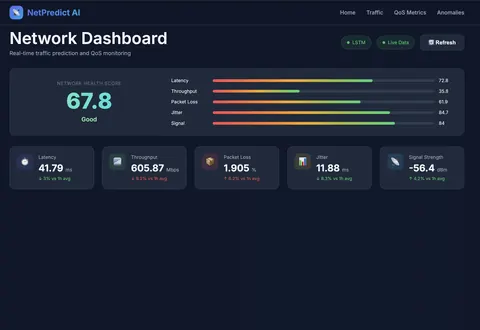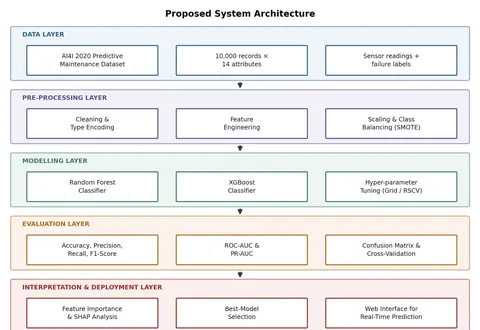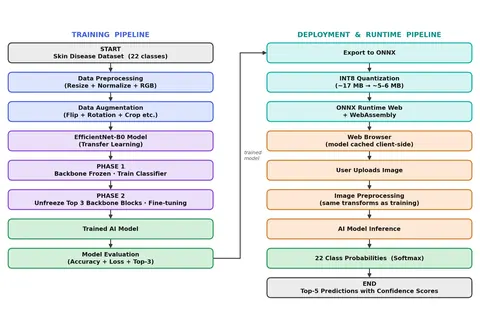
Most need only an ESP32, two or three named sensors and a free dashboard; a Raspberry Pi is worth it when you need a camera or on-device AI. Below are 33 IoT project ideas, each with the hardware, a dashboard, a difficulty level and a rough cost band, plus safety rules for anything that touches 230 V mains.
Which board should you use: ESP32, Arduino or Raspberry Pi?
Pick the smallest board that does the job. A microcontroller runs one program and sleeps on little power; a Raspberry Pi 5 is a full Linux computer that can run a camera model or a local server.
| Board | What it is | Wireless | Best for | Cost band |
|---|---|---|---|---|
| ESP32 dev board | Microcontroller; Arduino IDE, ESP-IDF or MicroPython | Wi-Fi and Bluetooth built in | The default for cloud-connected sensors | Low |
| Arduino Uno R3 | ATmega328P microcontroller at 16 MHz | None on the board | Learning and simple control; add an ESP32 for the cloud | Low (clones); genuine boards cost more |
| Raspberry Pi Pico 2 W | RP2350 microcontroller; C/C++ or MicroPython | 2.4 GHz Wi-Fi and Bluetooth 5.2 | MicroPython projects on a budget | Low |
| Raspberry Pi 5 | Linux computer, quad-core Arm Cortex-A76 at 2.4 GHz | Dual-band Wi-Fi and Bluetooth 5.0 | Cameras, on-device AI, gateways and local dashboards | High |
| ESP32-CAM | ESP32 module with a small camera | Wi-Fi and Bluetooth | Snapshots and simple streaming | Low |
Specs from Espressif, Arduino and Raspberry Pi.
Cost bands are rough totals for the electronics only: Low is roughly ₹2,000 or less, Medium about ₹2,000–5,000, High above ₹5,000. They assume common modules from Indian hobby-electronics stores, not quotes; check current prices, and add an enclosure, power supply and shipping.
Planning IoT projects using Arduino? Most ideas below name an ESP32, which you program from the same Arduino IDE. An Arduino Uno R3 handles the sensing and control logic well, but it needs a Wi-Fi board such as an ESP32 to reach a dashboard.
Difficulty: Beginner is one board, one or two sensors and a ready-made dashboard. Intermediate adds actuators, control logic or your own app. Advanced means several nodes, a camera, on-device AI or long-range radio.
These are starting points to discuss with your guide. Ideas marked Mains switch or measure 230 V; read the safety rules first. Our delivered work is in the case studies.
What are good smart home and energy IoT projects?
- Topic idea · Intermediate · Low costAppliance energy monitor with a clamp sensorMeasure an appliance’s current without cutting a wire, then show daily units and an estimated bill.
Hardware, dashboard and viva angle
Hardware: ESP32, SCT-013 split-core current transformer, burden and bias resistors
Dashboard: ThingSpeak
Viva angle: RMS current from raw samples, checked against a plug-in meter. Mains: the clamp goes around one insulated wire only. - Topic idea · Beginner · Low costSmart switchboard with schedulesControl lights and a fan from your phone, with timers and a manual override.
Hardware, dashboard and viva angle
Hardware: ESP32, 4-channel optocoupled relay module, push buttons
Dashboard: Home Assistant with ESPHome, or Blynk IoT
Viva angle: what still works when Wi-Fi drops. Mains: demo with 12 V loads. - Topic idea · Intermediate · Low costWater-tank level monitor and pump controlStart the pump when the tank is low, stop when full, and cut out if it runs dry.
Hardware, dashboard and viva angle
Hardware: ESP32, JSN-SR04T waterproof ultrasonic sensor, YF-S201 flow sensor, relay
Dashboard: Blynk IoT
Viva angle: spotting dry running from the flow rate. Mains if the pump is AC. - Topic idea · Beginner · Low costDoor and motion alert with photosA PIR or door sensor triggers a photo sent to your phone.
Hardware, dashboard and viva angle
Hardware: ESP32-CAM, HC-SR501 PIR sensor, magnetic reed switch
Dashboard: a Telegram bot
Viva angle: false triggers, and how you reduced them. - Topic idea · Beginner · Low costLPG leak alarm with exhaust fanDetect a leak, sound an alarm, start a 12 V exhaust fan and send an alert.
Hardware, dashboard and viva angle
Hardware: ESP32, MQ-6 LPG sensor, buzzer, MOSFET or relay for the fan
Dashboard: Telegram or Blynk alerts
Viva angle: sensor warm-up and how you set the alarm threshold. - Topic idea · Intermediate · Medium costClassroom CO2 and ventilation monitorShow CO2, temperature and humidity for each room and flag when to open windows.
Hardware, dashboard and viva angle
Hardware: ESP32, Sensirion SCD40 CO2 sensor, BME280
Dashboard: InfluxDB and Grafana
Viva angle: why CO2 is a practical proxy for ventilation.
Which IoT projects suit agriculture and the environment?
- Topic idea · Beginner · Low costDrip irrigation that checks the forecastWater only when the soil is dry and no rain is expected.
Hardware, dashboard and viva angle
Hardware: ESP32, capacitive soil-moisture sensor, DHT22, 12 V solenoid valve with a MOSFET or relay
Dashboard: Blynk IoT, with rain forecasts from the Open-Meteo API
Viva angle: why capacitive probes last longer than resistive ones in wet soil. - Topic idea · Intermediate · Medium costPM2.5 air-quality stationLog particulate matter, temperature and humidity, and compare with the nearest official station.
Hardware, dashboard and viva angle
Hardware: ESP32, Plantower PMS5003 laser particle sensor, BME280
Dashboard: a public ThingSpeak channel
Viva angle: the gap between your readings and the CPCB station, and the effect of humidity. - Topic idea · Intermediate · Medium costGreenhouse climate controllerKeep temperature and humidity within a band using fans and a mister.
Hardware, dashboard and viva angle
Hardware: ESP32, SHT31 sensor, BH1750 light sensor, 12 V fans, relay
Dashboard: Arduino Cloud
Viva angle: on-off control with hysteresis against PID. - Topic idea · Advanced · Medium costLoRa farm sensor networkSoil nodes across a field report to one receiver with no Wi-Fi in range.
Hardware, network and viva angle
Hardware: ESP32 boards with SX1276 LoRa modules for the 865–867 MHz band, capacitive soil sensors, DS18B20
Network: point-to-point to an ESP32 receiver, or LoRaWAN through The Things Network (IN865 plan) if a gateway is nearby
Viva angle: your measured range and battery life with deep sleep. - Topic idea · Intermediate · Medium costWater-quality monitor for tanks or pondsTrack pH, TDS, turbidity and temperature.
Hardware, dashboard and viva angle
Hardware: ESP32, analogue pH probe kit, TDS sensor module, turbidity sensor, waterproof DS18B20
Dashboard: ThingSpeak
Viva angle: two-point pH calibration with buffer solutions. - Topic idea · Advanced · High costLeaf-disease camera with on-device AIA camera photographs plants daily and a small model flags likely disease.
Hardware, cloud and viva angle
Hardware: Raspberry Pi 5, Camera Module 3
Cloud: Firebase for alerts; the model is trained on the public PlantVillage images
Viva angle: accuracy on your own leaf photos against the dataset’s. - Topic idea · Intermediate · Medium costWeather station with a rain gaugeRain, wind, pressure and humidity, compared with the forecast.
Hardware, dashboard and viva angle
Hardware: ESP32, BME280, tipping-bucket rain gauge, cup anemometer
Dashboard: Grafana
Viva angle: counting gauge tips with interrupts and debouncing.
What health and assistive IoT projects can students build?
- Topic idea · Intermediate · Low costHeart-rate and SpO2 loggerRead pulse and oxygen saturation and alert a caregiver if low values persist.
Hardware, cloud and viva angle
Hardware: ESP32, MAX30102 sensor, SSD1306 OLED
Cloud: Firebase Realtime Database with a small web app
Viva angle: readings compared with a commercial oximeter. Say clearly that it is not a medical device. - Topic idea · Intermediate · Low costFall detector for elderly peopleDetect a fall from motion data and send an alert, with a button to cancel.
Hardware, dashboard and viva angle
Hardware: ESP32, MPU6050 accelerometer and gyroscope, buzzer
Dashboard: Telegram or Blynk alerts
Viva angle: false alarms from sitting down fast; a threshold against a small ML model. - Topic idea · Beginner · Low costSmart pill boxReminds at each dose time and logs whether the compartment was opened.
Hardware, dashboard and viva angle
Hardware: ESP32, DS3231 real-time clock, reed switches, buzzer
Dashboard: Blynk IoT
Viva angle: keeping time correctly without internet. - Topic idea · Intermediate · Low costSmart cane for visually impaired usersVibrates near obstacles and shares location when the SOS button is pressed.
Hardware, cloud and viva angle
Hardware: ESP32, HC-SR04 ultrasonic sensor, vibration motor, NEO-6M GPS
Cloud: a Telegram location message through a phone hotspot
Viva angle: detection range and blind spots, such as overhanging branches. - Topic idea · Advanced · Medium costHead-tilt controlled wheelchair modelTilt your head to drive a small-scale wheelchair model that stops for obstacles.
Hardware, dashboard and viva angle
Hardware: ESP32, MPU6050 on a cap, L298N or BTS7960 motor driver, 12 V geared motors, HC-SR04
Dashboard: optional trip logging
Viva angle: dead zones and smoothing so the motion is not jerky.
Which smart city, transport and campus projects work well?
- Topic idea · Advanced · High costParking occupancy from one cameraOne camera counts free slots in a marked lot.
Hardware, software and viva angle
Hardware: Raspberry Pi 5, Camera Module 3
Software: Ultralytics YOLO, a simple web page
Viva angle: accuracy by time of day, and why you store counts, not faces or plates. - Topic idea · Intermediate · Medium costVehicle tracker with geofence alertsLive location, trip history and an alert when the vehicle leaves an area.
Hardware, cloud and viva angle
Hardware: ESP32, NEO-6M GPS, a 4G LTE module such as SIMCom’s A7670 series
Cloud: Firebase with a Leaflet map
Viva angle: GPS drift and how you filtered it. Older SIM800L boards are 2G-only, so check your operator still supports 2G. - Topic idea · Beginner · Low costRFID attendance with a web dashboardTap a card to mark attendance; teachers see reports.
Hardware, cloud and viva angle
Hardware: ESP32, MFRC522 RFID reader, OLED
Cloud: Firebase, or Google Sheets through Apps Script
Viva angle: stopping proxy attendance, for example with an R307 fingerprint sensor. - Topic idea · Intermediate · Low costSmart bins with a pickup routeBins report how full they are; the dashboard plans a route through the full ones.
Hardware, software and viva angle
Hardware: ESP32 and an HC-SR04 per bin
Software: Google OR-Tools routing, a Leaflet map
Viva angle: route length against visiting every bin. - Topic idea · Beginner · Low costStreetlight that dims on an empty roadFull brightness on motion, dim otherwise, with fault reports.
Hardware, dashboard and viva angle
Hardware: ESP32, PIR sensor, BH1750 light sensor, 12 V LED with a MOSFET PWM driver
Dashboard: ThingSpeak
Viva angle: energy saved in your own measured trial. - Topic idea · Advanced · Medium costTwo-wheeler crash alertDetect a crash from impact and tilt, then send the location to contacts unless the rider cancels.
Hardware, cloud and viva angle
Hardware: ESP32, MPU6050, NEO-6M GPS, 4G LTE module
Cloud: SMS or a Telegram message
Viva angle: telling a crash from a pothole. - Topic idea · Beginner · Low costNoise monitor for libraries and hostelsEstimate sound level and alert when it stays high.
Hardware, dashboard and viva angle
Hardware: ESP32, INMP441 I2S microphone, LED indicator
Dashboard: Blynk IoT
Viva angle: why the reading is relative unless calibrated against a sound level meter.
Which industrial, safety and edge-AI IoT project ideas stand out?
- Topic idea · Intermediate · Low costMotor vibration monitor for predictive maintenanceCompute vibration features on the board and flag unusual patterns.
Hardware, dashboard and viva angle
Hardware: ESP32, ADXL345 accelerometer, a small DC motor as the test rig
Dashboard: MQTT into InfluxDB and Grafana
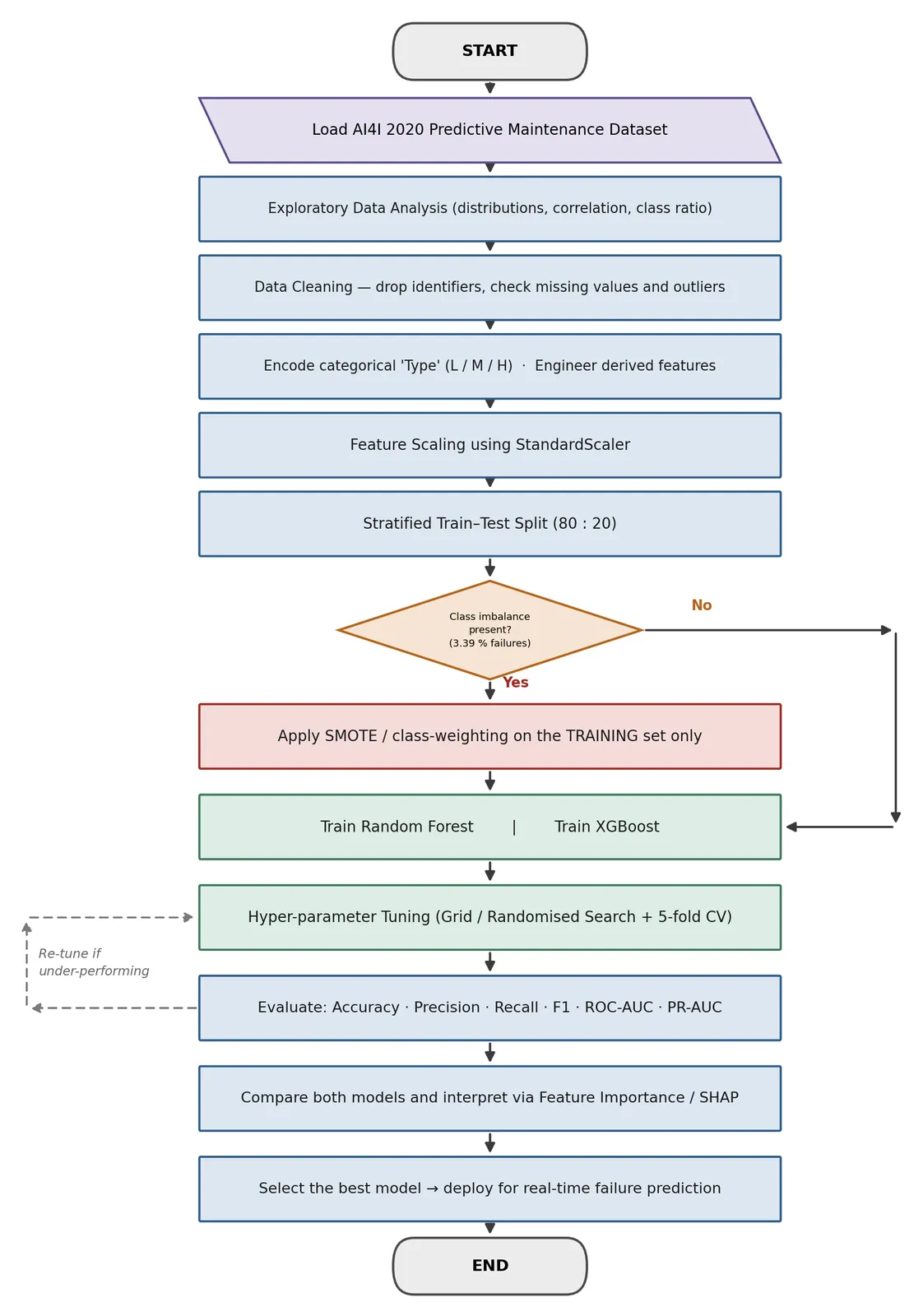
Viva angle: FFT peaks explained. Our delivered M.E. / M.Tech predictive-maintenance project shows the modelling side. - Topic idea · Intermediate · Low costCold-chain temperature loggerLog fridge or cool-box temperature, keep logging offline and alert on excursions.
Hardware, cloud and viva angle
Hardware: ESP32, waterproof DS18B20 probes, microSD module
Cloud: AWS IoT Core over MQTT with device certificates
Viva angle: store-and-forward when the network drops. - Topic idea · Beginner · Low costFire and smoke safety nodeSmoke, flame and temperature readings trigger a buzzer, a 12 V fan and an alert.
Hardware, dashboard and viva angle
Hardware: ESP32, MQ-2 smoke sensor, IR flame sensor, DHT22
Dashboard: Node-RED over MQTT
Viva angle: combining sensors to cut false alarms. - Topic idea · Advanced · Low costVoice-command switch with TinyMLRecognise a few spoken keywords offline, on the microcontroller itself.
Hardware, software and viva angle
Hardware: ESP32-S3 board, INMP441 microphone
Software: Edge Impulse or LiteRT for Microcontrollers (formerly TensorFlow Lite for Microcontrollers)
Viva angle: accuracy against model size after quantisation. - Topic idea · Advanced · High costHelmet-check camera at a site gateDetect people without helmets and log each event with a time.
Hardware, software and viva angle
Hardware: Raspberry Pi 5, Camera Module 3
Software: Ultralytics YOLO, a Grafana or web log
Viva angle: frames per second on the Pi, and privacy. - Topic idea · Intermediate · Low costLab energy meter with usage alertsVoltage, current, power and units for one lab circuit, with alerts on unusual use.
Hardware, dashboard and viva angle
Hardware: ESP32, PZEM-004T v3.0 module
Dashboard: Grafana
Viva angle: your readings against the building meter. Mains: the module connects to live wiring, so a qualified person must wire it. - Topic idea · Beginner · Low costStock shelf that weighs itselfLoad cells estimate the item count and trigger a reorder alert.
Hardware, dashboard and viva angle
Hardware: ESP32, load cells with an HX711 amplifier
Dashboard: a Firebase web app
Viva angle: calibration with known weights, and drift over a day. - Topic idea · Advanced · High costOffline edge gatewayA local server collects data from several nodes, serves dashboards without internet and syncs when back online.
Hardware, software and viva angle
Hardware: Raspberry Pi 5 plus two or more ESP32 nodes
Software: Mosquitto, Node-RED, InfluxDB, Grafana
Viva angle: MQTT topics, QoS levels and what happens on reconnect.
Which cloud platform or dashboard should you use?
Use a hosted dashboard for a quick, reliable demo, or self-host when you want full control and an offline mode. Free plans and limits change, so check them when you start.
| Platform | Good for | Keep in mind |
|---|---|---|
| Blynk IoT | Phone dashboards in minutes | The free plan has device and feature limits |
| ThingSpeak | Logging, charts and MATLAB analysis | Free for small non-commercial projects (under 3 million messages a year when this was written) |
| Arduino Cloud | Dashboards for Arduino and ESP32 sketches | Check the free plan’s limits |
| Firebase Realtime Database | Your own web or mobile app on live data | Write security rules; test-mode rules leave data open |
| Node-RED, InfluxDB and Grafana on a Pi | Full control; works on a local network without internet | More setup, and you maintain it |
| Home Assistant with ESPHome | Smart-home projects with local control | Needs a Pi or spare PC running Home Assistant |
| AWS IoT Core | Industry-style MQTT with device certificates | Set a billing alert before you start |
ThingSpeak limit from its licence page. Skip older tutorials built on Google Cloud IoT Core: Google retired it on 16 August 2023, and its Eventarc deprecations page records the Cloud IoT shutdown on that date.
How do you keep a mains-powered IoT build safe?
Household supply in India is nominally 230 V AC at 50 Hz, which can kill. Most projects never need to touch it.
- Demo at low voltage. Drive a 12 V DC fan, pump or LED strip through the relay; the control logic is the same.
- Power the electronics from a closed, certified 5 V adapter. Never build transformerless or capacitor-dropper supplies.
- Rate the switching parts above the load. Use optocoupled relay modules with a wide margin over the load’s voltage and current, or a certified smart plug for the mains side.
- Measure current without breaking the circuit. A split-core clamp (SCT-013) goes around one insulated wire. Modules that connect to live wiring, such as the PZEM-004T, must be wired by a qualified person.
- Enclose everything on the mains side. A closed insulated box, cable glands, a fuse on the live wire, no exposed terminals, and low-voltage wiring kept physically apart.
- Work dead, test protected. Unplug before touching anything, use an RCCB-protected socket, never work alone on live circuits, and never demo with the lid off.
- Get it checked. Ask your lab in-charge or an electrician to inspect the wiring before first power-up.
- Batteries and water. Use protected lithium cells with a charger module that includes protection, never charge swollen cells, keep boards above the water line, and prefer low-voltage DC pumps.
Follow your lab’s safety rules and your college’s academic rules. If you are unsure about any mains wiring, keep the demo at 12 V.
How do you make an IoT project viva-ready?
- Draw the whole data path. Sensor, board, MQTT or HTTP, cloud, dashboard, action: this is your first architecture slide.
- Calibrate against a reference. Compare your readings with a commercial meter or an official station and report the error.
- Handle dropouts. Buffer readings on the board or an SD card, and show what the dashboard does when Wi-Fi fails.
- Be honest about sensors. MQ-series gas sensors give relative readings that need warm-up and calibration, and pulse-oximeter modules are not medical devices.
- Keep a recorded backup demo. Hardware fails on the day more often than code.
Adding analytics makes a stronger project: forecast the next reading, detect anomalies, or add a model from the final year project ideas for CSE. For the write-up, see project report and PPT help; if your guide wants a published base paper, see IEEE projects.
For the model side of an edge-AI build, see machine learning projects for final year. For other branches and domains, browse all our final year project ideas, sorted by branch.
Frequently asked questions
Which board is best for an IoT final year project: ESP32, Arduino or Raspberry Pi?
For most cloud-connected projects, an ESP32: it has Wi-Fi and Bluetooth built in and can be programmed from the Arduino IDE. An Arduino Uno R3 has no wireless on the board. Choose a Raspberry Pi when you need a camera, heavier on-device AI or a local server.
How much does an IoT final year project cost?
Most single-board sensor projects need roughly ₹2,000 or less of electronics, while camera or Raspberry Pi 5 projects usually go above ₹5,000. These are rough bands for common modules, not quotes; check current prices, and add the enclosure, power supply and shipping.
Can I do an IoT project without buying hardware?
You can start in a browser simulator such as Wokwi, which runs Arduino, ESP32 and Raspberry Pi Pico code, then move to real parts once the logic works. Ask your guide whether a simulated project is accepted for the final demo.
Which IoT projects suit ECE students?
Pick ideas where the electronics carry the marks: sensor interfacing, calibration, power and radio. The appliance energy monitor with a clamp sensor, the LoRa farm sensor network, the motor vibration monitor and the head-tilt controlled wheelchair model all fit. CSE students often prefer the camera and on-device AI builds, such as parking occupancy or the leaf-disease camera. For VLSI, DSP, communication and RF topics, see our final year project ideas for ECE students.
Can I use LoRa for a project in India?
Yes. India allows low-power wireless equipment in the 865–867 MHz band, and LoRaWAN uses the IN865 plan there. Buy LoRa modules made for that band rather than 915 MHz modules meant for other countries.
Can The Ultimate Project World help with an IoT project?
Yes, with planning, the code (firmware, dashboard and any ML model), the report, the PPT and viva preparation. Share your idea and your college’s requirements in the free consultation and we will tell you exactly what we can take on.