It is usually written in two stages: a Stage-I report that fixes the problem and the method, and a Stage-II thesis that adds the results. The university manuals we compared all use A4 pages and a wider left margin for binding, and all allow figures and tables to be numbered by chapter, but your own university’s manual decides the font, the spacing, the similarity limit and the binding.
What is a dissertation in M.Tech?
It is the written record of your year-long M.Tech or M.E. project, and it has to add something to published work: a new method, an improvement you can measure, or a careful comparison nobody has made. Universities use both words for the same document. IIT Kanpur and AKTU call it the M.Tech thesis; the University of Mumbai and VTU call it the dissertation.
It also carries a large share of the degree. In the University of Mumbai’s M.E. syllabus (Rev. 2022), Dissertation-I and Dissertation-II are worth 10 and 16 of the programme’s 68 credits. VTU’s M.Tech regulations make the project a separate head of passing, preferably individual, examined by your guide and an external examiner before a viva-voce.
What is the M.Tech thesis format, part by part?
Most manuals agree on three blocks: preliminary pages, the chapters, and the reference material. A project with one main contribution often fits the six chapters below.
| Part | What it contains |
|---|---|
| Title page | Title, the “submitted in partial fulfilment” statement, degree, your name and roll number, guide, department, institute and year, copied from your manual’s specimen. |
| Certificate and declaration | Your guide’s certificate that the work is your own, and your signed declaration of originality and academic honesty. |
| Approval sheet | Signed by the examiners. The University of Mumbai includes it only in the hard-bound copies made after the viva. |
| Abstract | The problem, method and main result, with no citations. Limits differ: 300 words at IIT Kanpur, 500 at the University of Mumbai, up to four pages at AKTU. |
| Contents and lists | Acknowledgements, table of contents, then lists of figures, tables and abbreviations. |
| Chapter 1: Introduction | The problem, why it matters, your objectives and contributions, and an outline of the thesis. |
| Chapter 2: Literature review | Recent papers compared by method, dataset, metric and limitation, ending with the gap you address. |
| Chapter 3: Proposed method | The system design or architecture, and exactly what you changed in the base method. |
| Chapter 4: Implementation | Data, tools, parameters and hardware, in enough detail for someone to repeat the work. |
| Chapter 5: Results and discussion | The baseline against your method on the same data, ablations, and what did not work. |
| Chapter 6: Conclusion | Each objective, met or not, then future scope. The University of Mumbai asks for conclusions numbered point by point. |
| References and appendices | Every cited source in one style, then code listings, extra results and your publications. |
Order at the end differs: the University of Mumbai puts appendices before the references and acknowledgements after them; AKTU puts references first, then appendices, your publications and a short CV.
What goes in the Stage-I report, and what does Stage-II add?
Most universities assess the dissertation in two stages. The names differ (Stage-I and II, Phase-I and II at VTU, Dissertation-I and II at the University of Mumbai), but the split is the same: first prove the problem and the plan, then deliver the results.
| Aspect | Stage-I | Stage-II |
|---|---|---|
| Usual timing | Third semester | Fourth semester |
| Goal | Fix the problem, the gap and the method before building | Build, test and defend the contribution |
| Chapters | Introduction, literature review with a gap table, problem statement, objectives and scope, methodology, plan for Stage-II | The Stage-I chapters revised, plus implementation, results and discussion, and conclusion |
| Results | None or preliminary; the evaluation plan is fixed in advance | Baseline against your method, ablations, discussion of limits |
| University of Mumbai (M.E.) | Presentation to internal examiners and an external examiner appointed by the department or institute | Internal and external examiners appointed by the University; term work plus an oral |
| You hand in | Stage-I report and a review PPT | Final thesis, viva PPT and often a paper |
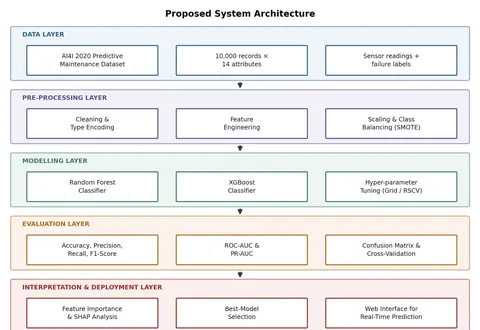
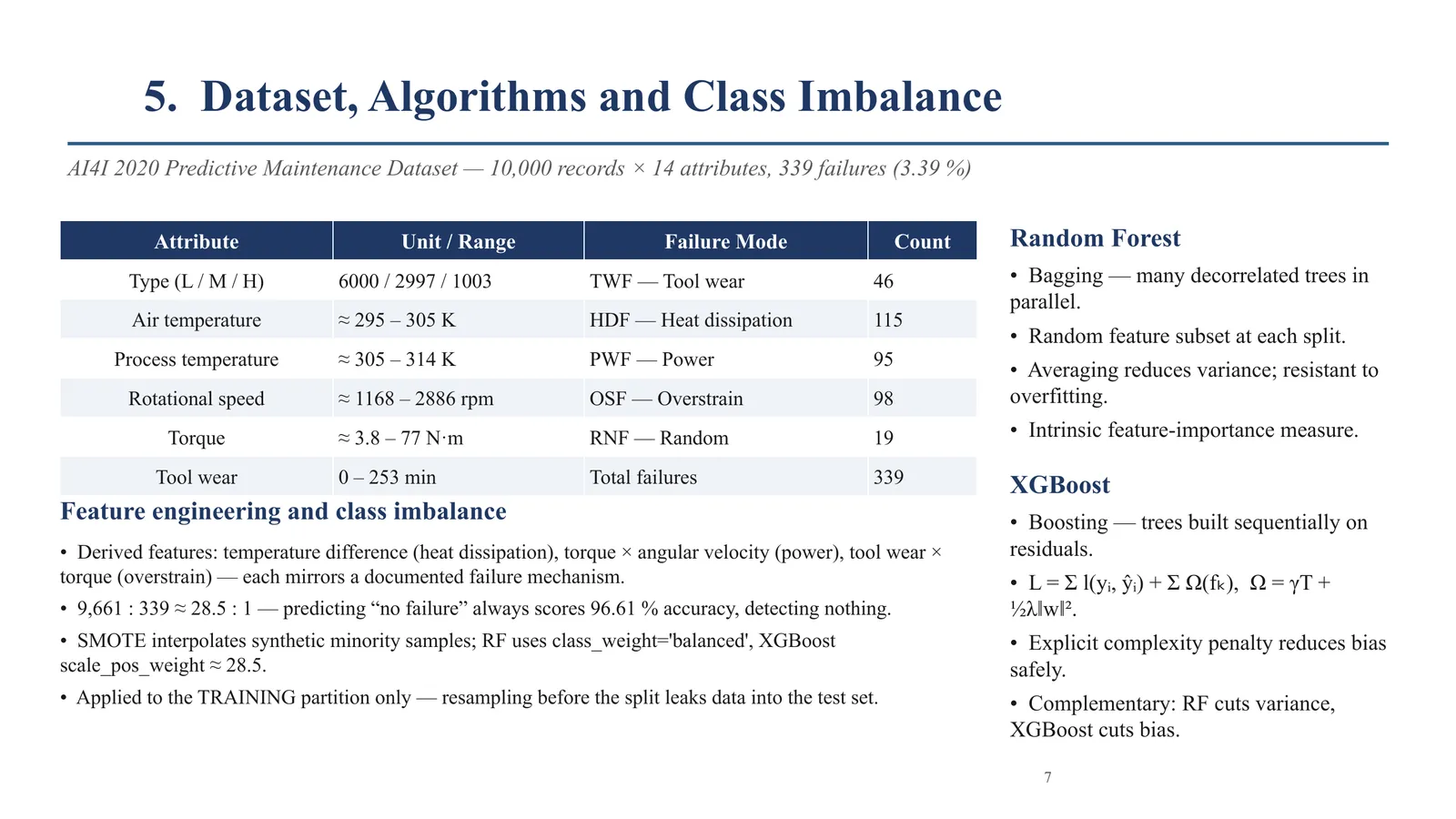
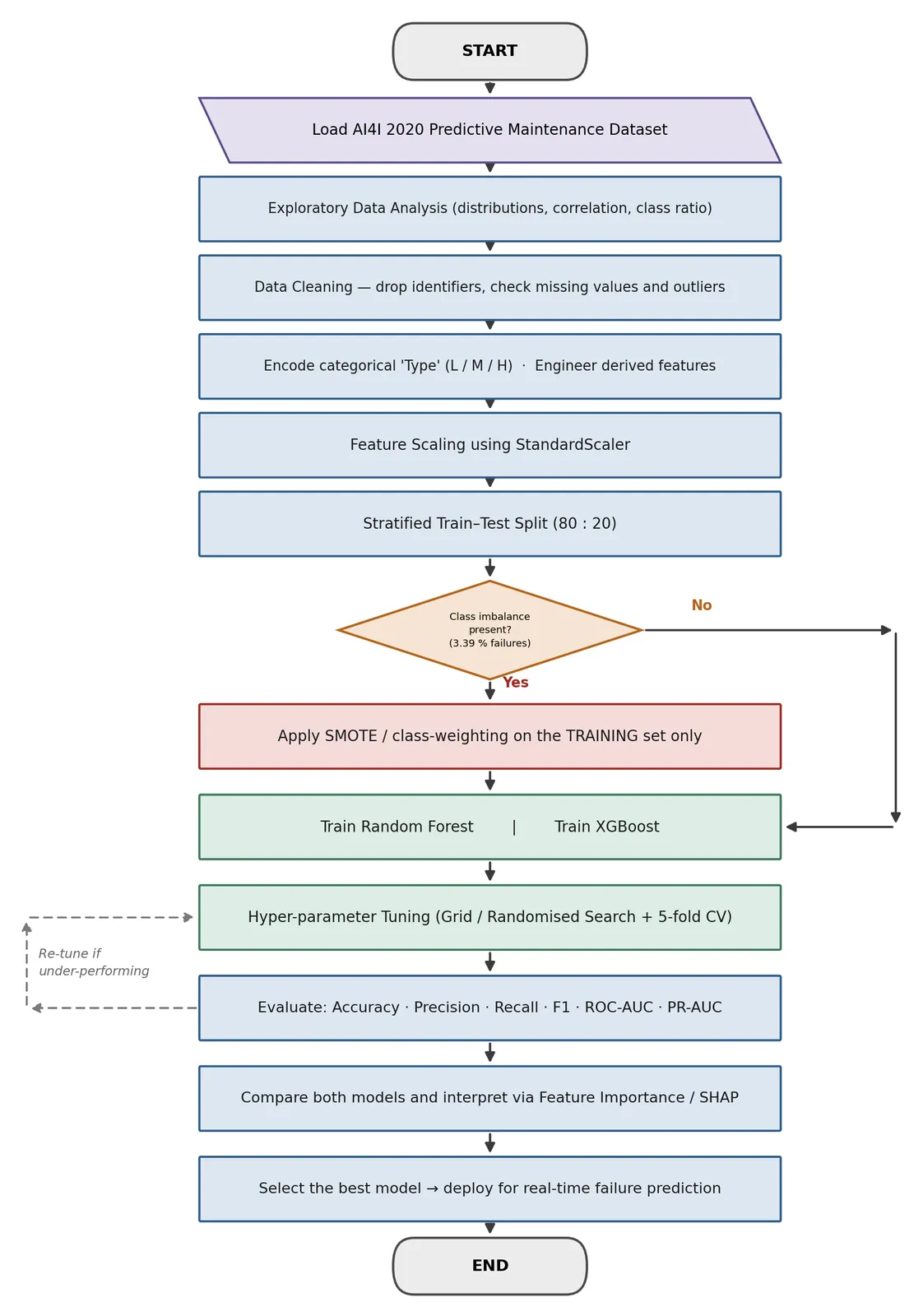
Here is a real one. Our delivered M.E. / M.Tech predictive maintenance dissertation compares Random Forest and XGBoost on the public AI4I 2020 dataset. Its Stage-I report has chapters for the introduction, a literature review with a research-gap table, the problem definition, objectives and scope, the methodology and the Stage-II plan, and it reports no scores by design: results belong to Stage-II.
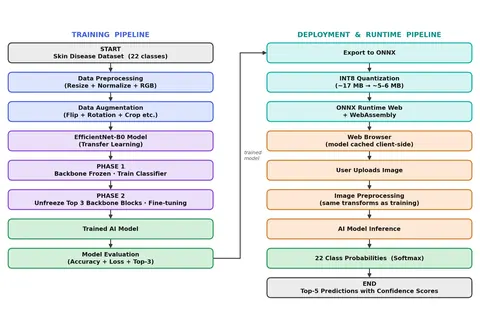
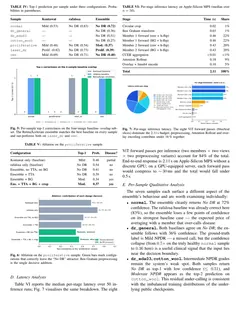
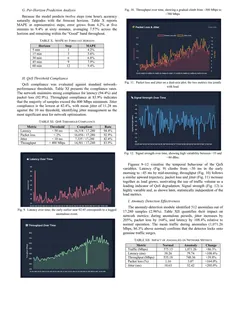
Stage-II adds the chapters Stage-I can’t have: implementation, results and discussion. For a picture of one, the page below comes from the extended results chapters of a different delivered M.E. dissertation, the in-browser skin screening project: training curves with numbered captions, then the held-out test results.
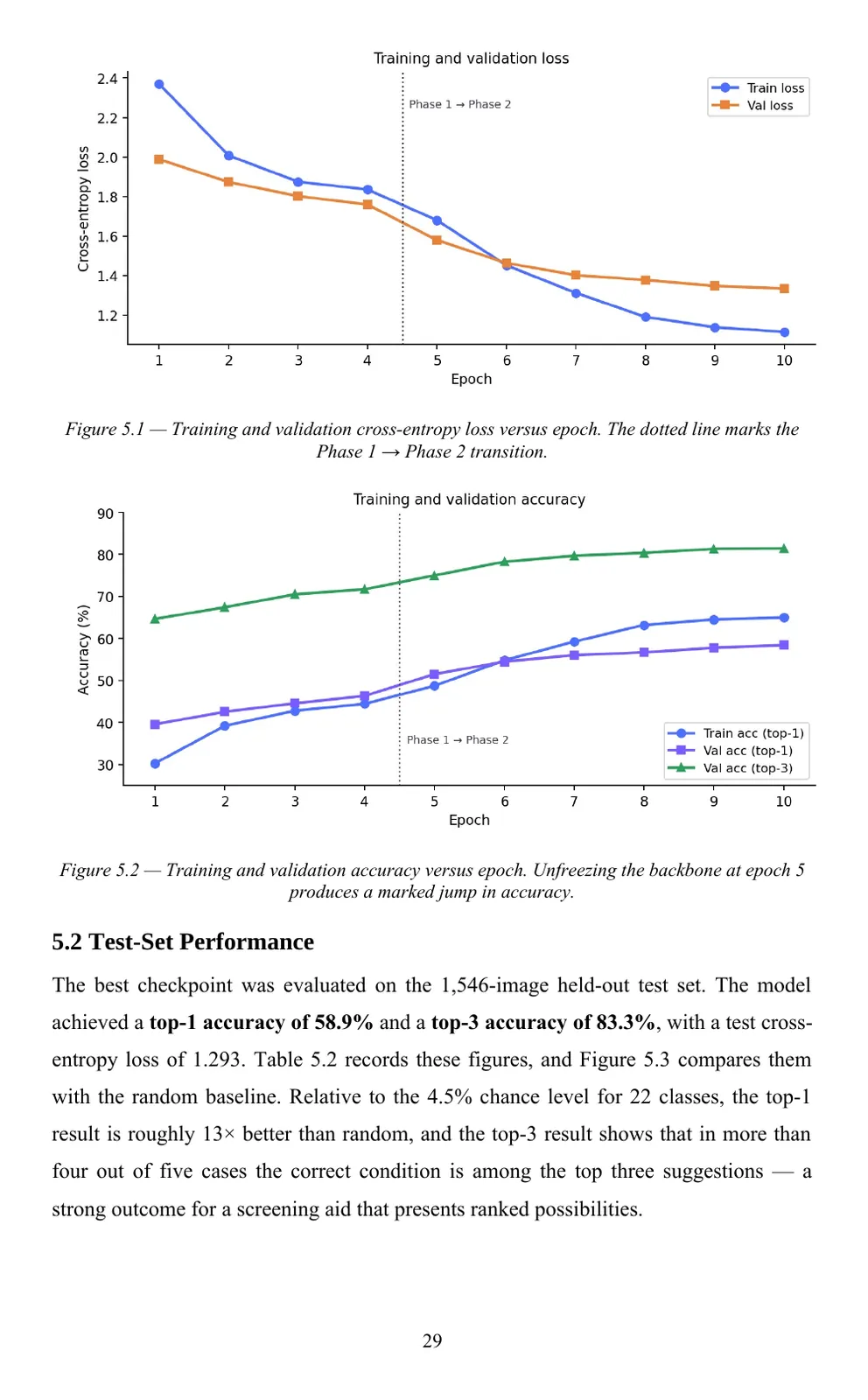
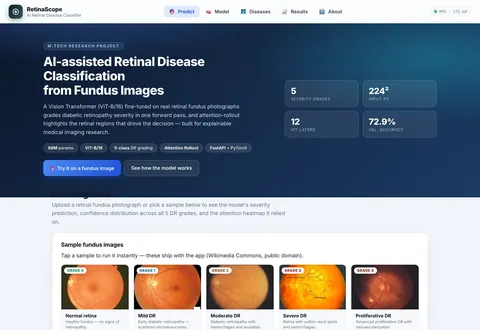
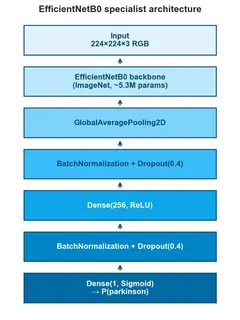
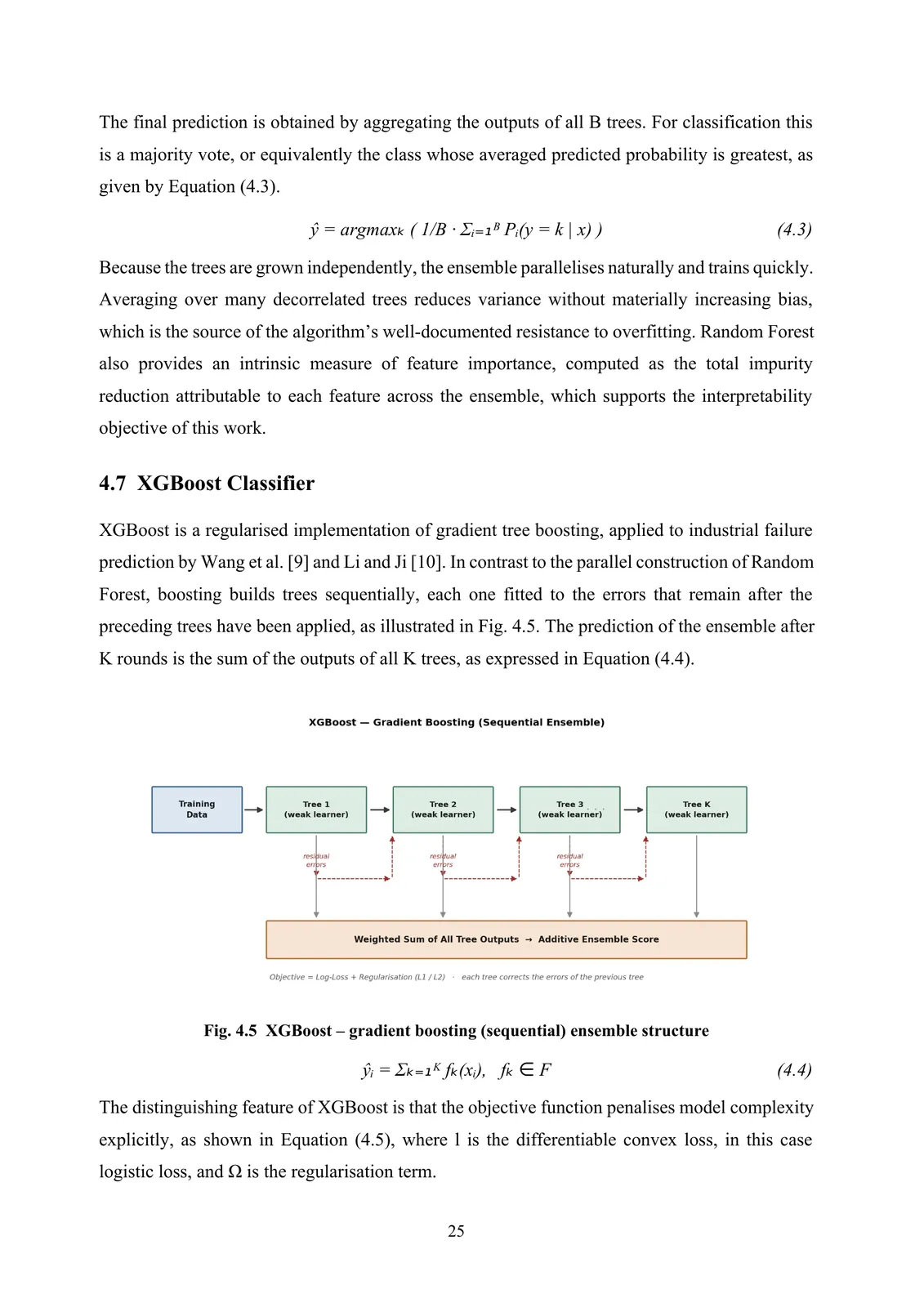
Pages from delivered M.E. / M.Tech dissertations, shown with student, guide and institute details removed.
What formatting rules do university manuals set for an M.Tech thesis?
We read three published manuals behind formats M.Tech students often look up. They agree on A4 pages and a wider left margin, and all allow figures and tables to be numbered by chapter; they differ on nearly everything else.
| Rule | University of Mumbai (2014) | AKTU (2019) | IIT Kanpur (2019) |
|---|---|---|---|
| Margins | Left 30 mm, right 20 mm, bottom 22 mm; top 30 mm without a header | Left 35 mm; top, bottom and right 25 mm | Left 35 mm; top, bottom and right 25 mm |
| Font and spacing | Times New Roman 12 pt, 1.5 spacing | Times New Roman 12 pt, 1.15 spacing | Double spacing; 11 pt single spacing for long tables, captions and references |
| Page numbers | Centre of the footer; Roman before Chapter 1 | Bottom centre, 15 mm from the edge; Roman before Chapter 1 | Top right corner, 12 mm from the edge; Roman before Chapter 1 |
| Chapter headings | New page, number and title centred, 18 pt bold, not in capitals | “CHAPTER 1” centred 50 mm from the top, title in capitals | Headings centred 25 mm below the top edge |
| Abstract | 500 words | Up to four pages, single spacing | Up to 300 words for an M.Tech thesis |
| Figures and tables | Numbered by chapter; table titles above, figure captions below | Numbered by chapter; table titles above, figure captions below | Numbered by chapter or through the thesis; drawn figures as vector graphics |
| Submission and binding | Final copies hard bound in black with gold lettering, after the viva | Three spiral-bound copies and a PDF on CD for evaluation; two hard-bound light-blue copies after the viva | PDF, after a similarity and formatting check by the Thesis Processing Cell |
| Length | Not fixed | Generally not more than about 150 pages | Not fixed |
Sources: the University of Mumbai’s guidelines for thesis, dissertation and report preparation (Ph.D., M.E. and B.E., Academic Council 4 March 2014; copy hosted by SPCE, Mumbai); AKTU’s guidelines for preparing the thesis (Ph.D., M.Tech and M.Pharm, March 2019); IIT Kanpur’s guidelines for thesis preparation (updated November 2019).
VTU’s M.Tech regulations (2022 scheme) don’t fix a page layout, but they fix the submission: the whole dissertation as one PDF rather than separate chapters, uploaded to the university’s evaluation portal, then evaluated by your guide and one external examiner before the viva. VTU’s July 2023 circular for final-semester students asked for a hard copy and a PDF, with the report and the viva each marked out of 100 by both examiners and scaled to 30 marks. For the upload it set a limit of 400 pages and 20 MB, text rather than scanned images, and no header or footer in the report.
These are four universities’ published rules, not a standard. Autonomous institutes and many departments issue their own format document, and it overrides anything here.
How is an M.Tech thesis different from a B.Tech black book and a PhD thesis?
All three follow the same chapter order. What changes is the contribution you must prove and who examines it.
| Aspect | B.Tech report or black book | M.Tech thesis | PhD thesis |
|---|---|---|---|
| Written by | A team, often of two to four | One student | One scholar |
| Must show | A working system and how it was tested | A measured improvement on published work | An original contribution across several studies |
| Literature | A survey of existing systems | A comparison that ends in a precise gap | A critical review of the whole area |
| Results | Test cases, a demo, basic metrics | Same-data comparison with a baseline, ablations | One or more chapters per objective |
| Examined by | Internal and external examiners, with a demo | Guide and an external examiner, then a viva | At least two external examiners, then an open viva |
For the PhD version of every rule above, read our PhD thesis format guide. For the B.Tech black book and PPT structure, see dissertation, report and PPT support.
How much similarity is allowed in an M.Tech thesis?
Your university sets the limit, and the published limits differ:
- VTU: the 2022 regulations allow a plagiarism index of up to 25%, but the July 2023 circular for M.Tech dissertations set 10% or less, checked on the Drillbit software. Above the limit you resubmit with a penal fee of ₹2,000, then ₹4,000; under the regulations, a third failure means redoing the project a semester later.
- AKTU: a plagiarism report with a similarity index below 20%, submitted with the evaluation copies.
- IIT Kanpur: the Thesis Processing Cell runs a similarity check and a formatting check before you submit.
- UGC: under the 2018 plagiarism regulations, up to 10% in a thesis or dissertation is Level 0, with no penalty. Our PhD thesis format guide sets out the higher levels.
Scores depend on the tool and its settings, so run the check your university uses, cite borrowed text and rewrite flagged passages in your own words. A paper you already published from the same work will match your thesis: cite it and tell your guide.
How do you turn an M.Tech thesis into a research paper?
Many programmes expect one: the University of Mumbai’s Rev. 2022 M.E. syllabi for branches such as EXTC say students should publish at least one paper from the dissertation, and AKTU’s manual lists your publications inside the thesis.
- Keep one contribution. The paper is chapters 3 to 5 in short form.
- Lead with the comparison. Put the baseline-against-yours table early; it is what reviewers look for.
- Cut the review. Keep the papers you compare against and the gap they leave.
- Use the venue’s template, such as the IEEE conference template explained in our IEEE paper format guide.
- Choose a venue your university accepts, and check it yourself with our guide to Scopus indexed journals. Acceptance is decided by the journal, never guaranteed.
What should you check before submitting an M.Tech thesis?
| Check | Done when |
|---|---|
| Current rules | You have this year’s thesis manual, your department’s format document and the specimen pages. |
| Order of parts | Preliminary pages, chapters, references and appendices follow your manual’s order. |
| Page setup | Margins, font, size and spacing match the manual on every page, including tables and appendices. |
| Numbering | Roman numbers before Chapter 1, Arabic after; sections, figures, tables and equations numbered by chapter. |
| Captions and lists | Every figure and table has a caption, and the lists repeat them with the right page numbers. |
| Results | Every number in the abstract, conclusion and PPT matches the results chapter. |
| Citations | One style throughout; every citation is in the list, and every listed source is cited. |
| Similarity report | Run with your university’s tool and under its limit, with the report kept. |
| Final files | Certificate and declaration signed; one PDF with fonts embedded, plus the printed copies and binding your university asks for. |
Is there an M.Tech thesis template you can use?
Use your university’s own. The University of Mumbai, AKTU and IIT Kanpur manuals each end with specimen pages for the title page, certificate and declaration; copy those exactly, and use your department’s Word or LaTeX template if it has one. We don’t offer a generic download, because a template that doesn’t match your manual causes more corrections than it saves.
Need help with your M.Tech thesis?
We write and format M.Tech and M.E. dissertations to your manual, from the Stage-I report to the viva PPT: see dissertation writing, reports and PPTs. For the build, see M.Tech projects for CSE and AI or M.Tech projects for ECE; for the paper, research paper writing support.
Our work is writing support, formatting and guidance. You sign the declaration of originality, so understand every chapter, cite every source and be ready to defend every result.
Frequently asked questions
Is an M.Tech thesis the same as an M.Tech dissertation?
Yes, in practice: both words name the report of your M.Tech or M.E. project. AKTU and IIT Kanpur call it the thesis; VTU and the University of Mumbai call it the dissertation.
How many pages should an M.Tech thesis be?
Most manuals set no fixed length. AKTU says an M.Tech thesis should not generally exceed about 150 pages, and VTU’s July 2023 circular capped the uploaded PDF at 400 pages.
What font and line spacing should an M.Tech thesis use?
Whatever your manual says. The University of Mumbai asks for Times New Roman 12 pt with 1.5 line spacing, AKTU for Times New Roman 12 pt with 1.15 spacing, and IIT Kanpur for double spacing, with 11 pt single spacing for long tables, captions and references.
Is paper publication compulsory in M.Tech?
It depends on the university. The University of Mumbai’s Rev. 2022 M.E. syllabi for branches such as EXTC say students should publish at least one paper from the dissertation in a refereed conference or journal, and AKTU’s manual has a section for your publications. Check your own syllabus; acceptance is always decided by the journal or conference.
How much plagiarism is allowed in an M.Tech thesis?
Your university sets the limit. VTU’s July 2023 circular set a plagiarism index of 10% or less for M.Tech dissertations, AKTU asks for a similarity index below 20%, and under the UGC’s 2018 regulations up to 10% in a thesis or dissertation carries no penalty. Run the check your university uses, and cite everything you borrow.
Where can I find an M.Tech thesis sample?
Ask your guide or department library for two or three recently approved theses from your own department; they follow the format your examiners expect. This page also shows redacted pages from delivered M.E. and M.Tech dissertations.