University manuals typically ask for A4 pages, a 12 pt font such as Times New Roman, 1.5 or double line spacing and a wider left margin for binding, but your university’s PhD ordinance and thesis guidelines decide the exact rules. Under UGC regulations, the thesis must also be checked for similarity and carry your undertaking that it is original.
What is the standard PhD thesis format in India?
Most Indian universities expect the same three blocks: preliminary pages, the chapters, and the reference material. The table shows the usual contents of each part. Names and order vary slightly, so match them to your own manual.
| Part | What it contains |
|---|---|
| Title page | Thesis title, degree, your name, supervisor, department, university, month and year, laid out exactly as your manual shows. |
| Declaration | Your undertaking that the work is your own, free of plagiarism and not submitted for any other degree. |
| Supervisor’s certificate | Your supervisor’s confirmation that the thesis is original and has not been submitted elsewhere. |
| Acknowledgements | Usually one or two pages. |
| Abstract or synopsis | A standalone summary without citations. Length is set by your manual. |
| Contents and lists | Table of contents, then lists of figures, tables, abbreviations and symbols. |
| Chapter 1: Introduction | Background, the problem, objectives, contributions and an outline of the thesis. |
| Chapter 2: Literature review | Prior work grouped by theme and compared, ending with the gap your objectives address. |
| Core chapters | Methodology, experiments or studies, results and discussion, often one chapter per objective. |
| Conclusion | What each objective achieved, your contributions, limitations and future work. |
| References | Every cited source, in one citation style. |
| Appendices | Questionnaires, derivations, code listings or extra results. |
| List of publications | Papers from your research, where the university asks for it. |
Some manuals place references before the appendices and some after. Follow yours.
What goes on a PhD thesis cover page?
The cover page (or title page) is the one page examiners check against the manual line by line. Most Indian manuals annex a sample; the layout below shows the usual order, top to bottom, with placeholders in square brackets.
| Line | Typical wording |
|---|---|
| Title | [TITLE OF THE THESIS], often in capitals and bold |
| Purpose | A thesis submitted to [University] for the award of the degree of Doctor of Philosophy in [Subject] |
| Candidate | by [Your name], with your registration or enrolment number if the manual asks for it |
| Supervisor | Under the supervision of [Supervisor’s name and designation], plus any co-supervisor |
| Emblem | The university logo, at the size and position the sample shows |
| Institution | [Department], [Faculty or school], [University], [City] |
| Date | [Month and year of submission] |
An illustrative layout, not any university’s official page. If your manual includes a sample cover page or a PhD thesis template, copy it exactly, including the wording of the purpose line.
How to write a PhD thesis, chapter by chapter
Most advice on how to write a thesis comes down to the order of work, and few scholars write in page order. Methods and results are the easiest to draft while the work is fresh; the introduction and abstract are easier once you know exactly what you found.
- Start with methods and results. Record data, tools, settings and approvals in enough detail for someone to repeat the work.
- Compare, don’t list, in the literature review. A table of methods, datasets, results and limitations makes the gap obvious.
- Tie results to objectives. Compare with baselines or published work on the same measures, and say where your method falls short.
- Open and close every chapter. A short opening says what the chapter covers; a summary links it to the next.
- Write the introduction, conclusion and abstract last, so they promise only what the thesis delivers.
- Keep it consistent. Use the same terms, symbols and units throughout, and number sections, figures, tables and equations by chapter (4.7, Fig. 4.5, Table 5.2, Eq. (4.4)).
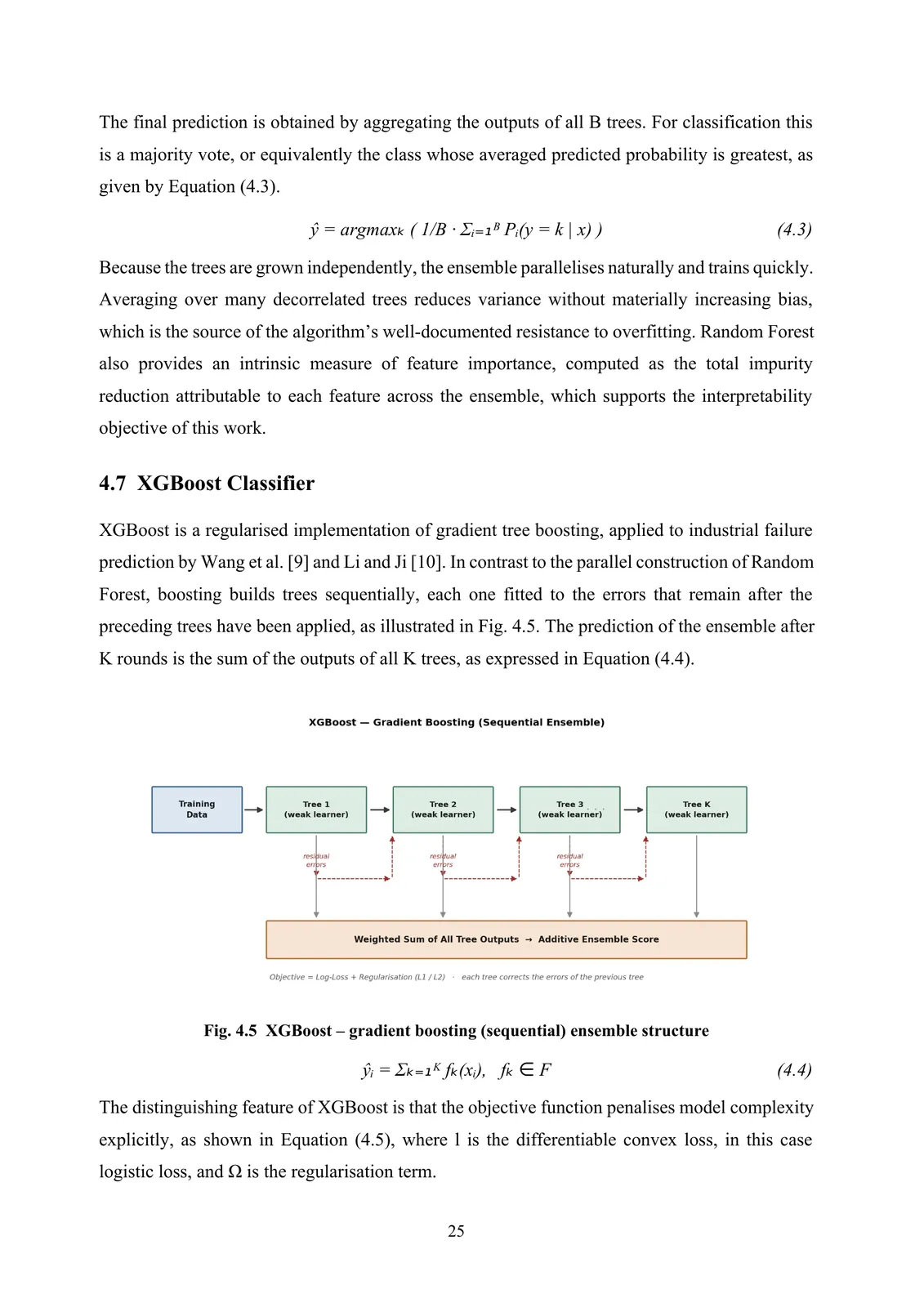
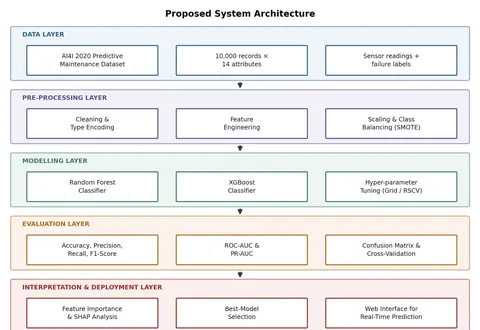
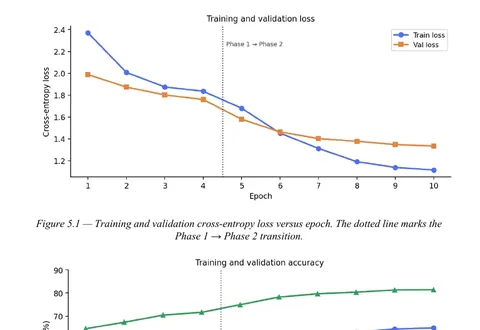
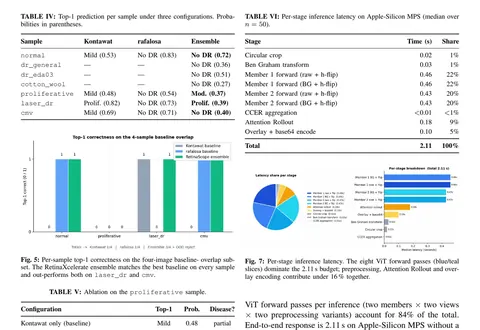
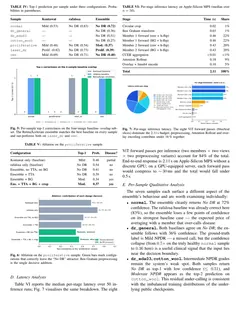
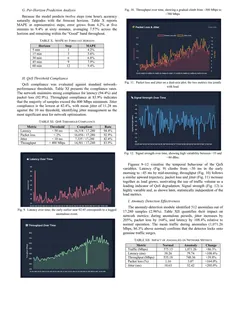
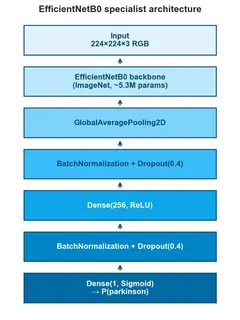
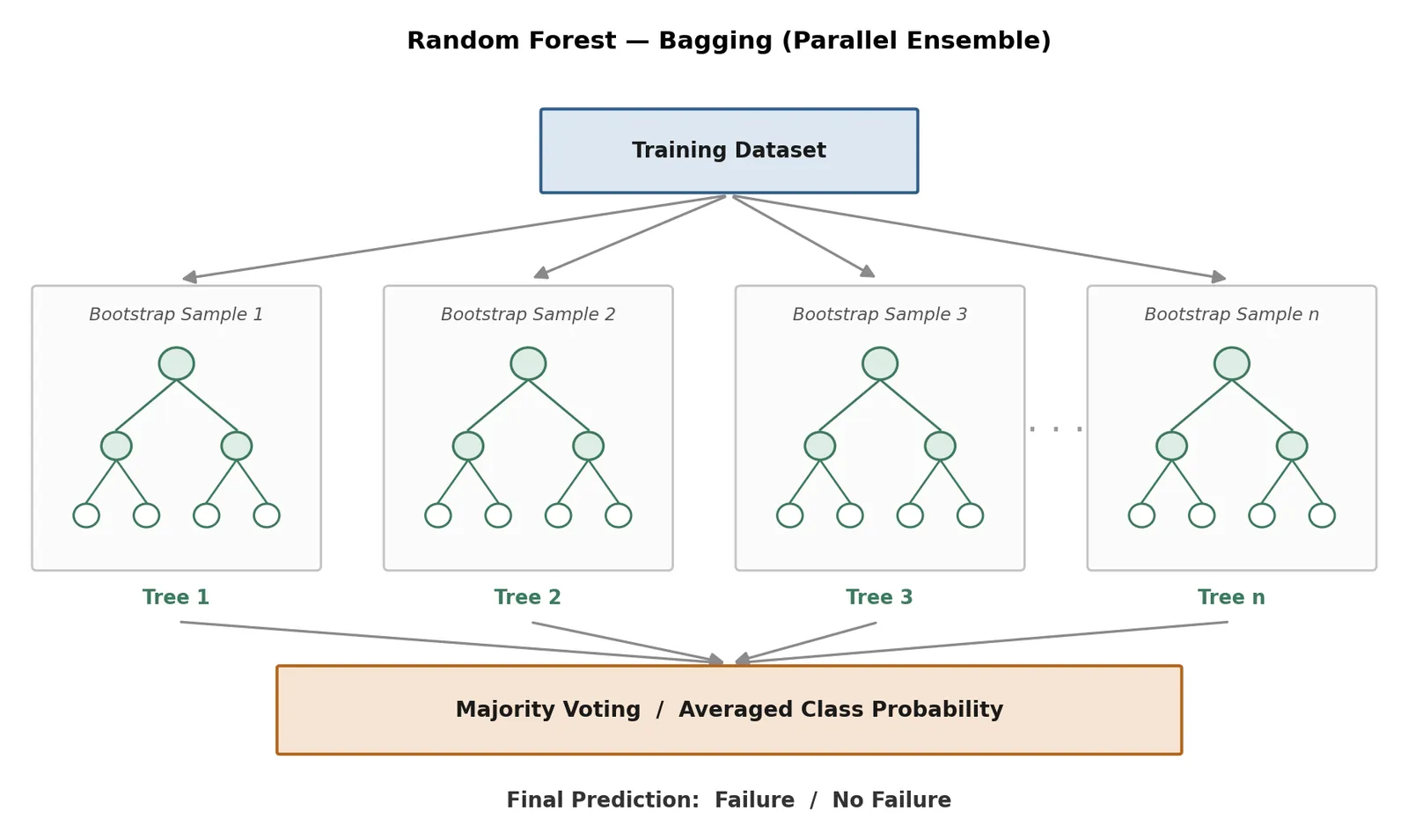
Pages from delivered M.E. / M.Tech dissertations, shown with student, guide and institute details removed.
The full projects behind these pages are the M.E. dissertations on predictive maintenance using machine learning and skin disease detection in the browser.
What font size, line spacing and margins does the thesis format need?
We compared the published thesis guidelines of five Indian universities and institutes. They agree on the basics and differ on the details, which is why your own manual is the only safe reference.
| Element | What the manuals say | If yours is silent |
|---|---|---|
| Paper | A4 in all five, printed on both sides, 75 to 100 gsm | A4 |
| Font | Times New Roman in four (one also allows a sans-serif font); Bookman Old Style in one. 12 pt where a size is given | Times New Roman, 12 pt |
| Line spacing | Double in three, 1.5 in two; single spacing for long tables, block quotes and references in some | 1.5 |
| Left margin | 31.7 to 38.1 mm (1.25 to 1.5 in), wider for binding | 38 mm (1.5 in) |
| Other margins | Top about 25 mm in all five; right 25 to 32 mm; bottom 17 to 25.4 mm | 25 mm (1 in) |
| Page numbers | Lower-case Roman (i, ii, iii) before Chapter 1, Arabic from Chapter 1. Bottom centre in two, a right-hand corner in two | Bottom centre |
| Numbering | Sections, tables and figures numbered by chapter, such as 3.2 or Table 2.1 | By chapter |
| Abstract length | Up to 500 words in one, about 600 in two, up to 1,000 in one | Ask your supervisor |
Chapters normally start on a new page, and one manual sets chapter titles in 15 pt bold capitals. Sample title pages, certificates and declarations are usually annexed to the manual: copy them exactly. If your department gives a thesis template in Word or LaTeX, write in it from the start, because its styles build the headings, captions and contents list for you.
The UGC regulations set the PhD process, not fonts or margins. Get the current PhD ordinance and thesis guidelines from your research cell or department before you format a single page, and check whether your department adds its own template.
Which citation style should a PhD thesis use?
Use the style your ordinance or department names. If it leaves the choice to you, use the style of the leading journals in your field and keep it identical from the first chapter to the last. A reference manager such as Zotero, Mendeley or BibTeX keeps citations and the list in step.
| Style | In-text citation | Common in |
|---|---|---|
| IEEE | Numbered in order of citation: [1] | Engineering, computer science, electronics |
| APA (7th ed.) | Author and year: (Author, 2024) | Psychology, education, social sciences, management |
| Harvard | Author and year: (Author 2024) | Commerce, management, some sciences |
| Vancouver | Numbered: (1) or superscript | Medicine, pharmacy, life sciences |
| Chicago | Footnotes, or author and date | History and the humanities |
| MLA | Author and page: (Author 45) | Languages and literature |
For IEEE rules and worked examples, see our IEEE paper format guide.
What similarity is allowed in a PhD thesis under UGC rules?
Under the UGC (Promotion of Academic Integrity and Prevention of Plagiarism in Higher Educational Institutions) Regulations, 2018, similarity up to 10% is Level 0 and carries no penalty. Above that, the consequences for a thesis or dissertation rise in three levels.
| Level | Similarity | Consequence |
|---|---|---|
| Level 0 | Up to 10% | Minor similarity, no penalty |
| Level 1 | Above 10% to 40% | Submit a revised thesis within a set period of up to 6 months |
| Level 2 | Above 40% to 60% | Barred from submitting a revised thesis for one year |
| Level 3 | Above 60% | Registration for the programme cancelled |
A repeat offence is penalised one level higher. If plagiarism is proved after the degree is awarded, the degree is put in abeyance for a period the institution’s academic integrity panel recommends.
The regulation excludes from the check any quoted work used with permission or attribution; references, bibliography, table of contents, preface and acknowledgements; and generic terms, laws, standard symbols and standard equations. It also says the core of the work (abstract, summary, hypothesis, observations, results, conclusions and recommendations) should have no similarity, apart from common knowledge or coincidental terms of up to 14 consecutive words.
At submission you sign an undertaking that the thesis is your original work, checked with a plagiarism detection tool approved by your institution, and your supervisor certifies that it is plagiarism-free. The percentage depends on the software and its settings, so run your chapters through the tool your university uses and rewrite flagged passages in your own words, with citations.
What do the UGC’s 2022 PhD regulations require at submission?
The UGC (Minimum Standards and Procedure for Award of Ph.D. Degree) Regulations, 2022, notified on 7 November 2022, set these steps around the thesis:
- Pre-submission presentation before your Research Advisory Committee, open to all faculty members and research scholars.
- Plagiarism check through your institution’s software mechanism.
- Two documents with the thesis: your undertaking that there is no plagiarism, and your supervisor’s certificate that the thesis is original and not submitted for another degree.
- Evaluation by your supervisor and at least two external examiners not employed by your institution, one from outside India wherever possible.
- Viva-voce once both external examiners recommend acceptance. If one recommends rejection, the thesis goes to an alternate examiner, and the viva is held only if that examiner recommends acceptance. It may be held online and is open to faculty and scholars.
- Six months: the institution must complete evaluation, including the viva result, within six months of submission.
- Deposit: the institution submits an electronic copy to INFLIBNET, which hosts theses on Shodhganga.
The same regulations require a Research and Publication Ethics course in PhD coursework. They do not require scholars to publish papers before submitting, but your university’s ordinance may. If yours does, check the journal before you submit: see how to check if a journal is Scopus indexed and what replaced the UGC CARE list.
PhD thesis format checklist before submission
| Check | Done when |
|---|---|
| Current guidelines | You have this year’s ordinance, thesis guidelines and sample pages. |
| Order of parts | Preliminary pages, chapters, references and appendices follow your manual’s order. |
| Page setup | Paper size, margins, font, size and line spacing match the manual on every page, including tables. |
| Page numbers | Roman before Chapter 1, Arabic after, in the right position. |
| Headings and numbering | Each chapter starts on a new page; sections, figures, tables and equations are numbered by chapter. |
| Captions and lists | Every figure and table has a caption, and the lists repeat the same captions with correct page numbers. |
| Borrowed figures | Any figure from another source is credited in its caption, with permission where needed. |
| Citations | One style throughout; every in-text citation is in the list and every listed source is cited. |
| Abstract | Within the word limit and free of citations. |
| Similarity report | Run with your university’s tool, flagged passages rewritten, report kept. |
| Signed pages | Your declaration and the supervisor’s certificate are signed and dated. |
| Pre-submission seminar | Presented, and the committee’s corrections made. |
| Final files | A PDF with all fonts embedded, plus the printed and bound copies your university asks for. |
Need help with your thesis?
We support PhD scholars with chapter writing, editing, formatting to your university’s template, figures and references, and viva preparation. See our chapter-by-chapter PhD thesis writing support, or PhD guidance and assistance if you are still at the synopsis stage (our PhD synopsis format guide covers that document). Writing a master’s dissertation instead? Our MTech dissertation format guide covers the chapters and the Stage-I and Stage-II reports; for writing help with dissertations and project reports, see M.Tech thesis writing help, and for papers from your thesis, research paper writing.
Our work is writing support, editing, guidance and explanation. You sign the undertaking of originality, so make sure you understand and can defend every chapter, and cite every source.
Frequently asked questions
What is the standard format of a PhD thesis?
Preliminary pages (title page, declaration, supervisor’s certificate, acknowledgements, abstract, contents and lists), then chapters from introduction to conclusion, then references and appendices. Your university’s ordinance fixes the exact order and page layout.
How do you write a PhD thesis, chapter by chapter?
Draft the methods and results chapters first, while the work is fresh, then the literature review as a comparison that ends in your gap. Write the introduction, conclusion and abstract last, so they promise only what the thesis delivers, and number sections, figures and tables by chapter.
What font, size and line spacing should a thesis use?
The Indian university manuals we compared ask for a 12 pt font, usually Times New Roman, with 1.5 or double line spacing on A4 paper. Check your own guidelines, because some specify a different font or spacing.
How many pages should a PhD thesis have?
The UGC’s 2022 PhD regulations do not set a page count, and length varies by discipline and university. Some manuals limit the abstract or synopsis, so follow your ordinance and your supervisor’s advice.
How much plagiarism is allowed in a PhD thesis?
Under the UGC 2018 regulations, similarity up to 10% is Level 0 with no penalty. Above 10% to 40% means submitting a revised thesis within up to six months, above 40% to 60% means a one-year bar on resubmission, and above 60% means cancelled registration.
Which citation style should a PhD thesis use?
The one your university or department prescribes. Engineering and computer science theses commonly use the IEEE numbered style, while social sciences and management often use APA or Harvard. Whichever you use, keep it consistent.
Do I need published papers before submitting my PhD thesis?
The UGC’s 2022 PhD regulations do not require publications before thesis submission, but your university’s ordinance may. Check the current rules for your programme.