To check one journal, search its ISSN on the free Scopus Sources page or in that list, confirm it is active and not on the Discontinued Titles sheet, and match the ISSN, publisher and website to the journal you are submitting to. No agent can guarantee acceptance or indexing.
What does “Scopus indexed” actually mean?
Scopus is Elsevier’s abstract and citation database. According to Elsevier it includes titles from more than 7,000 publishers, and a journal enters only after review. “Scopus indexed” means the journal is covered now, for the issues your paper could appear in, not that it was covered at some point.
The publisher or editor suggests the journal to Scopus. It must first meet every technical criterion; then the Content Selection and Advisory Board (CSAB), an independent board of subject experts, evaluates it.
| Stage | What Scopus looks for |
|---|---|
| Technical criteria | Peer-reviewed content with a public description of the review process; regular publication with an ISSN registered with the ISSN International Centre; a publication history to review; English titles and abstracts; a public publication ethics and malpractice statement |
| Journal policy | A convincing editorial policy, the type of peer review, and editors and authors from a broad spread of countries |
| Content | Academic contribution, clear abstracts, fit with the stated aims and scope, and readable articles |
| Journal standing | How often its articles are cited in Scopus, and the standing of its editors |
| Publishing regularity | No delays or interruptions in the publication schedule |
| Online availability | Full content online, an English-language home page, and a good-quality home page |
Summarised from Elsevier’s Scopus content policy and selection page, checked on 29 September 2026.
Where is the official Scopus indexed journals list?
There are two official places to look, both free and both from Elsevier:
- Scopus Sources at scopus.com/sources: a search page for every journal, book series and conference series Scopus covers, with each title’s publisher, ISSN, subject areas and CiteScore.
- The Scopus source title list: an Excel file linked from Elsevier’s content policy and selection page. The August 2026 edition lists 49,009 sources, active and inactive, of which 30,200 are active journals, with separate sheets for Accepted Titles and Discontinued Titles.
Lists of “Scopus indexed journals 2026” posted on other websites, often as PDFs, are copies. Elsevier does not maintain them, they go out of date within weeks, and they may still include discontinued titles. Download the current month’s file yourself.
Looking for Scopus indexed journals in India? SCImago’s journal rankings, built on Scopus data, can be filtered by country and subject area. Use them to shortlist, then confirm each title in the current source list, because SCImago updates its rankings once a year.
A sample from the Scopus indexed journals list 2026: computer science and engineering
These eleven titles are ones engineering students often ask about. Each was checked in Elsevier’s August 2026 source title list: all are marked active, none is on the Discontinued Titles sheet, and the subject areas are Elsevier’s own (ASJC) labels. The last three come from Indian bodies: IETE, the Institution of Engineers (India) and the Indian Academy of Sciences.
| Journal | Publisher | ISSN / E-ISSN | Subject areas in the list |
|---|---|---|---|
| IEEE Access (open access) | IEEE | — / 2169-3536 | General Engineering; General Computer Science; General Materials Science |
| Expert Systems with Applications | Elsevier | 0957-4174 | Artificial Intelligence; Computer Science Applications; General Engineering |
| Pattern Recognition | Elsevier | 0031-3203 | Computer Vision and Pattern Recognition; Artificial Intelligence; Signal Processing; Software |
| Computers in Biology and Medicine | Elsevier | 0010-4825 / 1879-0534 | Computer Science Applications; Health Informatics |
| IEEE Internet of Things Journal | IEEE | — / 2327-4662 | Computer Networks and Communications; Hardware and Architecture; Signal Processing; Information Systems |
| Computer Networks | Elsevier | 1389-1286 | Computer Networks and Communications |
| Computers and Security | Elsevier | 0167-4048 | General Computer Science; Law |
| Journal of Big Data (open access) | Springer Nature | — / 2196-1115 | Information Systems; Computer Networks and Communications; Hardware and Architecture |
| IETE Journal of Research | Taylor & Francis | 0377-2063 / 0974-780X | Electrical and Electronic Engineering; Computer Science Applications; Theoretical Computer Science |
| Journal of The Institution of Engineers (India): Series B | Springer | 2250-2106 / 2250-2114 | Electrical and Electronic Engineering; General Computer Science |
| Sadhana: Academy Proceedings in Engineering Sciences | Springer India | 0256-2499 / 0973-7677 | Multidisciplinary |
Checked on 2026-09-29 against Elsevier’s source title list, August 2026 edition. A sample, not a complete or recommended list: being in Scopus says nothing about whether a journal suits your paper or will accept it. Verify each title again before you submit, because coverage can change in any month.
How do you check if a journal is Scopus indexed?
Do not rely on a journal’s own badge, an invitation email or a list copied onto another website. Check the source yourself, in this order.
Take the ISSN from the journal itself
Copy the print ISSN and E-ISSN from a recent article PDF or the journal’s masthead, not from an email that invited you to submit.
Search Scopus Sources
On the free Scopus Sources page, search by ISSN, then by title. Note the publisher, ISSN, subject areas and CiteScore on the journal’s record.
Cross-check the source title list
Elsevier’s source title list, linked from its content policy page, is a free Excel file updated monthly. The August 2026 edition has separate sheets for Scopus Sources, Accepted Titles and Discontinued Titles. In the main sheet, check “Active or Inactive” and “Coverage”, the years Scopus holds.
Rule out discontinuation
Search the Discontinued Titles sheet by ISSN. It shows the final volume and issue covered; nothing published after that is added.
Match the ISSN and the website
Look the ISSN up in the ISSN Portal and confirm that the title, publisher and web address match the site you are submitting through.
Look for recent issues
If your library has Scopus access, check that the journal’s latest issues are in Scopus. If coverage stopped some time ago, find out why before you submit.
The Accepted Titles sheet lists journals that are in the process of being added. Elsevier’s notice on that sheet says a positive CSAB decision does not guarantee inclusion if licensing terms with the publisher cannot be agreed.
What is the Scopus discontinued titles list?
It lists the journals whose coverage Scopus has stopped. Scopus runs a continuous re-evaluation programme: a journal is flagged when Elsevier’s data model spots outlier or unexpected publishing patterns, or when concerns about its standards raised by the research community are validated. The CSAB then reviews it against the same criteria used for new titles.
- During re-evaluation, new content from the journal is paused until the CSAB decides.
- If the journal is discontinued, content already indexed stays in Scopus as part of the scientific record, but nothing new is added.
- In severe cases of proven unethical publishing, content already indexed may be removed.
- There is no quick return. A discontinued title has an embargo period before it can be suggested again.
So a journal where a senior published two years ago may not be indexed for your paper. Check the current month’s list when you shortlist, and again just before you submit.
How do you spot a cloned or hijacked journal?
A hijacked or cloned journal is a fake website posing as a real indexed journal, often using its exact title and ISSN. The Scopus record you find may be genuine, because it belongs to the real journal. After hijacked sites were found linked from Scopus, Scopus removed journal homepage links from its source pages in December 2023, as reported by Retraction Watch. No single link proves which website is real.
- The domain differs from the one in the ISSN Portal or on the publisher’s own website.
- The “current issue” articles are not in Scopus, or the volume numbering does not match what Scopus holds.
- The scope covers almost every subject, from engineering to literature, in one issue.
- Fees go to a personal bank account or payment ID instead of the publisher.
- Acceptance arrives within days, with no reviewer comments.
Retraction Watch keeps a free Hijacked Journal Checker. Search it before you pay any fee.
How do you identify predatory journals?
Predatory journals take publication fees while doing little or no real peer review. Unlike a cloned journal, a predatory journal is usually its own title, and a few have been indexed for a time before Scopus discontinued them. So indexing alone is not proof; check the journal’s behaviour as well.
- Acceptance within days and no reviewer comments, or comments that only ask for formatting changes.
- Fees before review, or charges that appear only after acceptance and were never listed on the journal’s website.
- Invitation emails that praise your “recent work” and promise fast publication.
- Metrics you cannot verify, such as a “Scopus impact factor” or an impact factor that is not in Clarivate’s Journal Citation Reports.
- An editorial board you cannot trace, with members who do not list the journal on their own university pages.
- A scope that covers everything, and issues with far more papers than similar journals publish.
To check a journal, work through the free Think. Check. Submit. checklist, look an open-access journal up in the Directory of Open Access Journals (DOAJ), and see whether the publisher is a member of COPE. None of these proves quality on its own, but a journal that fails all three is a clear no.
CiteScore vs impact factor: what is the difference?
They come from different companies and different data. CiteScore is Elsevier’s metric, calculated from Scopus. The Journal Impact Factor is Clarivate’s, published in Journal Citation Reports. Scopus does not publish impact factors, so a “Scopus impact factor” is a red flag.
| Metric | Published by | How it is calculated | Access |
|---|---|---|---|
| CiteScore | Elsevier, from Scopus data | Citations over four years to articles, reviews, conference papers, book chapters and data papers, divided by the number of those documents published in the same four years. CiteScore 2025, for example, uses 2022–2025. | Free on Scopus. Fixed once a year; a CiteScore Tracker is updated monthly. |
| Journal Impact Factor | Clarivate, in Journal Citation Reports | Citations in one year to items published in the previous two years, divided by the citable items published in those two years | Subscription |
| SJR | SCImago, from Scopus data | A prestige metric that weights each citation by the subject field, quality and reputation of the citing source | Free on the SCImago website |
Sources: Elsevier: What is CiteScore?, Clarivate: the Journal Impact Factor and Elsevier: Scopus metrics. Compare journals only within the same subject; citation habits differ widely between fields.
What do Q1, Q2, Q3 and Q4 mean for Scopus journals?
A quartile places a journal within its subject area. Scopus ranks journals by CiteScore inside each subject area and gives each a percentile; the quartiles group those percentiles into quarters.
- Q1: the top 25% of journals in that subject area.
- Q2: the next 25%.
- Q3: the 25% below that.
- Q4: the bottom 25%.
A journal listed in several subject areas can be Q1 in one and Q2 in another (Elsevier explains this here). SCImago publishes its own Q1–Q4 based on SJR, not CiteScore, and the two can disagree. When a rule says “Q1 journal”, ask which source and which subject area it means.
How long does publishing in a Scopus-indexed journal take?
There is no standard time. It depends on the journal, the number of review rounds and how quickly you revise, so estimate your target journal’s real pace rather than trusting its marketing.
- Read the dates on recent articles. Many journals print received, revised and accepted dates on each paper. A handful of recent papers gives you a realistic range.
- Read the review policy. Journals that describe their peer review often state the number of rounds and target times.
- Allow for production. Proofs and online publication follow acceptance, then the publisher’s content has to reach Scopus. The source title list shows whether a title supplies articles in press.
- Work back from your deadline. If your university needs an accepted or published paper before thesis submission, plan for at least one revision round.
What are the red flags in “Scopus guaranteed” offers?
No one outside the journal controls acceptance, and no one outside Elsevier controls indexing. Elsevier, advised by the CSAB, can re-evaluate or remove a title without prior notice. An agency that guarantees either is selling something it does not control.
- A fixed price that includes “acceptance” before anyone has read your paper.
- A journal name they will not share until you pay, so you cannot verify it.
- A “Scopus-indexed” journal whose ISSN is missing from the current title list, or sits on the Discontinued Titles sheet.
- Places in a special issue or conference volume sold in bulk.
- Offers to sell or add author positions on a paper.
- A refund “if not indexed”, which admits that indexing is not in their hands.
We write your paper in IEEE, Springer or the journal’s format, shortlist Scopus-indexed or peer-reviewed journals with you using the checks on this page, and help you answer reviewers. Acceptance is decided by the journal, and we are not affiliated with Scopus or Elsevier. See how we give help publishing in a Scopus-indexed journal.
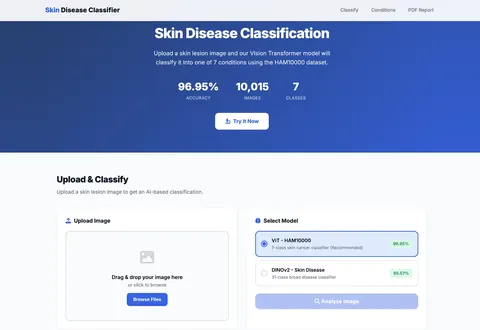
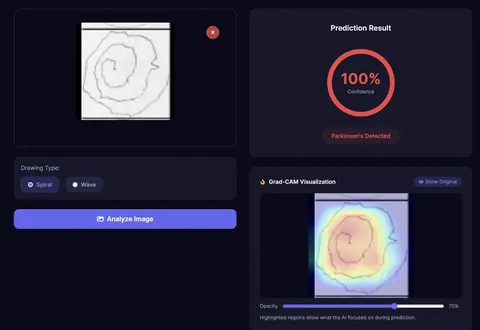
If your paper grows out of a project, IEEE projects and M.Tech projects cover the build and results first. Delivered M.Tech examples include the diabetic retinopathy detection project and the skin lesion classification project, each written up as an IEEE-format paper.
Is a Scopus-indexed journal the same as a UGC-CARE journal?
They were linked, but the UGC-CARE list has ended. While it ran, UGC-CARE Group II covered journals indexed in globally recognised databases, including Scopus. UGC discontinued the list in 2025, and institutions now judge journals with UGC’s suggestive parameters, which include indexing in reputed databases and CiteScore. Our guide to the UGC CARE list 2026 explains what changed.
Frequently asked questions
Is there an official list of Scopus indexed journals?
Yes. Elsevier publishes the Scopus source title list as a free Excel file, updated monthly, and the same titles can be searched on the Scopus Sources page. Lists copied onto other websites go out of date and may include discontinued titles.
How can I check if a journal is Scopus indexed for free?
Search the journal’s ISSN on the Scopus Sources page at scopus.com/sources or in Elsevier’s source title list. Confirm the title is active, check its coverage years, and make sure it is not on the Discontinued Titles sheet.
How do I identify a predatory journal?
Watch for acceptance within days with no real reviewer comments, fees demanded before review, invitation emails promising fast publication, metrics you cannot verify and an editorial board you cannot trace. Then check the journal with the Think. Check. Submit. checklist, DOAJ for open-access titles, and the current Scopus source list.
Can a journal lose its Scopus indexing?
Yes. Scopus re-evaluates journals continuously and can discontinue a title. Content already indexed normally stays in Scopus, but nothing published after the final covered issue is added.
Is CiteScore the same as impact factor?
No. CiteScore is Elsevier’s four-year metric calculated from Scopus data and is free to view. The Journal Impact Factor is Clarivate’s two-year metric, published in Journal Citation Reports.
What is a Q1 Scopus journal?
A journal in the top 25% of its subject area by CiteScore. A journal can have a different quartile in each subject area it belongs to, and SCImago’s SJR quartiles can differ from CiteScore quartiles.
Can anyone guarantee publication in a Scopus indexed journal?
No. Acceptance is decided by the journal’s editors and reviewers, and indexing by Elsevier on the advice of its Content Selection and Advisory Board. Treat any guarantee of acceptance or indexing as a red flag.