We build IEEE projects for final year B.Tech, M.Tech and PhD students in CSE, IT and AI: working code, results, a report or thesis chapter, and an IEEE-format paper if you need one.
What is an IEEE project?
In Indian engineering colleges, an “IEEE project” is one whose method comes from a recent IEEE paper, in a journal such as IEEE Access or in conference proceedings on IEEE Xplore. Your guide may give you the paper or ask you to find one.
The name does not mean IEEE approved the project, or that a paper about it will be accepted. We are not affiliated with IEEE; “IEEE-format” only describes a paper’s layout, which our IEEE paper format guide explains rule by rule.
Which domains do our IEEE projects cover?
- Machine learning
- Deep learning
- Computer vision
- Medical imaging
- NLP & LLMs
- Explainable AI
- Data science
- Cybersecurity
- Networking & 5G
- IoT & edge AI
- Cloud computing
- Blockchain
Most IEEE projects for CSE, AI&ML and data science students start from a recent paper on machine learning, deep learning or LLMs; security, networking and cloud papers work well too. For topics to match with a base paper, see our final year project ideas for CSE, the deep learning project ideas and the M.Tech project topics. In ECE? IEEE projects for ECE are listed with the ECE ideas, and M.Tech students can see M.Tech projects in VLSI and embedded systems.
What do you get with an IEEE project?
The scope depends on your level and on whether you need an extension and a paper. Everything you choose is listed in the quote.
| Deliverable | What it covers | Format |
|---|---|---|
| Base paper check | Your paper checked for data, detail and compute, or two or three recent IEEE papers shortlisted | Short feasibility note |
| Baseline code | The paper’s method rebuilt, on its dataset or the closest public one | Python code with a setup guide; MATLAB if the paper uses it |
| Baseline results | Your numbers beside the paper’s, with any gap explained | Comparison table |
| Extension | One or more measured improvements of your own | Code and results |
| Evaluation | Same test split, an ablation study and charts | Figures and tables |
| Write-up | Report, black book or thesis chapter, plus an IEEE-format paper if needed | Word or LaTeX (IEEE template) |
| PPT and viva prep | Slides and a walkthrough of the paper, the code and your results | PowerPoint and a session |
| Timeline | Typically 1–3 weeks for a B.Tech reproduction; 3–6 weeks with an extension and paper | Fixed in your plan |
Timelines are typical ranges. Acceptance of any paper is decided by the journal or conference.
For final year students the scope is usually a faithful reproduction with a working demo; M.Tech work adds an extension and a paper. If the base paper still has to be built as a full B.Tech project, see final year projects for CSE.
How does IEEE base paper implementation work?
Base paper implementation follows the paper first and changes it second. Without a baseline you trust, you cannot show that your extension helped.
- Map the paper. Dataset, preprocessing, model, loss, hyperparameters, metrics and the exact numbers reported.
- Rebuild the pipeline. Use the authors’ code if published; otherwise write it from the paper and note every assumption.
- Reproduce the baseline. Same data split, your numbers beside the paper’s. Small gaps are normal and get explained.
- Extend it. One change at a time, such as a new backbone, class-imbalance handling or an explanation layer.
- Evaluate fairly. Same test set and metrics, plus an ablation that removes each change.
- Write it up. Report or thesis chapter, and an IEEE-format paper if needed, with the base paper cited.
How do I choose a base paper for an IEEE project?
A base paper you cannot reproduce stalls the whole project, so check three things before you commit:
- Recent and genuinely IEEE: for 2026–27, published in the last two or three years and listed on IEEE Xplore, not a journal that only calls itself “IEEE-format”.
- Reproducible: the dataset can be downloaded today (or has a public equivalent), and the architecture, settings and metrics are stated, ideally with code.
- Fits your time and compute, with room to extend: it trains on a free cloud GPU or your laptop, and its limitations point to at least one improvement you can test.
Where to search, the red flags and how to test reproducibility are covered step by step in how to select a base paper. Unsure about yours? Send it in the consultation to hear whether it can be reproduced in your time frame. B.Tech students can start here.
How much novelty does an IEEE project need?
Your guide decides what counts as enough, but most projects are one of three types.
| Approach | What you do | Usually suits | Write-up |
|---|---|---|---|
| Reproduction only | Rebuild the paper and match its results | B.Tech major project | Report or black book |
| Reproduction and extension | Add one or two measured improvements | M.Tech, strong B.Tech | Thesis and an IEEE-format paper |
| New method | Your own approach against several baselines | PhD, ambitious M.Tech | Journal paper and thesis chapters |
Whether a paper is accepted is decided by the journal or conference.
Extensions that work well
- Explainability: Grad-CAM, attention maps or SHAP for each prediction.
- A stronger backbone: a Vision Transformer in place of a CNN, or a pretrained start.
- Class imbalance: weighted loss, oversampling or focal loss for a rare class.
- Ensembles: models trained on different views of the data, combined.
- Deployment: a web app, an in-browser model or an edge device, with measured latency.
- Cross-dataset testing: train on one public dataset, test on another.
How does the work run?
Four steps, in this order. Nothing is paid before step 2 is agreed.
Free consultation
Share the base paper (or your area, if you need one shortlisted), your level and your deadline.
Plan and fixed quote
The paper is checked for data and compute, an extension is proposed, and scope, dates and price are fixed in writing.
Build and review
Baseline first, then the extension. Comparison tables are shared as they come in.
Handover and viva prep
Code, results, write-up and slides, then a walkthrough of the paper, the code and your results.
Rebuilding a published method is normal research practice when the paper is cited. Our work is building, writing support, guidance and explanation: use it to learn and prepare your own submission, and check what your institution allows.
What does a well-tested IEEE-format project look like?
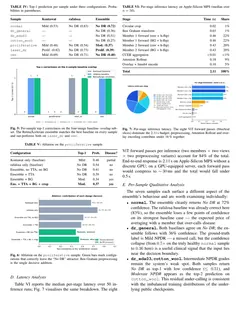
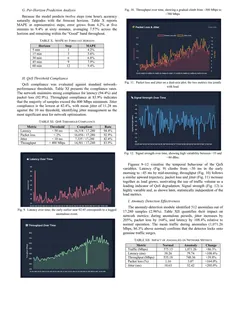
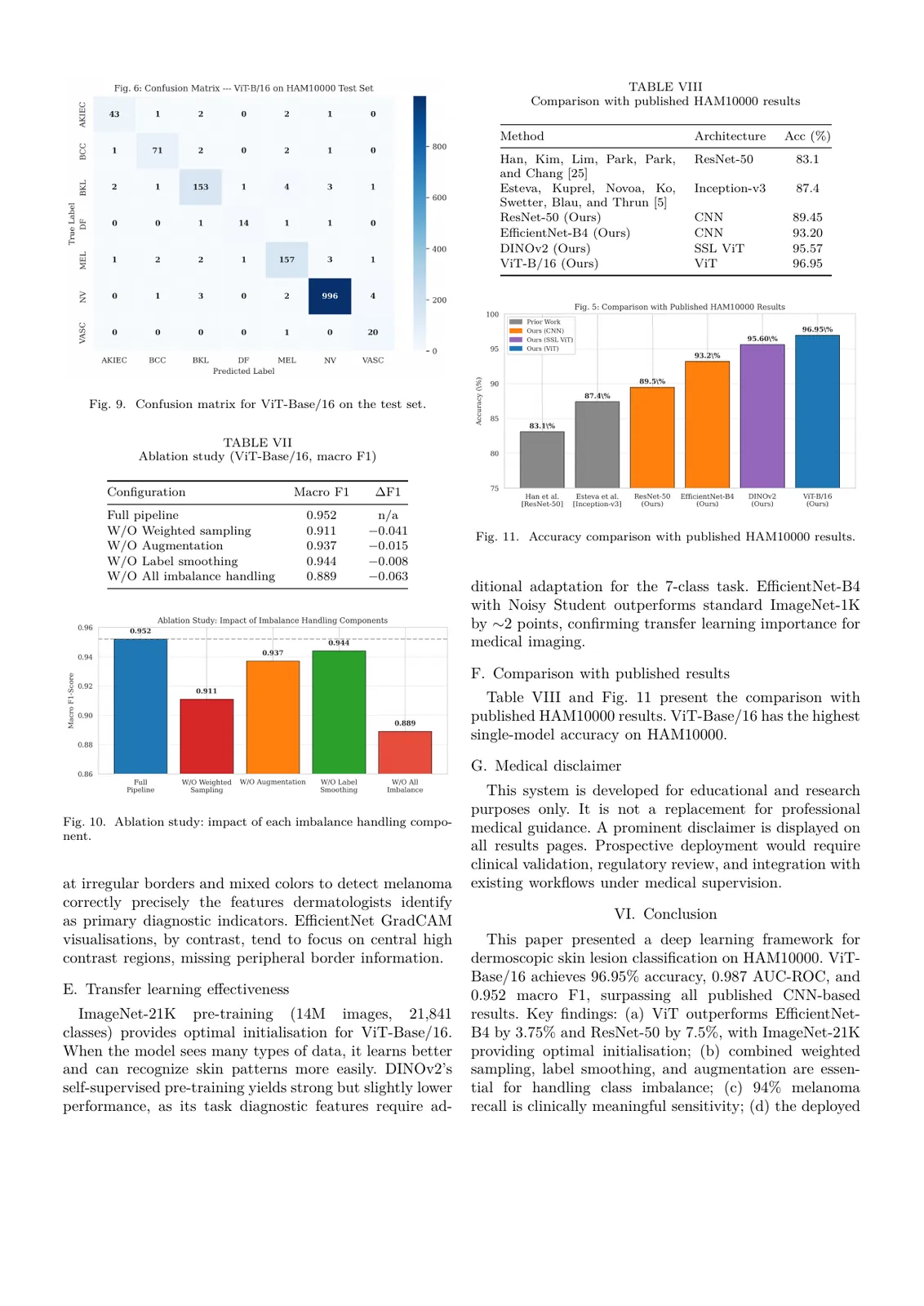
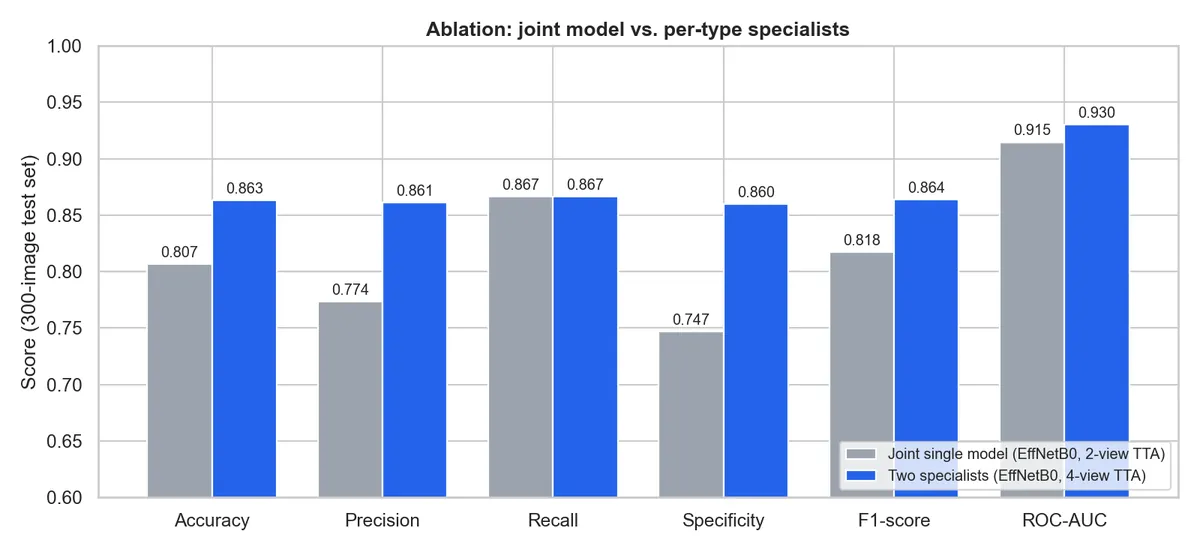
These come from M.Tech projects we delivered and wrote up as IEEE-format papers. They show what examiners look for: a fair comparison with other models, and an ablation that proves each design choice helped.
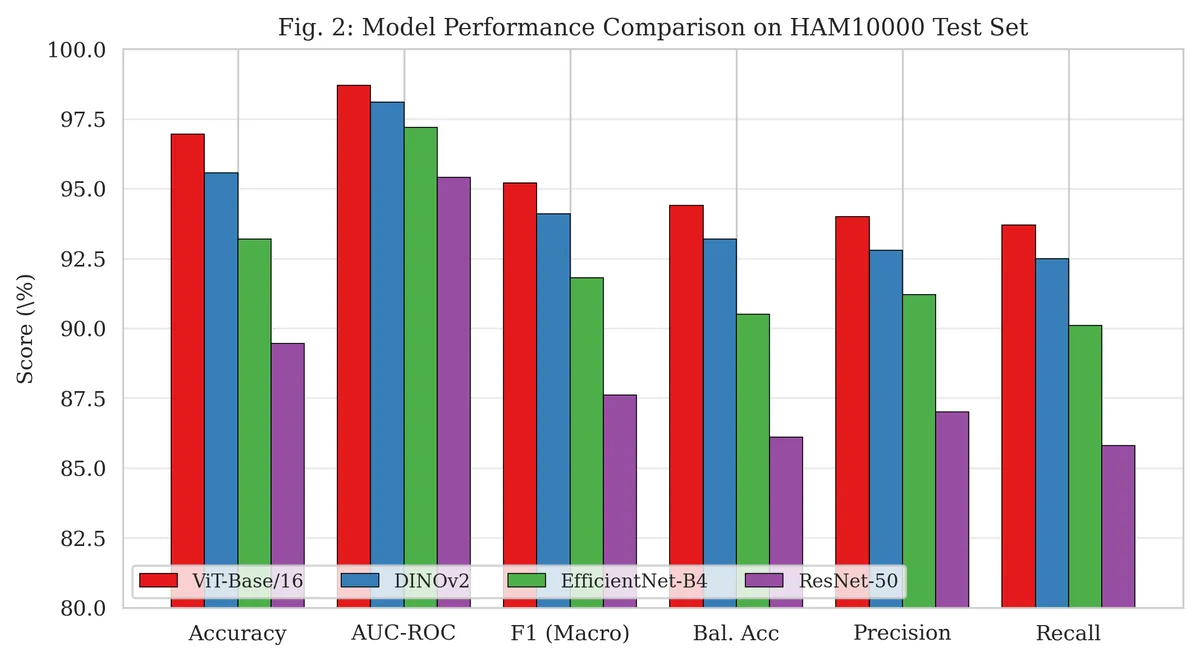
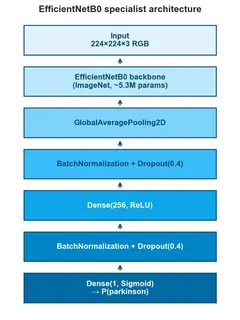
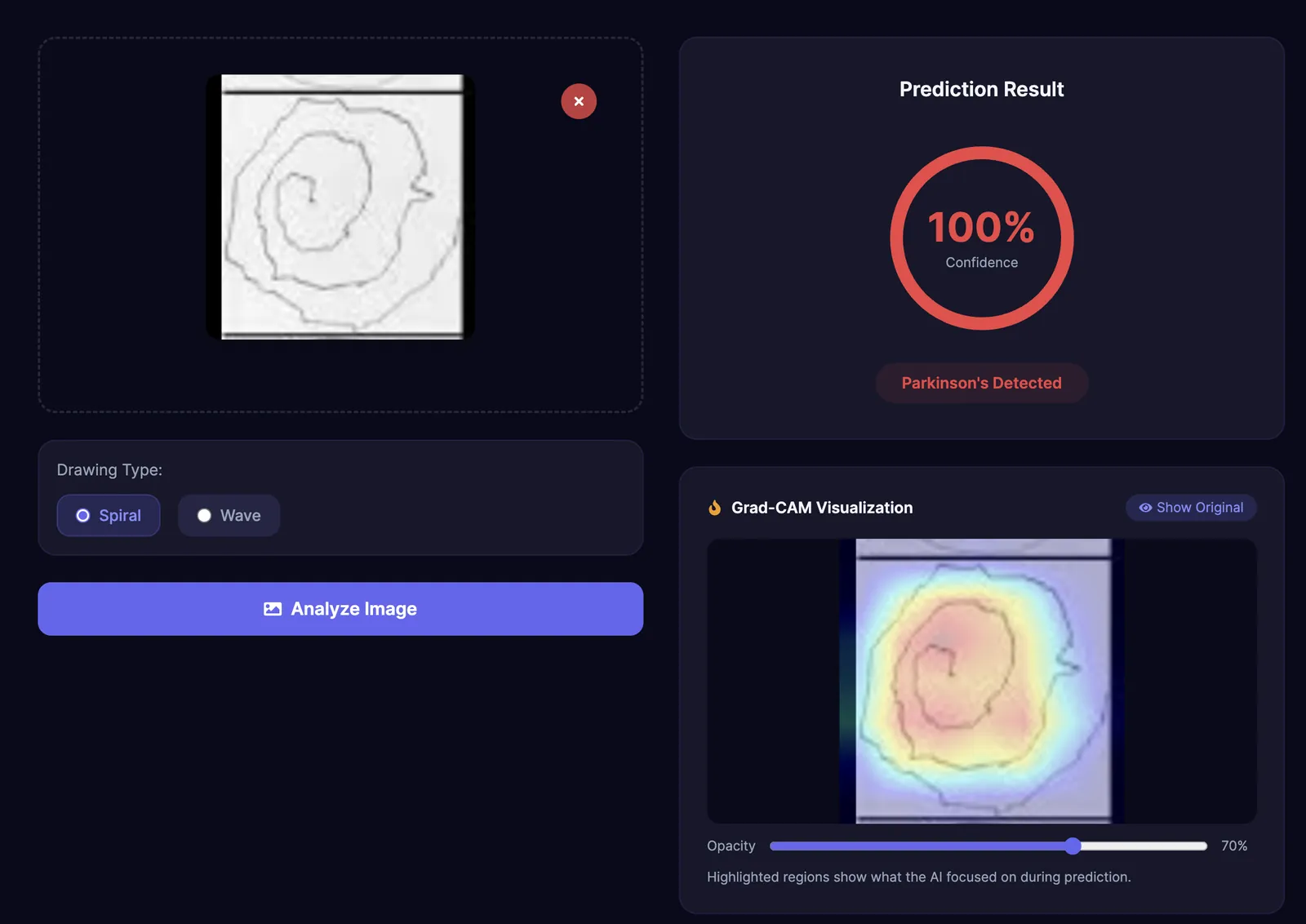
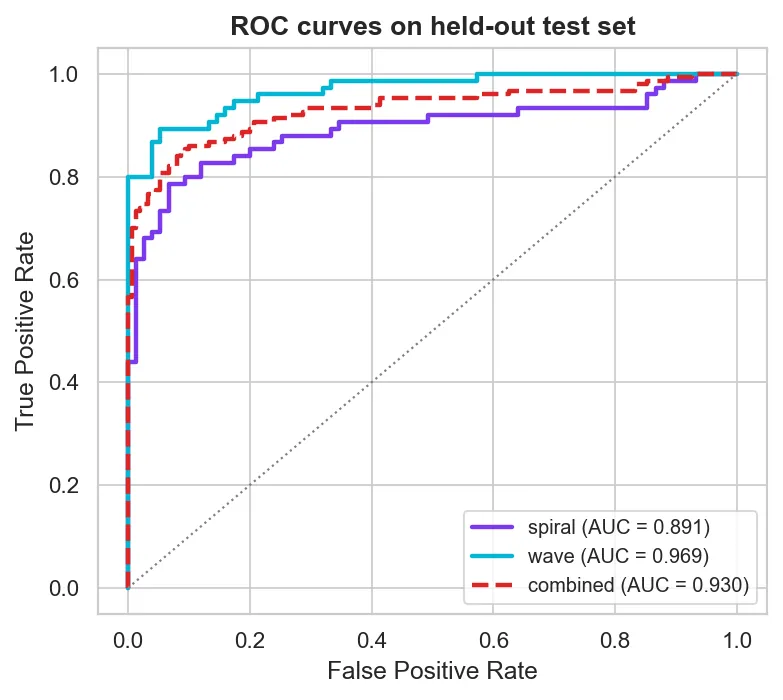
In the Parkinson’s detection project, the held-out test set gave ROC AUC 0.891 for the spiral model, 0.969 for the wave model and 0.930 combined. Read the case studies on Parkinson’s detection from spiral drawings, skin lesion classification using a Vision Transformer and the diabetic retinopathy detection project, or compare all the M.Tech AI projects we delivered.
What IEEE format means for the write-up
- A two-column layout from the official IEEE conference or journal template, in Word or LaTeX.
- An abstract and index terms, then numbered sections from introduction to conclusion.
- Table captions above tables, figure captions below figures.
- References numbered in the order they are cited: [1], [2], [3].
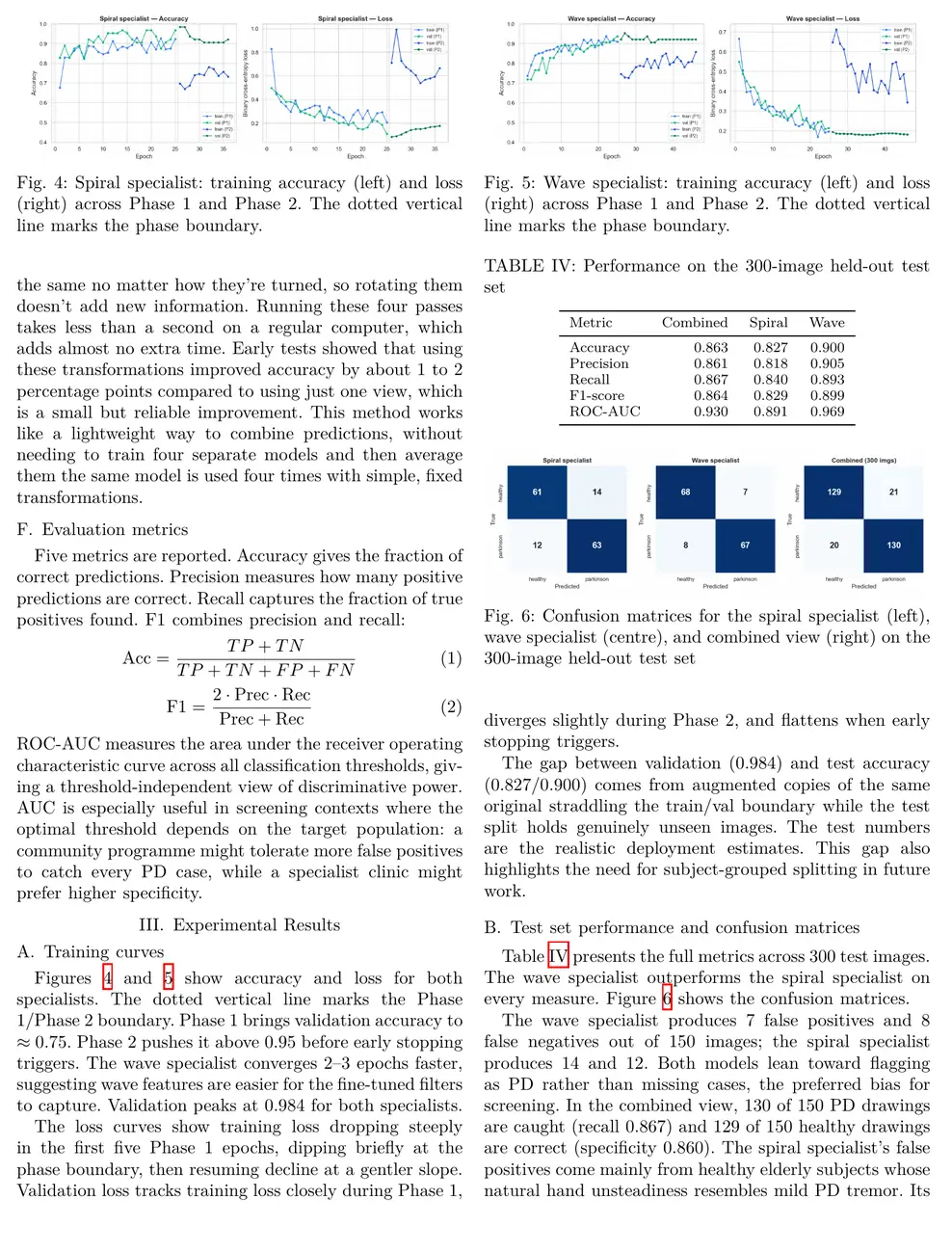
Shown with student, guide and institute details removed.
For choosing a journal or conference and replying to reviewers, see research paper writing and publication.
Frequently asked questions
How much does an IEEE project cost?
It depends on the base paper, the data and compute it needs, the extension, the write-up and your deadline. After the free consultation you get a fixed quote in writing before any work starts, and payment can be split into milestones.
How long does base paper implementation take?
A B.Tech reproduction typically takes 1–3 weeks. With an extension, results and an IEEE-format paper, M.Tech work usually takes 3–6 weeks. Very large datasets or models take longer, which is why the paper is checked before the quote.
Is implementing an IEEE paper plagiarism?
Not when it is cited. Reproducing a published method is normal practice: the base paper is credited in the code and the write-up, and the text is written for your project. A similarity report can be listed in the quote.
What if the base paper’s dataset isn’t available?
The closest public dataset is used instead, and the difference is stated in your report so the comparison stays fair. If there is no reasonable substitute, the feasibility check tells you before you pay, and you can pick another paper.
What if my guide wants a different extension?
Changes within the agreed scope are included. If your guide asks for a new direction that needs more work, it is quoted first, and nothing changes until you agree.
Is it allowed to get help with an IEEE project?
It depends on your institution, so check its rules. Use our work as guidance: understand the base paper, the code and the results, and prepare your own submission. The walkthrough prepares you to explain every step.