That improvement might be less area or power in a synthesis report, lower latency on a board, or a better bit error rate at the same SNR. You get the design files and code, the simulation and implementation reports, an M.Tech thesis in your university’s format, an IEEE-format paper and review PPTs, then a walkthrough so you can defend every waveform and table in your viva. It suits M.Tech and M.E. students in ECE, EXTC or EnTC, VLSI design and embedded systems.
What does an M.Tech ECE project include?
The same M.Tech standard as any branch, a base paper and a measured extension, but the evidence is different. In ECE it comes from waveforms, synthesis and timing reports, current measurements and BER curves.
| Track | What gets built | Evidence in your thesis | Typical tools |
|---|---|---|---|
| VLSI and digital design | RTL in Verilog or VHDL, a self-checking testbench, an FPGA implementation | Simulation waveforms, resource use (LUTs, flip-flops, DSP blocks), timing slack and maximum clock, power estimate | Vivado or Quartus with a simulator, or open tools; ASIC flows on your lab’s licence |
| Embedded systems | Firmware for an ARM Cortex-M or similar board, with an RTOS where the design needs one | Measured latency and jitter, memory use and current draw | C or C++ in the vendor’s IDE, FreeRTOS or Zephyr, on-chip timers or a logic analyser |
| Signal processing and communication | A simulation or software-defined radio prototype of the base method and your change | BER, MSE or accuracy against SNR for both methods, plus computational cost | MATLAB on your licence, Python with NumPy and SciPy, GNU Radio |
Whatever the track, the handover is the same: design files and code with a setup guide; the reports behind every number; Stage-I and Stage-II documents in your university’s format; an IEEE-format paper if your course or guide asks for one; review PPTs; and a walkthrough before your viva. The toolchain is agreed in the consultation, based on the tools and boards your lab actually has.
Can you do a VLSI project for M.Tech without paid tools?
For most FPGA-based work, yes. Vendor tools have free editions for the smaller devices on student boards, and open-source tools cover simulation and even a full ASIC flow on an open process kit.
| Stage | Free option | Licensed option |
|---|---|---|
| RTL simulation | Icarus Verilog with GTKWave, Verilator, or the Questa Altera FPGA Starter Edition (free licence file) | Full Questa, Xcelium or VCS in your college lab |
| FPGA synthesis and implementation | AMD Vivado’s free BASIC tier (from release 2026.1), which covers every 7-series part, such as the Artix-7 on a Basys 3 board or the Zynq-7000 on a PYNQ-Z2, with its simulator capped at 50,000 design instances; Altera Quartus Prime Lite for MAX, Cyclone IV, Cyclone V and Cyclone 10 LP devices | Paid Vivado or Quartus tiers for large devices |
| ASIC synthesis, place and route | Yosys and OpenROAD through LibreLane, the successor to OpenLane, on the open SkyWater SKY130 process kit | Cadence or Synopsys flows, only on your college’s licence |
| Analog and mixed-signal | ngspice, Xschem and Magic with SKY130 | Cadence Virtuoso, only on your college’s licence |
Checked on 2026-09-29 against AMD’s Vivado licensing tiers and the LibreLane project. Vendors change their free tiers, so check the current edition and device list before you fix your target board.
Compare like with like. An FPGA’s LUT count can’t be set against an ASIC area in square micrometres, and a result from a licensed 45 nm library can’t be matched on SKY130. If your base paper reports ASIC numbers from a commercial flow, the fair comparison runs on the same flow, which means your college lab.
What counts as a measurable extension in ECE?
Your change has to beat the base paper, or trade one metric for another on purpose, on the same test. Rebuild the baseline yourself on the same tool, device and data rather than copying its numbers from the paper. Our guide on how to select a base paper covers the reproduction check.
| Area | Example change | What you report |
|---|---|---|
| VLSI arithmetic | An approximate multiplier inside an image filter | Area, delay and power against the exact design, and the PSNR of the output |
| DSP hardware | Canonical signed digit coefficients or distributed arithmetic in an FIR filter | Resources, maximum clock, power and the frequency response |
| Channel coding | A lower-complexity polar or LDPC decoder schedule | Bit and frame error rate against Eb/N0, throughput and resources |
| Embedded | Moving a task from polling to interrupts under an RTOS | Worst-case latency, jitter, CPU load and current draw |
| Wireless | A learned channel estimator in an OFDM receiver | MSE and BER across SNR against LS and MMSE, and inference cost |
How does an M.Tech ECE project run, stage by stage?
Four steps, in this order. Nothing is paid before step 2 is agreed.
Free consultation
Share your specialisation, your base paper or area, the tools and boards your lab has, and your review dates.
Plan and fixed quote
Base paper, extension, toolchain, any hardware, deliverables and dates in writing, at one fixed price.
Build and review
Stage-I: literature, gap and design. Stage-II: implementation, reports and results. Your guide’s comments are worked in within the scope.
Handover and viva prep
Design files, reports, thesis and paper, then a walkthrough of every waveform, table and curve.
For the Stage-I and Stage-II documents themselves, our MTech thesis format guide sets out the chapters and the rules in published university manuals.
Our work is building, writing support, guidance and explanation. Use it to learn the design and prepare your own submission, cite the base paper, and check what your university allows.
Which MTech project topics suit ECE? 16 ideas
Starting points to take to your guide, each with a baseline to beat and a measure to report. For B.Tech-level ECE ideas, see final year projects for ECE; for sensor and cloud builds, see IoT project ideas.
These are suggestions to discuss with your guide. Our delivered work is in the case studies.
| Topic idea | Track | Baseline to beat | What you measure |
|---|---|---|---|
| Approximate multipliers for image filtering | VLSI | Exact array or Wallace-tree multiplier | Area, delay, power; PSNR and SSIM of the output |
| Low-power FIR filter with CSD coefficients | VLSI · DSP | Direct-form filter with full multipliers | LUTs, DSP blocks, maximum clock, power |
| Pipelined FFT for an OFDM receiver | VLSI · Communication | Radix-2 FFT from a published design | Throughput, latency, resources, SQNR against word length |
| INT8 accelerator for one CNN layer on an FPGA | VLSI · AI | The same layer on a CPU | Latency, operations per second, resources, accuracy lost to quantisation |
| Ascon lightweight cipher core | VLSI · Security | Published Ascon or AES-128 FPGA cores | Throughput per LUT, energy per bit, official test vectors passed |
| Small RISC-V core through an open ASIC flow | Physical design | The core’s default LibreLane run on SKY130 | Area, worst slack and power at the target clock |
| RTOS latency: FreeRTOS against Zephyr | Embedded | A bare-metal super-loop | Interrupt latency, jitter, RAM and flash |
| Keyword spotting with TinyML | Embedded · AI | The float model on the same microcontroller | Accuracy after 8-bit quantisation, latency, RAM |
| Duty-cycled wireless sensor node | Embedded · IoT | An always-on node | Measured current profile, estimated battery life |
| Post-quantum key exchange on IoT boards | Embedded · Security | ECDH | ML-KEM (Kyber) time, memory and energy per handshake |
| Deep learning for OFDM channel estimation | Communication | LS and MMSE estimators | MSE and BER across SNR |
| Automatic modulation classification | Communication · AI | A published CNN on the public RadioML data | Accuracy against SNR, model size |
| Spectrum sensing for cognitive radio | Communication · SDR | Energy detection | Detection probability against SNR at a fixed false-alarm rate |
| Direction-of-arrival estimation | Array processing | MUSIC and ESPRIT | RMSE against SNR and snapshots, run time |
| ECG arrhythmia classification | Biomedical signals | Results reported on intra-patient splits | Per-class sensitivity and positive predictivity on the stricter inter-patient MIT-BIH split |
| EEG seizure detection across patients | Biomedical signals | A patient-specific model | Sensitivity and false alarms per hour on public EEG data |
Have you delivered ECE projects like these?
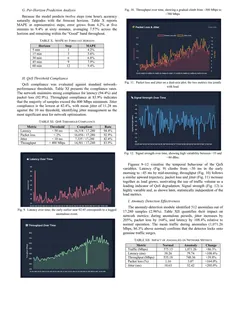
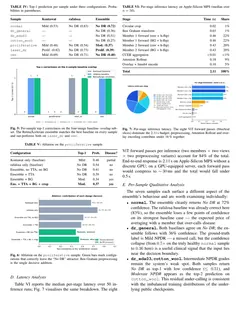
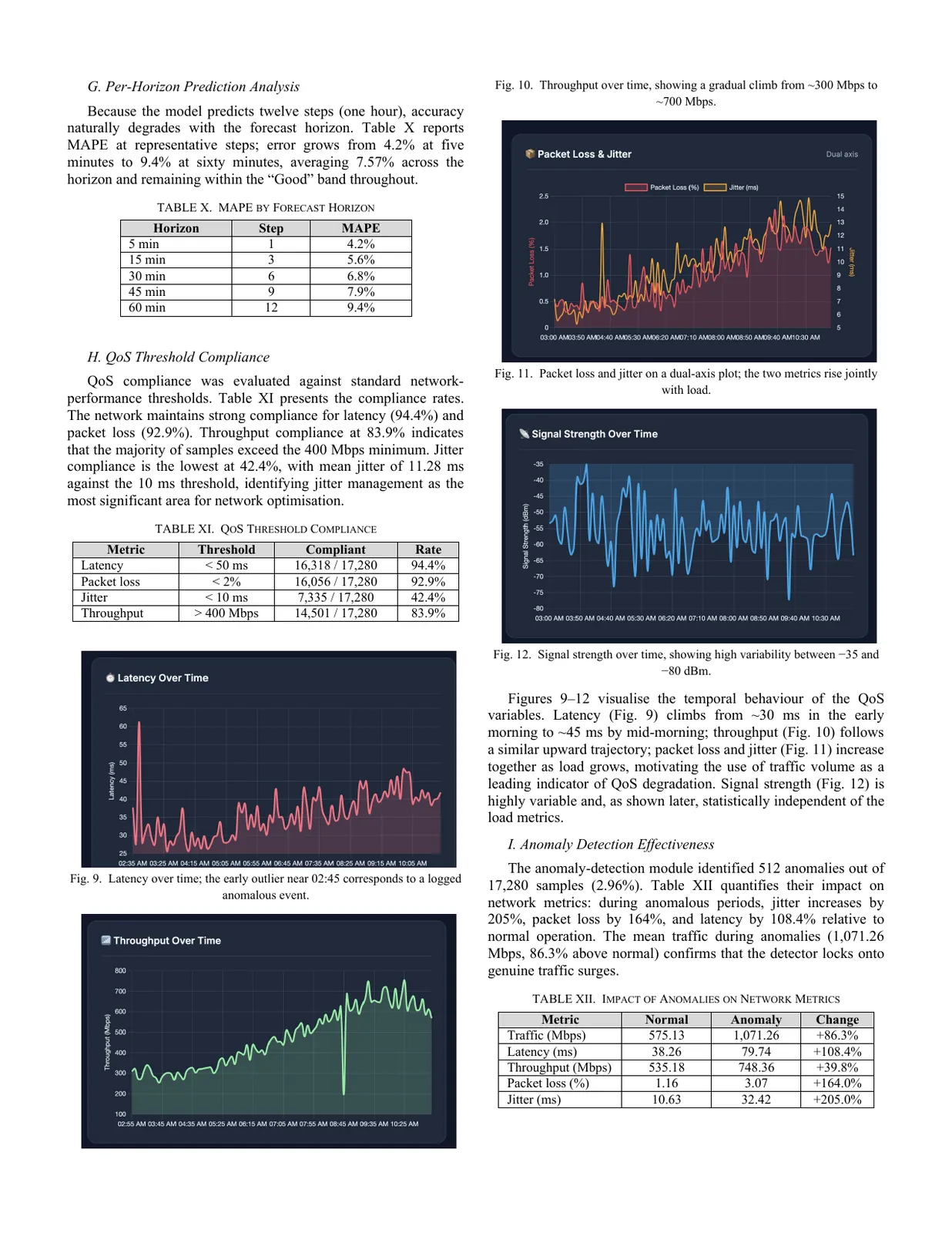
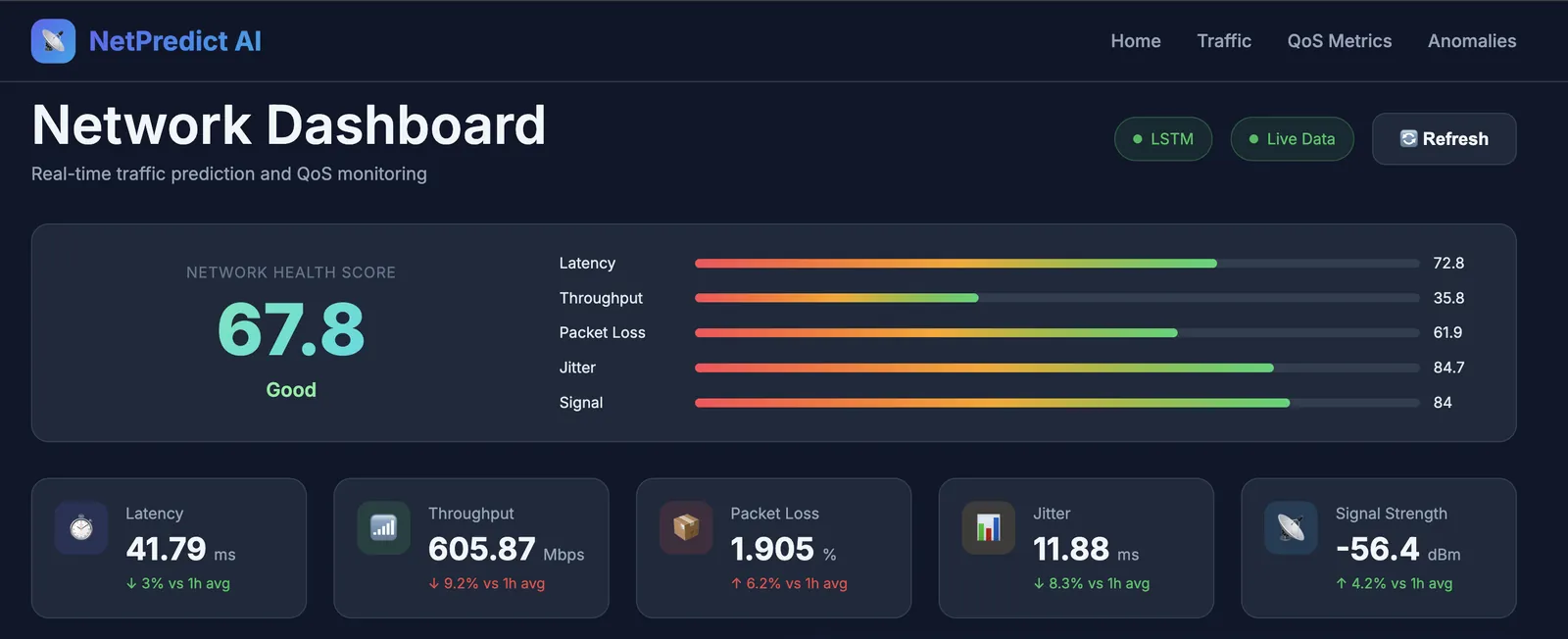
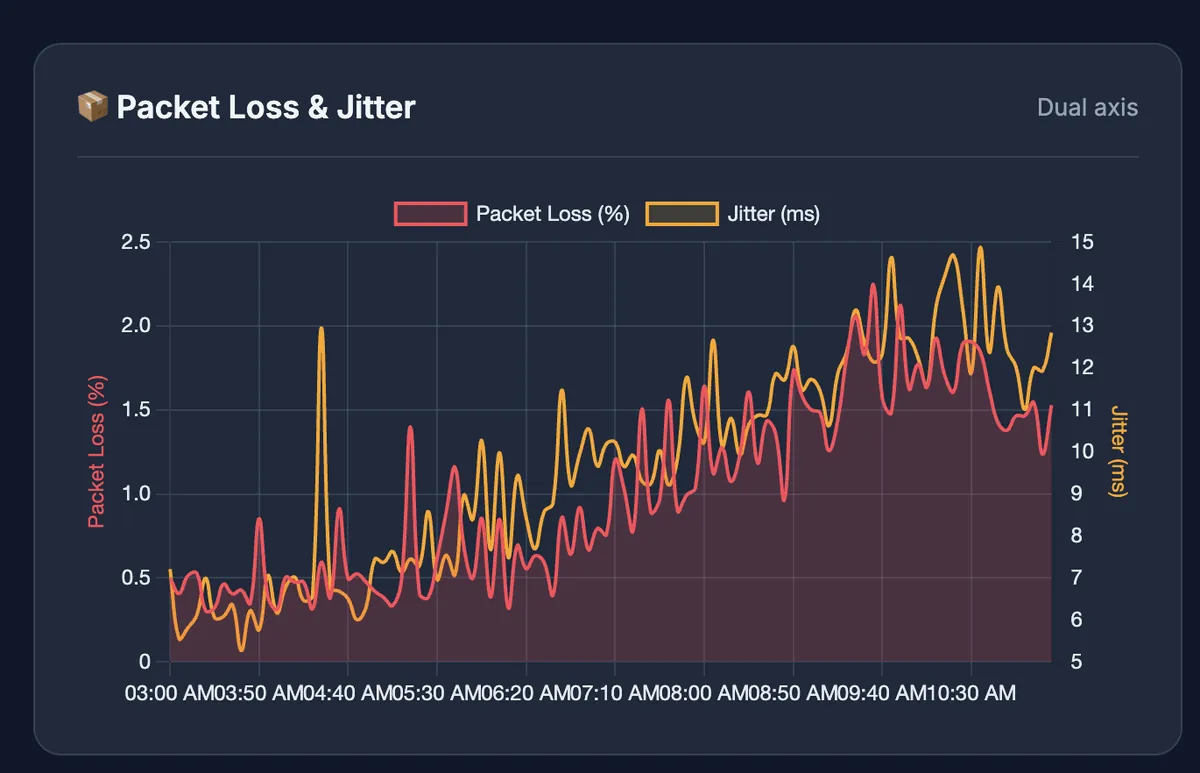
Not among the examples on this site. Our eight published case studies are M.Tech and M.E. projects in computing and AI. The closest to ECE is a network traffic forecasting M.Tech project, whose dashboard tracks latency, throughput, packet loss, jitter and signal strength, and whose IEEE-format paper reports the QoS results. They show the standard of thesis, paper and results we write to, not ECE hardware work.
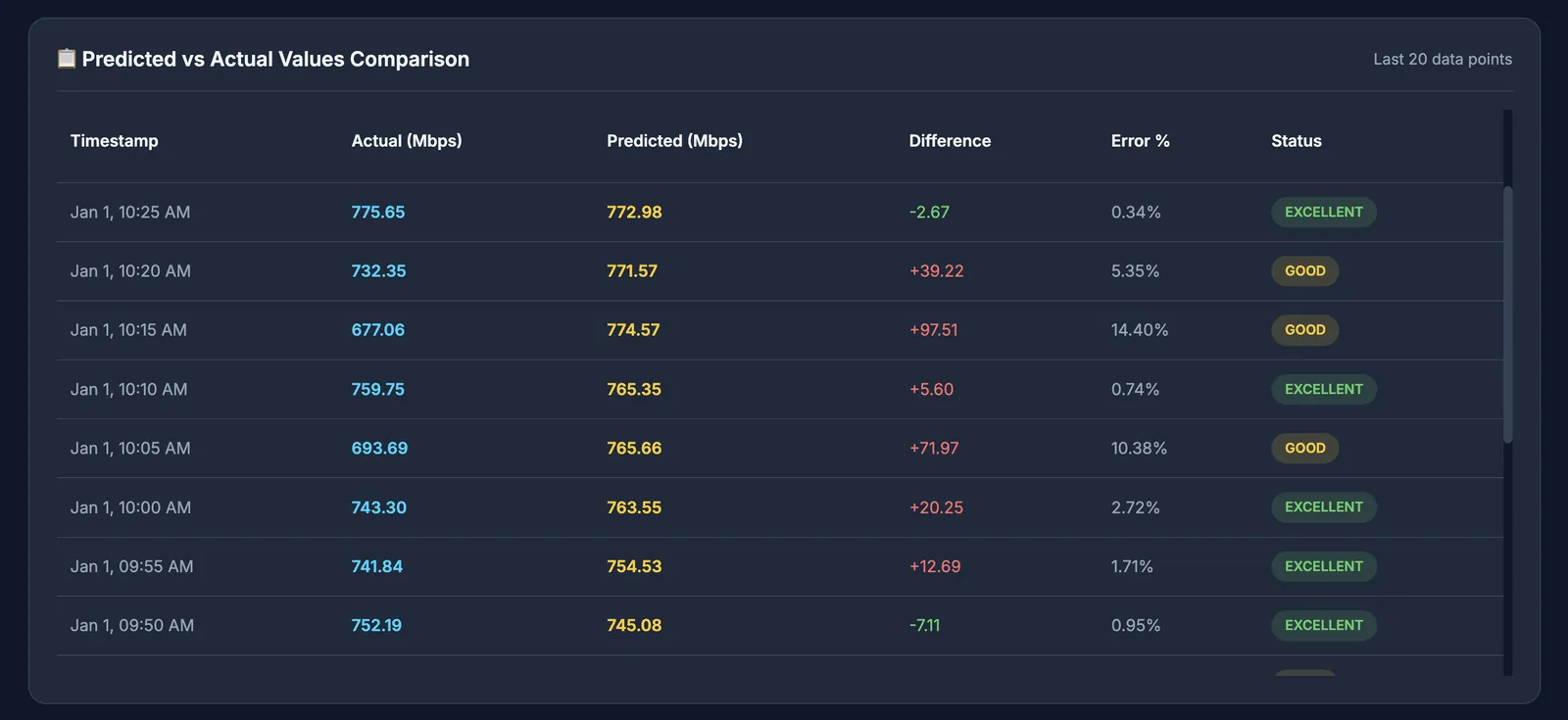
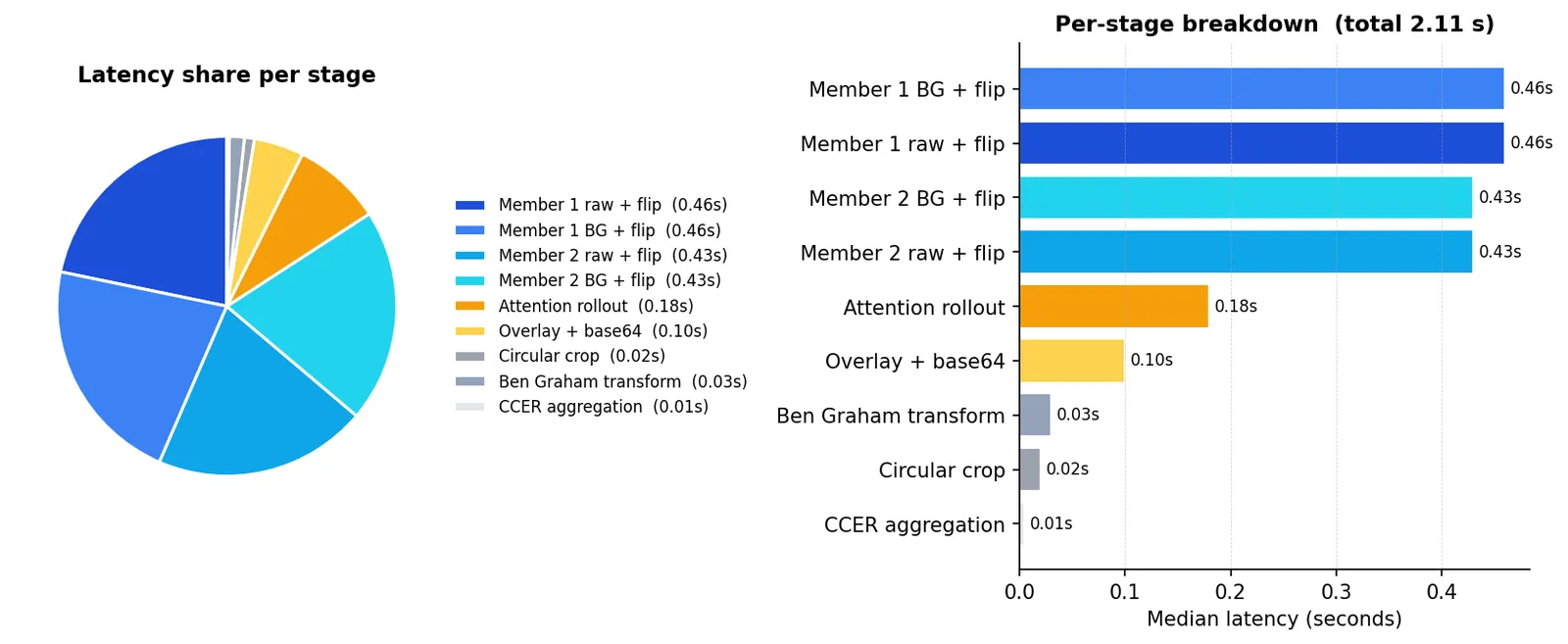
Delivered M.Tech work in computing and AI, shown with student, guide and institute details removed.
Where do M.Tech ECE base papers come from?
Mostly from IEEE Xplore. Journals that suit M.Tech work include IEEE Transactions on Very Large Scale Integration (VLSI) Systems, IEEE Transactions on Circuits and Systems I and II, IEEE Embedded Systems Letters, IEEE Transactions on Wireless Communications, IEEE Communications Letters and IEEE Transactions on Signal Processing. Conference papers from ISCAS, DATE and the International Conference on VLSI Design (VLSID), held in India, are shorter and narrower, which can make them easier to reproduce. If you need the whole project built around one published paper, see IEEE projects; for CSE and AI topics, see M.Tech projects for CSE and AI.
Frequently asked questions
Can I do an M.Tech VLSI project without paid tools?
Yes, for FPGA work and for ASIC work on an open process. Vivado’s free BASIC tier (from release 2026.1) covers 7-series FPGAs, Quartus Prime Lite covers Altera’s MAX, Cyclone IV, Cyclone V and Cyclone 10 LP devices, and Yosys, OpenROAD and LibreLane with the SKY130 kit take RTL to layout. If your base paper reports results from a commercial ASIC flow, the fair comparison needs the same flow, on your college lab’s licence.
How much novelty does an M.Tech ECE project need?
One improvement you can measure is usually the bar: less area, power or delay in a synthesis report, lower latency on a board, or a better error rate at the same SNR, against a baseline you rebuilt yourself on the same tool and data. Your guide sets the final standard, so agree the metric with them before Stage-I.
Where do I find a base paper for an M.Tech ECE project?
Mostly on IEEE Xplore. IEEE Transactions on VLSI Systems, IEEE Transactions on Circuits and Systems, IEEE Embedded Systems Letters and IEEE Communications Letters suit M.Tech work, and shorter conference papers from ISCAS, DATE or VLSID are often easier to reproduce. Pick a recent one whose method you can rebuild with the tools you have; how to select a base paper explains the checks.
What are the latest VLSI projects for M.Tech?
Areas with recent base papers include approximate arithmetic for image and AI workloads, low-power DSP filters, FPGA accelerators for quantised neural networks, lightweight ciphers such as Ascon, and RISC-V cores taken through open ASIC flows. The topic ideas on this page are ideas to discuss with your guide, not delivered projects.
Do I need MATLAB for a signal processing M.Tech project?
No. MATLAB is common where the college has a licence, but Python with NumPy and SciPy covers most simulations, and GNU Radio adds real-time software-defined radio. Use the tool your guide expects, and run the baseline and your method on the same one.
How much does an M.Tech ECE project cost?
It depends on the track, any hardware, the deliverables and your deadline. After the free consultation you get one fixed quote in writing before any work starts, and payment can be split into milestones.