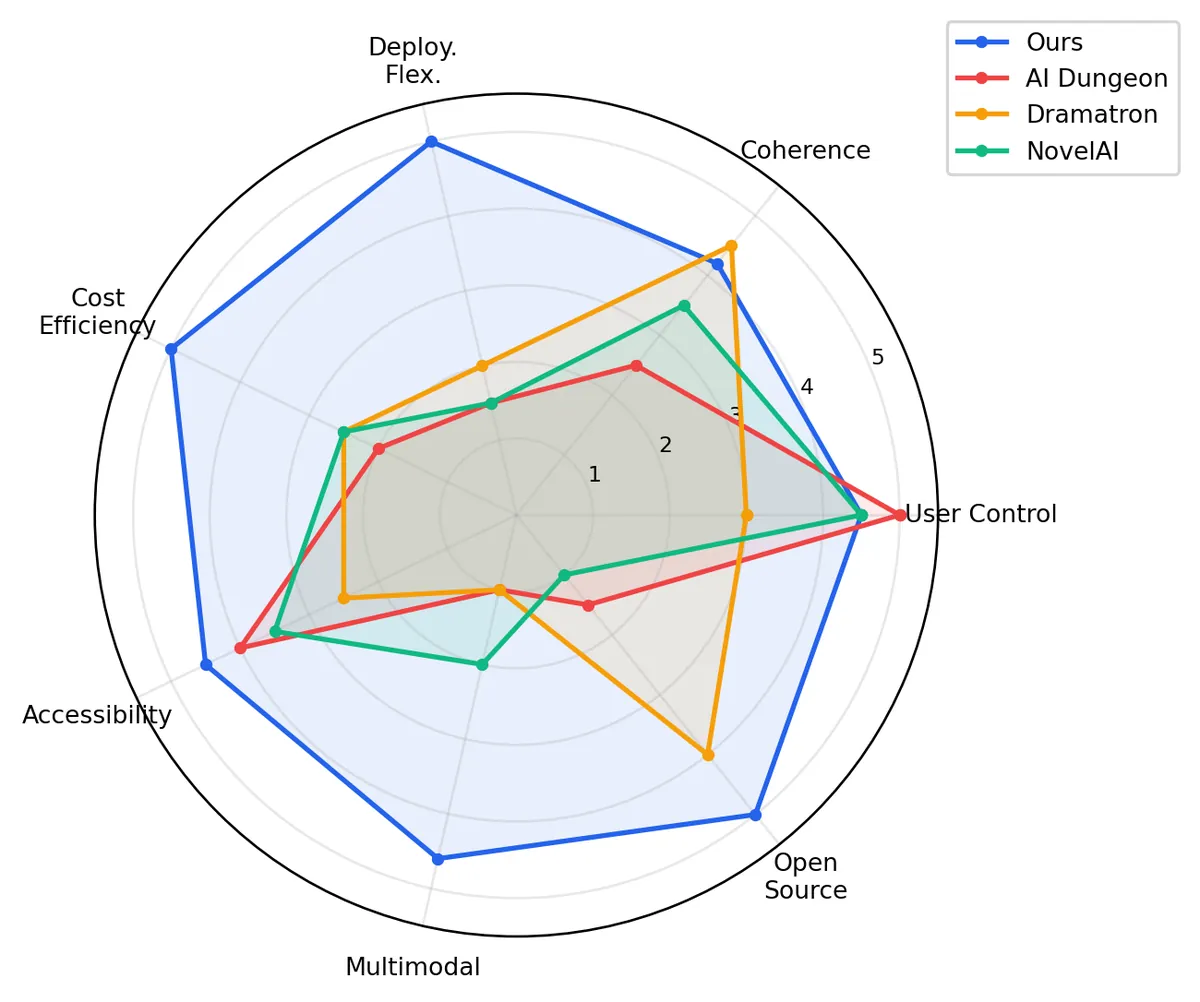
Below are 49 ideas for 2026–27 across classic machine learning, deep learning, computer vision, NLP, generative AI and LLMs, explainable AI and MLOps. Each lists a level (B.Tech mini, B.Tech major or M.Tech), a named dataset, the metric to report and a research extension, and where we have built one, a link to the delivered version.
How do you choose an AI project for final year?
Choosing between AI projects for final year starts with your level. A mini project proves you can train and evaluate one model; a major project ships a working system; an M.Tech project must improve on published work. Every machine learning and deep learning project idea on this page is tagged with the level it fits best.
| Level | Scope | Compute | Examiners look for |
|---|---|---|---|
| B.Tech mini | One model on one public dataset, in a notebook or a simple page | Laptop or free Colab | A clean split, one metric, an honest confusion matrix |
| B.Tech major | Data to model to app, with two or three models compared | Free cloud GPU | A live demo, a comparison table, report and PPT |
| M.Tech / M.E. | A base paper reproduced, plus one measured extension | A GPU for hours, not weeks | Same-data baseline, ablation, a thesis and often a paper |
Rules differ between universities. Your guide’s requirements come first.
Three checks save most projects: can you download the data today, is the split fair (by patient, speaker or user when one person has many rows), and is there a simple baseline to beat? For CSE projects outside AI, see our final year projects for CSE.
In an AI&DS or AIML branch? Every idea here fits B.Tech programmes in Artificial Intelligence and Data Science or AI and Machine Learning. Because your course already covers the basics, start from the B.Tech major rows and add an explainable AI or MLOps angle, which shows engineering beyond a notebook.
Where do you find datasets for AI projects?
- UCI Machine Learning Repository: small, well-documented tabular and sensor sets.
- Kaggle Datasets and past competitions, which come with a fixed metric.
- Hugging Face Datasets: most NLP, speech and LLM benchmarks.
- PhysioNet: ECG, EEG and clinical signals; some sets need credentialed access.
- AI4Bharat: Indian-language text and speech resources.
- Open Government Data Platform India: public data for local problems.
The 49 ideas below are suggestions to discuss with your guide. Where a row says “see a delivered version”, that links to a separate project we built; our delivered work is in the case studies.
Which machine learning project ideas work on tabular data?
Customer, hospital and sensor records are tables, and gradient-boosted trees are usually the model to beat on them. These seven ideas reward careful features and fair evaluation over big networks.
| Idea | Level | Dataset | Metric | Research extension |
|---|---|---|---|---|
| Churn prediction with a cost-based threshold | B.Tech mini | Telco Customer Churn (IBM sample, on Kaggle) | PR-AUC, recall on churners | Set the threshold from retention cost, not 0.5; explain each customer with SHAP |
| Term-deposit prediction without leakage | B.Tech mini | Bank Marketing (UCI) | ROC-AUC, lift in the top 10% | Show how the call-duration column inflates scores; the dataset notes say to drop it for a realistic model |
| 30-day hospital readmission | B.Tech major | Diabetes 130-US Hospitals (UCI) | ROC-AUC, Brier score | Split by patient, not by visit, and calibrate the probabilities |
| Customer segmentation | B.Tech mini | Online Retail II (UCI) | Silhouette score, stability across months | RFM features; k-means against Gaussian mixtures and HDBSCAN |
| Air-quality forecasting for Indian cities | B.Tech major | Air Quality Data in India (Kaggle, compiled from CPCB) | MAE, RMSE per city | Gradient boosting against an LSTM; test on a city the model never saw |
| Machine failure prediction | B.Tech major | AI4I 2020 Predictive Maintenance (UCI) | Recall and F1 on the failure class | SMOTE against class weights, and name the failure mode. See a delivered M.E. / M.Tech version |
| Boosted trees versus deep tabular models | M.Tech | OpenML-CC18 benchmark suite | Mean rank across datasets, Friedman test | XGBoost, LightGBM and CatBoost against FT-Transformer or TabPFN |
What are good deep learning project ideas beyond images?
Signals, audio, time series and graphs make strong deep learning projects for final year and M.Tech, because simple baselines exist and the data is public.
| Idea | Level | Dataset | Metric | Research extension |
|---|---|---|---|---|
| 12-lead ECG classification | M.Tech | PTB-XL (PhysioNet) | Macro ROC-AUC on the recommended test fold | A single-lead model for wearables, and what accuracy it costs |
| Environmental sound classification | B.Tech major | ESC-50 | Accuracy over its 5 official folds | Pretrained audio embeddings against a CNN on log-mel spectrograms |
| Speech emotion recognition | B.Tech major | RAVDESS and CREMA-D | Unweighted accuracy, speaker-independent split | Train on one corpus, test on the other |
| Human activity recognition | B.Tech mini | Human Activity Recognition Using Smartphones (UCI) | Macro-F1 on unseen volunteers | A 1D CNN on raw signals against the provided handcrafted features |
| Electricity load forecasting | M.Tech | ElectricityLoadDiagrams 2011–2014 (UCI) | MAE and MASE per horizon | A trained LSTM against a zero-shot pretrained forecaster such as Chronos |
| Traffic speed forecasting on road graphs | M.Tech | METR-LA and PEMS-BAY | MAE, RMSE, MAPE at 15, 30 and 60 min | A graph neural network against an LSTM, with sensors removed at test time |
| Molecule property prediction | M.Tech | ogbg-molhiv (Open Graph Benchmark) | ROC-AUC on the scaffold split | GIN against GCN, then test whether a pretrained molecular encoder helps |
Which computer vision projects suit final year?
Vision projects demo well, and pretrained CNNs or Vision Transformers train on a free GPU. The strongest ones test on data the model has not seen, not just a random split.
| Idea | Level | Dataset | Metric | Research extension |
|---|---|---|---|---|
| Plant disease detection that works in the field | B.Tech major | PlantVillage to train, PlantDoc to test | Macro-F1 | Measure the lab-to-field drop, then reduce it with augmentation or field photos |
| Road damage and pothole detection | B.Tech major | RDD2022 (includes Indian roads) | mAP@0.5 | Run a YOLO model on a phone or Jetson and report frames per second |
| Segmentation of Indian road scenes | M.Tech | India Driving Dataset (IDD) | Mean IoU | Train on Cityscapes, test on IDD, then adapt with a few labels |
| Multi-label chest X-ray screening | M.Tech | NIH ChestX-ray14 | Per-class AUROC, patient-wise split | Check whether Grad-CAM points at the lungs or at shortcuts such as text markers |
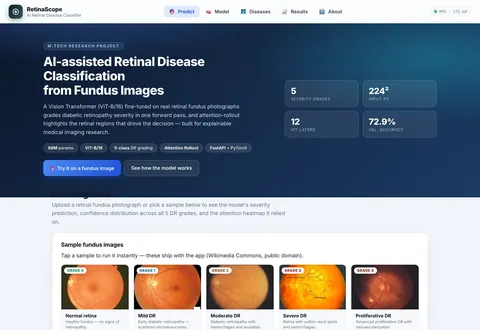
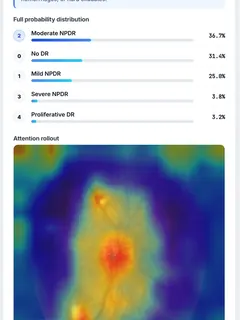
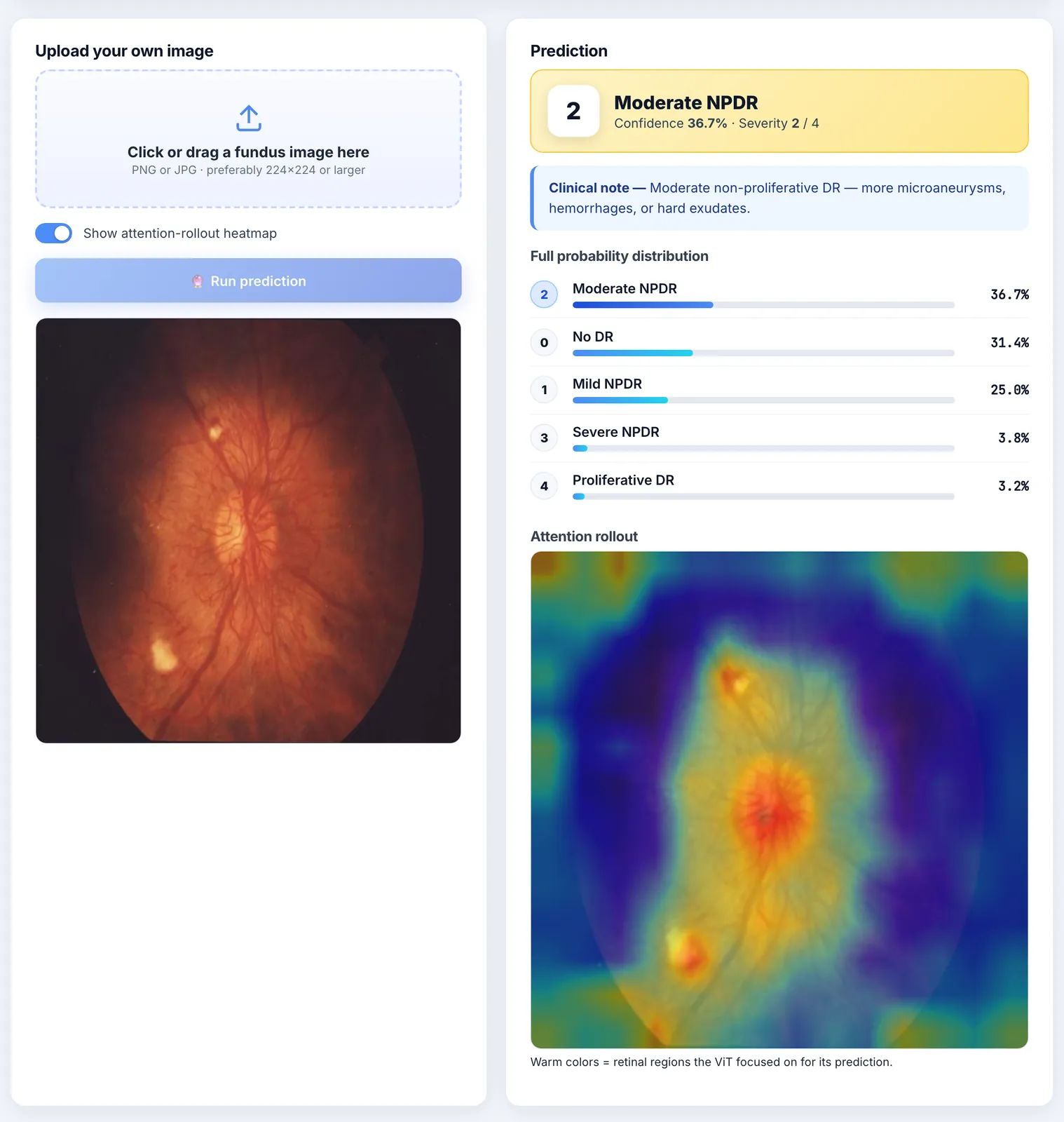
| Diabetic retinopathy grading | B.Tech major | APTOS 2019 Blindness Detection (Kaggle) | Quadratic weighted kappa | Ensemble pretrained models and add attention heatmaps. See a delivered M.Tech version |
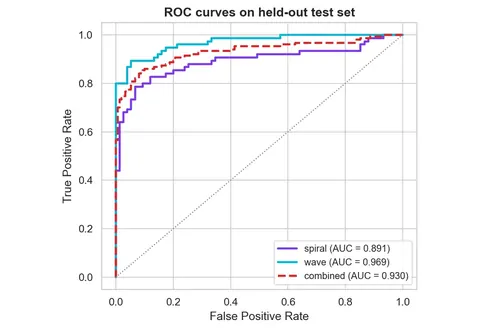
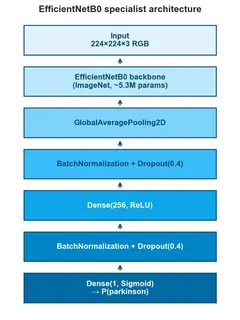
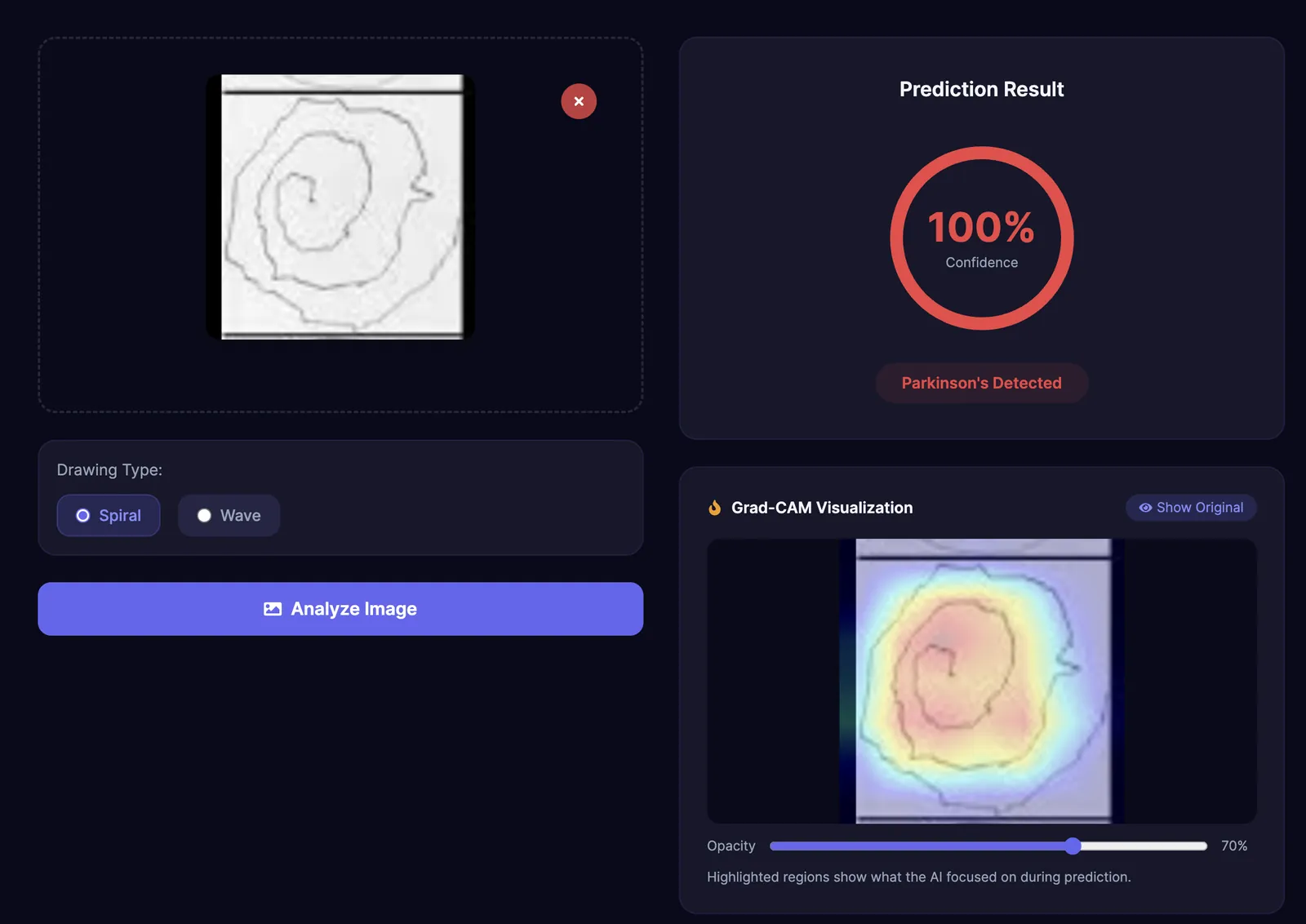
| Parkinson’s screening from drawings | B.Tech major | Parkinson’s Drawings (Kaggle: spirals and waves) | ROC-AUC, sensitivity | One model per drawing type, with Grad-CAM. See a delivered M.Tech version |
| Handwritten Devanagari recognition | B.Tech mini | Devanagari Handwritten Character Dataset (UCI) | Accuracy, per-class confusion | Test on your own handwriting, then move from characters to words |
| Skin lesion classification | M.Tech | HAM10000 | Balanced accuracy, macro-F1 | A Vision Transformer against CNNs, with class-imbalance handling. See a delivered M.Tech version |
Which NLP project ideas use Indian-language data?
Indian languages and code-mixed text give an NLP project a local angle that generic sentiment projects lack. Speech counts here too.
| Idea | Level | Dataset | Metric | Research extension |
|---|---|---|---|---|
| Hindi-English code-mixed sentiment | B.Tech major | SemEval-2020 Task 9 (SentiMix, Hinglish) | Macro-F1 | MuRIL or IndicBERT against XLM-R, with and without transliteration |
| Fact-checking claims against evidence | M.Tech | FEVER | Label accuracy, FEVER score | Swap the retriever for dense embeddings and measure evidence recall |
| Hindi news summarisation | B.Tech major | XL-Sum (Hindi split) | ROUGE-1, ROUGE-2, ROUGE-L | Fine-tune a small mT5, then flag summary facts not in the article |
| English to Indian-language translation | M.Tech | FLORES-200 devtest (now maintained as FLORES+) | chrF++ | Fine-tune on one domain, such as health notices, and measure the gain |
| Named-entity recognition for Indian languages | M.Tech | Naamapadam (AI4Bharat, 11 languages) | Entity-level F1 | Train on Hindi, test zero-shot on Marathi or Bengali |
| Chatbot intent detection | B.Tech mini | CLINC150 | In-scope accuracy, out-of-scope recall | Reject questions the bot cannot handle instead of guessing |
| Toxic comment classification | B.Tech major | Jigsaw Toxic Comment Classification (Kaggle) | Mean column-wise ROC-AUC | Measure bias against identity words with the Jigsaw Unintended Bias data |
| Hindi speech recognition | M.Tech | Mozilla Common Voice (Hindi) | Word error rate (WER) | Fine-tune Whisper small and compare with the zero-shot model |
What generative AI and LLM projects can students build in 2026?
RAG, agents and small-model fine-tuning are the live topics. A chat window is a demo, not a result, so each idea names a benchmark and a number to report. Most run on open models without a paid API.
| Idea | Level | Dataset | Metric | Research extension |
|---|---|---|---|---|
| RAG for multi-hop questions | M.Tech | HotpotQA | Exact match, F1, retrieval recall@k | BM25, dense and hybrid retrieval compared, then a re-ranker |
| Hallucination detector for RAG answers | M.Tech | RAGTruth | Span-level F1 | A small NLI model against an LLM judge, on accuracy and cost |
| Natural-language to SQL agent | B.Tech major | Spider | Execution accuracy | Let the agent run its query, read the error and retry; count the fixes |
| Tool-calling agent on a small open model | M.Tech | Berkeley Function Calling Leaderboard (BFCL) | Call accuracy by category | Constrained JSON decoding against plain prompting |
| QLoRA fine-tuning for maths word problems | B.Tech major | GSM8K | Final-answer accuracy | 4-bit QLoRA against LoRA and a prompted larger model, on accuracy and GPU memory |
| LLM-labelled data for a small classifier | M.Tech | AG News | Accuracy against human labels, cost per 1,000 labels | Active learning to choose which examples the LLM labels |
| Consistent characters across generated scenes | M.Tech | DreamBooth dataset (30 subjects) | DINO and CLIP-I for the subject, CLIP-T for the prompt | LoRA against anchor-image conditioning for multi-scene stories. See a delivered M.Tech version |
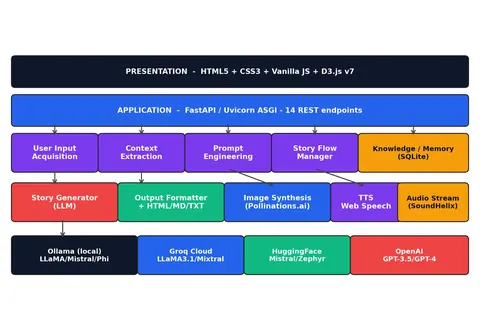
| Interactive story generator with memory | B.Tech major | WritingPrompts | Human coherence ratings, consistency-check pass rate | Track characters and plot threads between turns. See a delivered M.Tech version |
| Visual question answering for blind users | M.Tech | VizWiz-VQA | VQA accuracy, answerability F1 | Fine-tune a small vision-language model that says “unanswerable” when unsure |
Which explainable AI projects stand out?
Explainable AI (XAI) turns a plain classifier into research: you test whether an explanation is faithful, stable or fair, not just draw a heatmap.
| Idea | Level | Dataset | Metric | Research extension |
|---|---|---|---|---|
| Do saliency maps show what the model uses? | M.Tech | CUB-200-2011 (with part locations) | Deletion and insertion AUC, pointing game | Grad-CAM, Integrated Gradients and attention rollout compared |
| SHAP versus LIME stability | B.Tech major | Adult / Census Income (UCI) | Rank correlation across runs | Add random features and check that both methods rank them last |
| Fairness audit of credit scoring | B.Tech major | Default of Credit Card Clients (UCI) | ROC-AUC, equal-opportunity difference | Mitigate with Fairlearn and report the accuracy cost |
| Counterfactual explanations for loans | M.Tech | Statlog German Credit (UCI) | Validity, proximity, sparsity | DiCE limited to features a person can actually change |
| Concept-based skin lesion explanations | M.Tech | Derm7pt (seven-point checklist) | Concept accuracy, diagnosis accuracy | A concept bottleneck model that a clinician can correct |
What MLOps project ideas show real engineering?
MLOps projects suit students who like systems more than models: the result is a pipeline that keeps a model fast, current and safe to deploy.
| Idea | Level | Dataset | Metric | Research extension |
|---|---|---|---|---|
| Drift monitoring with automatic retraining | B.Tech major | NYC TLC Trip Record Data (monthly files) | PSI or KS drift score, MAE over time | Retrain on a drift trigger against a fixed schedule, tracked in MLflow |
| Faster model serving on a CPU | M.Tech | Imagenette (ImageNet subset) | p95 latency, throughput, accuracy drop | ONNX Runtime and INT8 quantisation, then in-browser inference. See a delivered M.E. version |
| CI/CD pipeline for a model | B.Tech major | Bike Sharing (UCI) | RMSE, share of injected data faults caught | Data-validation tests that block a bad model from deploying |
| Federated learning on skewed data | M.Tech | FEMNIST (LEAF benchmark) | Accuracy against communication rounds | FedAvg against FedProx as client data grows more skewed |
| Cost and latency monitoring for an LLM app | M.Tech | MS MARCO queries | p95 latency, tokens per answer, cache hit rate | Semantic caching, and how often a cached answer is wrong |
How do you turn an idea into a project your guide approves?
Download the data first
Check that it downloads, its licence allows your use and it fits your compute.
Fix the split and the metric
Use the official or a subject-wise split, and the metric in the table, before any tuning.
Build the baseline
A simple model, or the base paper’s method for M.Tech.
Add one change at a time
The research extension is your contribution; an ablation shows what helped.
Write it up and rehearse the viva
Report or thesis, PPT, and a paper if your guide wants one.
Starting from a published paper? See how to select a base paper, IEEE base paper implementation and M.Tech projects. Need a paper at the end? See research paper writing and publication. Planning a PhD after that? See our PhD research topics in AI and machine learning.
Our work is building, writing support, guidance and explanation. Use it to learn the method, cite every dataset and paper, and check what your institution allows.
What does a delivered M.Tech AI project look like?
Here are four of the M.Tech AI projects we delivered, all linked from the tables above. Each came with working software, a thesis or report and an IEEE-format paper.
- Parkinson’s disease detection using deep learning: two EfficientNetB0 models with Grad-CAM; ROC-AUC 0.930 on a 300-image test set.
- Diabetic retinopathy detection using deep learning: two public ViT-B/16 models ensembled without retraining, with attention rollout.
- Interactive storytelling AI using LLMs: guided questions, illustrations and narration, on local or hosted models.
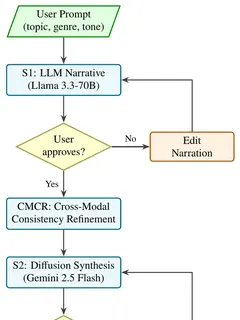
- Text to video generator project (AI video storyteller): LLM script, diffusion scenes and text-to-speech combined into a narrated 1080p video.
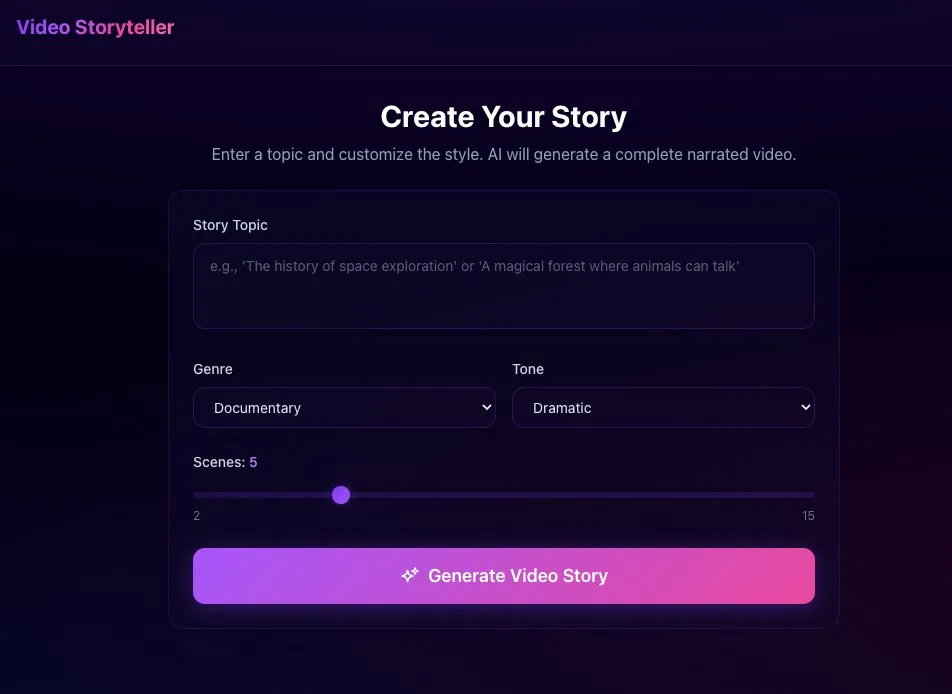
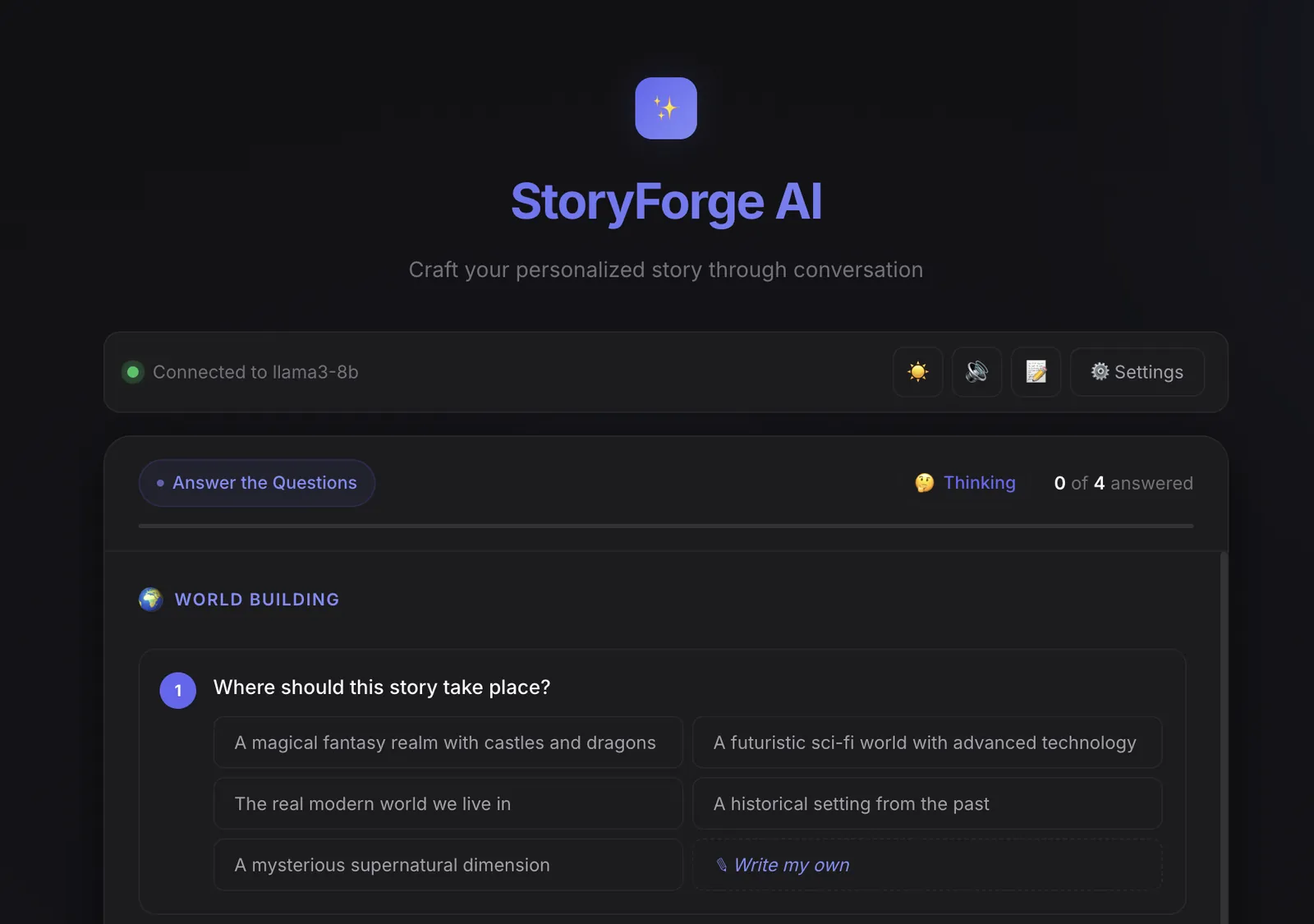
Shown with student, guide and institute details removed.
Looking beyond AI? See 53 final year project ideas for CSE across eight domains, IoT project ideas with the hardware named, or all our final year project ideas, sorted by branch.
Frequently asked questions
Which AI project is best for a final-year B.Tech student?
One that uses a public dataset you can download today, trains on a laptop or a free cloud GPU, and ends in a working demo. Image and text classifiers with an explanation screen are easy to demonstrate. RAG chatbots are popular in 2026, but they need a measured evaluation, not just a chat window.
Should I choose machine learning or deep learning for my project?
Let the data decide. On tabular data such as customer or sensor records, gradient boosting is usually strong and easier to explain. For images, audio and text, fine-tune a pretrained deep learning model. Many good projects compare one of each on the same test set.
Can I build an LLM project without a paid API?
Yes. Small open-weight models run locally through tools such as Ollama or on a free cloud GPU, and QLoRA fine-tunes a small model in 4-bit precision. Our delivered interactive storytelling project can use a local Ollama model as well as hosted APIs.
What makes an AI project good enough for M.Tech?
A contribution you can measure. Reproduce a recent base paper on the same data, add one change, and prove it with an ablation study and, ideally, a test on a second dataset. The M.Tech ideas above are scoped that way.
Where do I find datasets for machine learning projects?
Start with the UCI Machine Learning Repository for tabular and sensor data, Kaggle for datasets that come with a fixed metric, Hugging Face Datasets for text and speech, PhysioNet for medical signals, AI4Bharat for Indian languages and data.gov.in for local problems. Check each dataset’s licence and download it before you commit to the idea.
Can you build one of these ideas with me?
Yes. We build B.Tech and M.Tech AI projects with code, results, report and PPT, and walk you through the method for your viva. Share the idea, your level and your deadline for a free consultation, and follow your institution's rules on outside help.