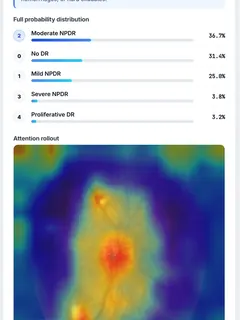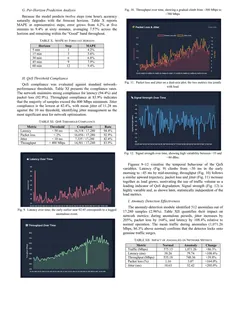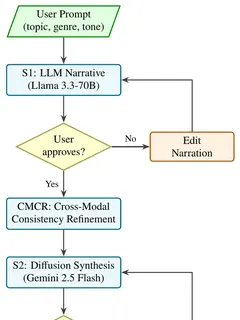
Each card is one sentence of problem and one of output, which is how a dissertation abstract begins. The details under each card name a starting point, not a specific paper, because you and your guide should choose the base paper together.
- 20 M.Tech project ideas, each with a research problem and an expected output.
- Five groups: vision (5), language and LLMs (4), data and forecasting (4), security and systems (3), and ECE (4).
- Every idea names what to measure, because an M.Tech result is a comparison, not a demo.
- The recipe: reproduce a base paper, change one thing, and measure the difference.
- Six ideas build on a full guide that covers the dataset, steps and metrics.
Which M.Tech project ideas come with a problem and an output?
All 20 below do. Most use public data and fit a single GPU or a free cloud notebook, and each has a comparison you can report in a results table.
Every card below is an idea to discuss with your guide. Our 8 delivered case studies are M.Tech and M.E. projects, each shown with its real paper pages, screens and results.
Computer vision and imaging
- Topic idea · CSE · AIUnknown class detection for an image classifierProblem: A deployed classifier gives a confident label to inputs from classes it never saw in training.Output: A scoring rule and threshold that flag such inputs, compared with the softmax, ODIN and energy baselines on two unseen datasets.
Where to start, and what to measure
Start from: the maximum softmax probability baseline and one recent method, with CIFAR-10 as the known classes
Measure: AUROC and the false positive rate at a 95% true positive rate, with accuracy on known classes unchanged. Read the unknown class detection guide. - Topic idea · CSE · AIDefect detection from a handful of good samplesProblem: A new product line has only a few photos of good parts and none of defects.Output: An anomaly detector whose accuracy is reported as the number of good images falls, with heatmaps and memory use.
Where to start, and what to measure
Start from: PatchCore on MVTec AD, then cut the training images in steps
Measure: image-level and pixel-level AUROC against the number of training images, and time per image. Read the defect detection guide. - Topic idea · CSE · AIAI-generated image detection across unseen generatorsProblem: A detector trained on one image generator often fails on images from another.Output: A detector and a training recipe that hold up on generators left out of training and on compressed images.
Where to start, and what to measure
Start from: a CNN baseline on CIFAKE, then a subset of GenImage for cross-generator tests
Measure: accuracy for each unseen generator, and accuracy against JPEG quality. Read the AI-generated image detection guide. - Topic idea · CSE · AIChange detection in satellite images of a growing cityProblem: Planners need to know where new building has happened, and comparing satellite images by eye is slow.Output: A change map between two dates, scored against labelled changes, with the errors grouped by cause.
Where to start, and what to measure
Start from: a Siamese U-Net change detection paper and a public building-change dataset
Measure: F1 and intersection over union on the changed class, and results on a city not seen in training. - Topic idea · CSE · AILow-light enhancement that helps night-time detectionProblem: Object detectors lose accuracy at night, and enhancement methods are judged on looks, not on detection.Output: An enhancement stage placed before a detector, with the gain in detection measured and the added delay reported.
Where to start, and what to measure
Start from: a published low-light enhancement method and a public low-light detection dataset
Measure: mean average precision before and after enhancement, and the time added per frame.
Language, documents and LLMs
- Topic idea · CSE · AIFaithful summaries of long court judgmentsProblem: Indian court judgments run to many pages, and automatic summaries often state things the judgment does not say.Output: A summariser for long legal text, with each summary checked for statements the source does not support.
Where to start, and what to measure
Start from: a long-document summarisation model and a public set of Indian judgments with reference summaries
Measure: ROUGE and a faithfulness score, with a lawyer or law student checking a sample by hand. - Topic idea · CSE · AIDetecting prompt injection in LLM applicationsProblem: An LLM app that reads web pages or emails can be taken over by instructions hidden in that content.Output: A detector and a set of defences, with attack success measured before and after on the same test set.
Where to start, and what to measure
Start from: a published prompt injection benchmark and an open model served locally
Measure: attack success rate, false alarms on harmless inputs and the delay added to each request. - Topic idea · CSE · AIReading scanned forms in two Indian scriptsProblem: Banks and offices retype details from scanned forms written in Hindi and regional languages.Output: A pipeline that reads a scanned form and returns its fields, tested on forms in two scripts and at two scan qualities.
Where to start, and what to measure
Start from: an open OCR engine and a layout-aware document model, with a form set you collect and label
Measure: field-level F1 and character error rate, split by script and scan quality. - Topic idea · CSE · AIGrading short answers with consistent feedbackProblem: Teachers cannot give detailed feedback on hundreds of short answers, and LLM graders change their mark when an answer is reworded.Output: A grader whose agreement with human markers is measured, with a consistency check on paraphrased answers.
Where to start, and what to measure
Start from: a public short-answer grading dataset and a fine-tuned encoder against a prompted LLM
Measure: quadratic weighted kappa against human marks, and how often the grade changes under paraphrase.
Data, forecasting and decisions
- Topic idea · CSE · Data scienceDemand forecasts that add up across a hierarchyProblem: Forecasts made separately for items, departments and stores do not add up, so planners do not trust them.Output: Item-level forecasts with prediction intervals that stay consistent at every level, compared with unreconciled ones.
Where to start, and what to measure
Start from: LightGBM on the M5 retail data and a published reconciliation method
Measure: a scaled error at each level, and how often the true value falls inside the interval. Read the demand forecasting guide. - Topic idea · CSE · Data scienceFraud detection that keeps up as fraud changesProblem: Fraud patterns shift over time, so a model tested on a random split looks better than it will be in use.Output: A detector evaluated in time order, with a drift alarm and a retraining rule whose cost and benefit are measured.
Where to start, and what to measure
Start from: a boosted-tree baseline on the ULB card dataset, split by time
Measure: area under the precision-recall curve for each time window, with and without retraining. Read the credit card fraud detection guide. - Topic idea · CSE · Data scienceUplift modelling for retention offersProblem: A churn model finds who will leave, not who would stay because of an offer.Output: A model that ranks customers by the expected effect of an offer, compared with ranking by churn risk.
Where to start, and what to measure
Start from: a public uplift dataset from a randomised campaign, with two-model and meta-learner methods
Measure: Qini curves and the uplift in the top tenth of customers. Read the customer churn prediction guide first. - Topic idea · CSE · Data scienceDay-ahead solar power forecasting with intervalsProblem: Grid operators need tomorrow’s solar output, and cloud makes a single-number forecast unreliable.Output: Day-ahead forecasts with prediction intervals, compared with a persistence baseline over a full set of seasons.
Where to start, and what to measure
Start from: a public solar plant dataset with weather readings, and a sequence model against boosted trees
Measure: normalised error, skill against persistence and interval coverage.
Security, software and systems
- Topic idea · CSE · ITAndroid malware detection that survives obfuscationProblem: Malware authors repackage and obfuscate apps, so detectors trained on older samples miss newer ones.Output: A detector tested on obfuscated variants and on apps released after its training data.
Where to start, and what to measure
Start from: static features in the style of Drebin and a public Android malware collection with release dates
Measure: F1 on a time-ordered split, and the fall in F1 on obfuscated samples. - Topic idea · CSE · ITEnergy-aware scheduling in a cloud data centreProblem: Schedulers that look only at CPU requests leave servers half idle and waste energy.Output: A placement policy, heuristic or learned, compared with first-fit and best-fit on energy and missed service levels.
Where to start, and what to measure
Start from: a cloud simulator such as CloudSim and a public workload trace
Measure: energy used, service-level violations and the number of migrations. - Topic idea · CSE · ITFinding vulnerable functions with graph neural networksProblem: Static analysers raise so many false alarms that developers stop reading them.Output: A model that flags vulnerable functions from a graph of the code, tested on projects it never saw.
Where to start, and what to measure
Start from: a published graph-based vulnerability detection paper and its public dataset of labelled functions
Measure: F1 within the training projects and on held-out projects, and the gap between the two.
Electronics and communication
VLSI, embedded and more communication topics are on our M.Tech projects for ECE page.
- Topic idea · ECE · EnTCFall detection with a millimetre-wave radarProblem: Cameras in an elderly person’s home raise privacy concerns, and wearables are often not worn.Output: A classifier that tells falls from daily activity using radar signatures, tested on people not in the training data.
Where to start, and what to measure
Start from: a public radar activity dataset or a lab millimetre-wave sensor board
Measure: recall on falls, false alarms per day and leave-one-person-out accuracy. - Topic idea · ECE · EnTCBeam prediction for millimetre-wave linksProblem: Searching every beam before each transmission wastes airtime in a millimetre-wave system.Output: A model that predicts the best beam from limited measurements, compared with exhaustive search.
Where to start, and what to measure
Start from: a public ray-traced channel dataset and a published beam prediction paper
Measure: achieved data rate against exhaustive search, and the measurement overhead saved. - Topic idea · ECE · EnTCReal-time speech denoising within a hearing-aid delay budgetProblem: Neural denoisers improve speech but add more delay than a hearing device can tolerate.Output: A small causal denoiser that meets a fixed delay limit on an embedded board, compared with a classical method.
Where to start, and what to measure
Start from: a public noisy speech dataset and a published low-latency enhancement model
Measure: PESQ and STOI, algorithmic delay and the real-time factor on the board. - Topic idea · ECE · EnTCSolar panel fault detection from thermal imagesProblem: Faulty or shaded panels cut a solar plant’s output and are found only by manual inspection.Output: A classifier of panel faults from thermal images, tested on images from a second site.
Where to start, and what to measure
Start from: a public infrared dataset of solar modules and a pre-trained CNN
Measure: macro-F1 for each fault type, and the fall in accuracy at the second site.
More topics: the M.Tech project topics for CSE and AI on our service page, and the M.Tech rows in our machine learning project list.
What turns an idea into an M.Tech project?
Three things, written down before you start.
- A base paper you can reproduce. Recent, with public data and enough detail to rebuild. See how to select a base paper.
- One extension. A harder test, a second dataset, a smaller or faster model, or a missing analysis such as fairness or robustness.
- A comparison that can fail. Decide the metric and the baseline first, so the result is a finding and not a choice made afterwards.
Write the three as one line: “We reproduce method A on dataset B, change C, and measure D.” If you can fill in all four letters, your guide can approve it.
How do you plan the idea across two stages?
| Stage | Work | What you show |
|---|---|---|
| Stage I | Literature review, the base paper reproduced, the problem statement and the plan for the extension | The base paper’s numbers matched, and a clear gap |
| Stage II | The extension, the experiments, the comparison and the writing | A results table, the dissertation and, where required, a paper |
Stage names and dates differ between universities; follow your own regulations. Our M.Tech thesis format guide covers the chapters and both stage reports.
What should you check before you commit to a topic?
- Can you get the data today? Download it before the synopsis, and read its licence.
- Does it fit your compute? Estimate the training time for one run, then multiply by the number of runs your table needs.
- Is the baseline reproducible? Look for the authors’ code, and check that its reported numbers can be matched.
- Can your guide supervise it? A topic near your guide’s own work gets better feedback.
For how we build an M.Tech project with you, from base paper to viva, see M.Tech projects for CSE and AI. Earlier or later in your studies? There are separate lists of B.Tech project ideas and PhD research topics.
Frequently asked questions
How do I choose an M.Tech project topic?
Start from a recent paper in your specialisation whose results you can reproduce with the data and compute you have. Then pick one thing to change and measure, such as a harder test set, a smaller model or a second dataset. Your guide’s interests and your stage dates decide between candidates.
What is the difference between an M.Tech project and a B.Tech project?
A B.Tech project shows that you can build a working system. An M.Tech project also has to show a measured improvement or a new finding compared with a published method, written up as a dissertation and usually a paper in a format such as IEEE.
Do I need a base paper for an M.Tech project?
In most colleges, yes. The base paper gives you a method to reproduce, a dataset, and numbers to compare against. Your contribution is the measured extension on top of it, so choose a paper with public data and enough detail to reproduce.
Can an M.Tech project idea from this list lead to a paper?
It can, if the extension gives a clear and honest result. Whether a paper is accepted is decided by the journal or conference, so nobody can promise that. Plan the experiments so the result is worth reporting even when the gain is small.
Can The Ultimate Project World help with an M.Tech project?
Yes. Share your specialisation, your base paper if you have one, and your stage dates in the free consultation. We will tell you exactly which parts we can take on, such as the implementation, the results, the paper, the thesis and viva preparation.