Four are in medical AI, two in generative AI and two in networks and manufacturing; six came with an IEEE-format paper and seven with a working web app. Student, guide and institute details are removed from every image.
How do these MTech AI projects compare?
All eight are AI projects for M.Tech students, but they use different kinds of models. Five are deep learning projects for MTech-level study: two Vision Transformer projects, two CNN projects and a Bi-LSTM. One is a classic machine learning project that compares Random Forest and XGBoost, and two are generative AI projects built on pretrained language, image and speech models. Three of the four medical AI projects are medical image processing projects on skin and retinal photos; the fourth classifies images of hand-drawn spirals and waves.
| Project | Task | Model | Data |
|---|---|---|---|
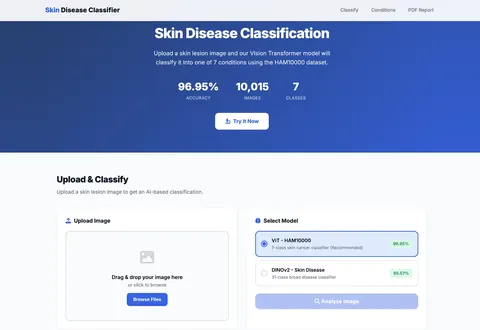
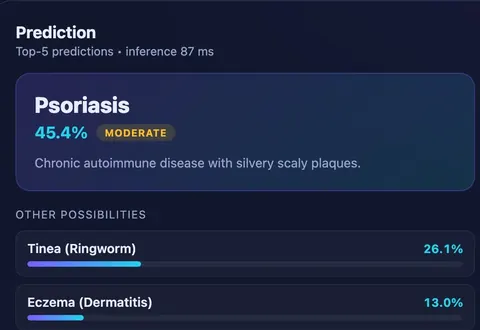
| Skin lesion classification M.Tech | Sort dermoscopic images into seven lesion types | ViT-Base/16, tested against DINOv2, EfficientNet-B4 and ResNet-50 | HAM10000 (public) |
| Skin disease detection in the browser M.E. | Recognise 22 skin conditions from ordinary photos, on the user’s device | EfficientNet-B0, exported to ONNX | A public 22-class skin disease photo dataset from Kaggle |
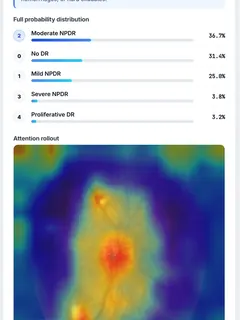
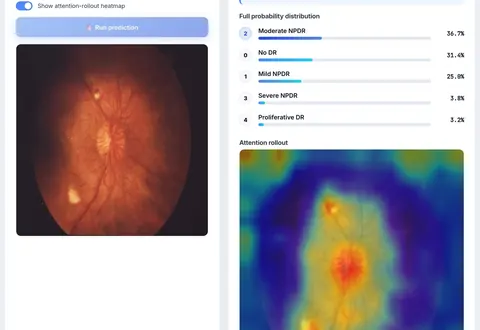
| Diabetic retinopathy detection M.Tech | Grade fundus photos on the five-grade severity scale | Ensemble of two pretrained ViT-B/16 models, with attention rollout | Public pretrained checkpoints and openly licensed sample photos, no retraining |
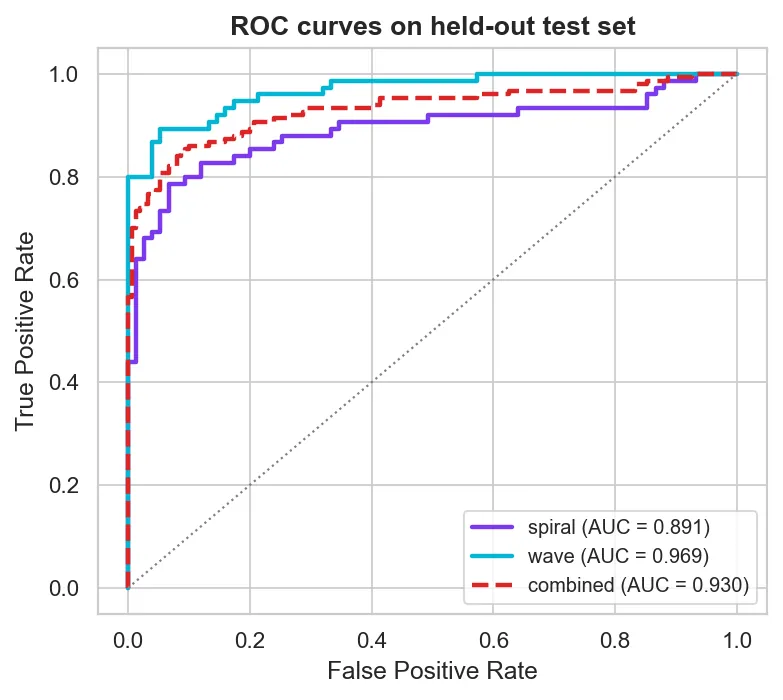
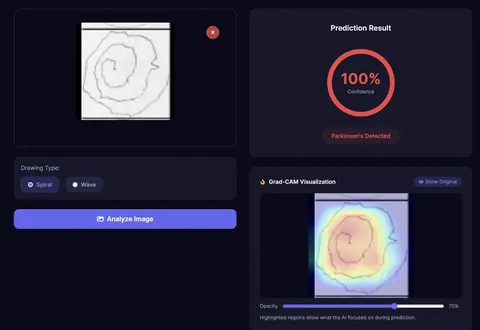
| Parkinson’s disease detection M.Tech | Healthy or Parkinson’s, from spiral and wave drawings | Two EfficientNetB0 CNNs, with Grad-CAM | A public Kaggle dataset of spirals and waves |
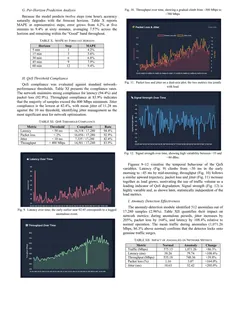
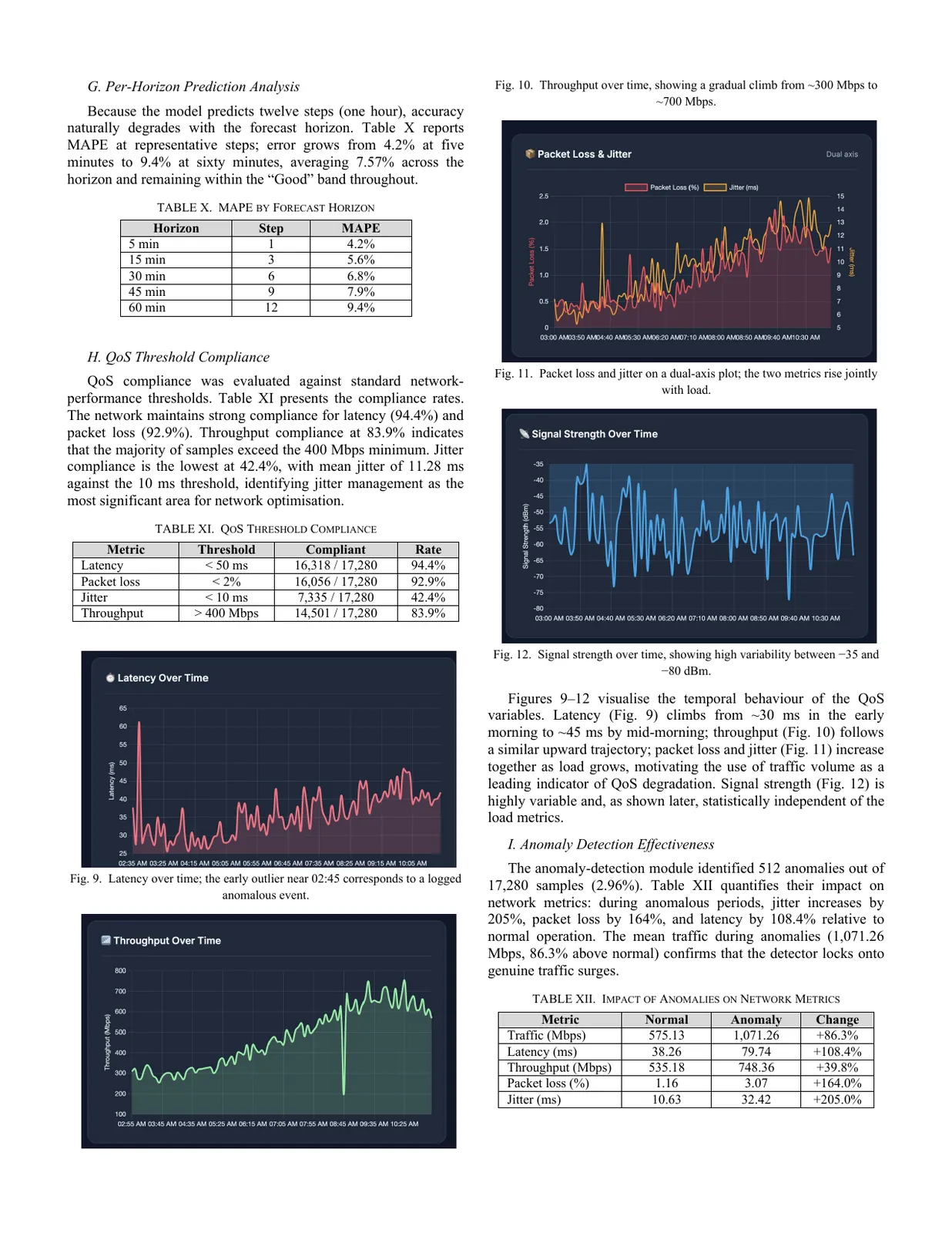
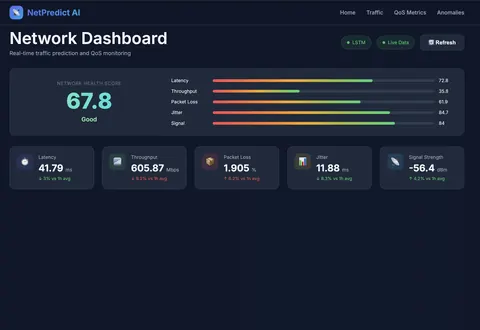
| Network traffic prediction M.Tech | Forecast traffic an hour ahead and flag unusual traffic | Two-layer Bi-LSTM, with Linear Regression and Random Forest fallbacks | Traffic and QoS values at five-minute intervals; the code includes a sample-series generator |
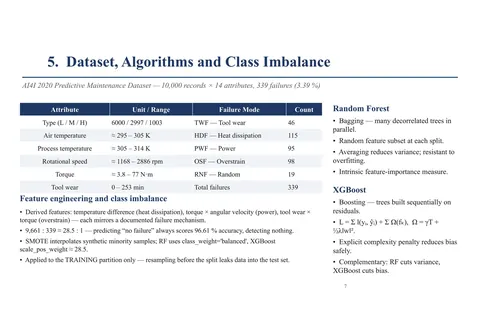
| Predictive maintenance M.E. / M.Tech | Plan failure prediction from machine sensor readings (Stage-I) | Random Forest vs XGBoost, with SMOTE | AI4I 2020 (public) |
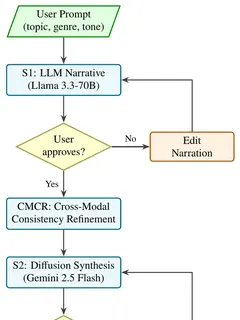
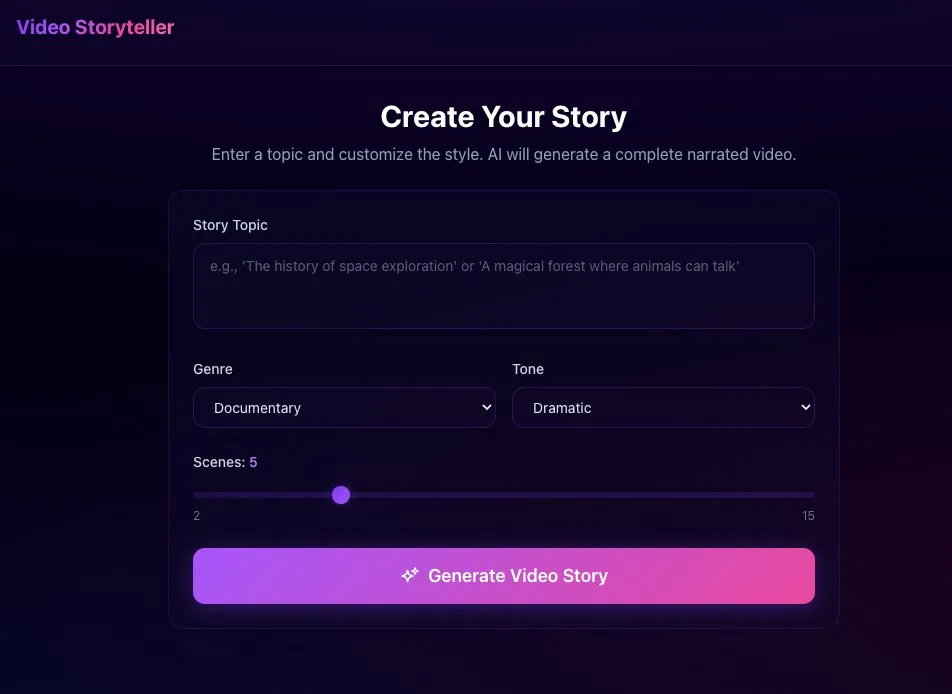
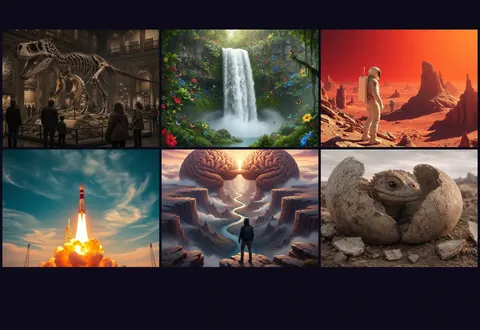
| AI video storyteller M.Tech | Turn a topic into a narrated 1080p video | An LLM for the script, a diffusion model for scenes, neural TTS | No training dataset; pretrained hosted models |
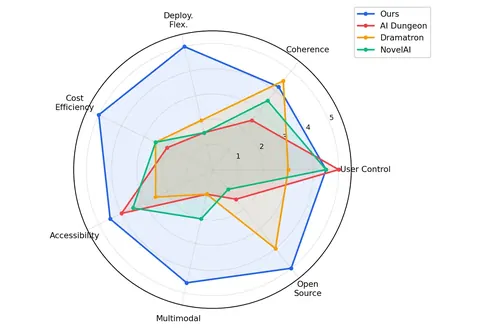
| Interactive storytelling AI M.Tech | Write a personalised story from guided questions | Any of four LLM providers: Ollama, Groq, Hugging Face or OpenAI | No training dataset; evaluated on generated stories and a user questionnaire |
What each student received is in the next table. Figures, results and limits are on each case study.
What did each M.Tech and M.E. project deliver?
No two students received the same bundle. What was built depended on the course, the stage of the dissertation and what the guide asked for. The table lists what each student received at handover.
| Project | Paper | Software | Written report | Also |
|---|---|---|---|---|
| Skin lesion classification (ViT) M.Tech | IEEE-format | Flask web app, training notebooks | M.Tech thesis | PPT |
| In-browser skin disease detection M.E. | Not included | In-browser web app (ONNX), training code | Dissertation report | Seminar slides |
| Diabetic retinopathy detection M.Tech | IEEE-format | FastAPI web app, Python code | M.Tech report | Presentation outline |
| Parkinson’s detection from spiral drawings M.Tech | IEEE-format | React + Flask web app | M.Tech thesis | PPT |
| Network traffic prediction M.Tech | IEEE-format | Flask QoS dashboard, Bi-LSTM training scripts | M.Tech thesis | None listed |
| Predictive maintenance M.E. / M.Tech | Not in Stage-I | Planned for Stage-II | Stage-I dissertation report | Seminar PPT, method figures |
| AI video storyteller M.Tech | IEEE-, journal- and Springer-format | Next.js + Remotion web app | M.Tech thesis | Viva guide |
| Interactive storytelling AI M.Tech | IEEE-format, plus a single-column version | FastAPI web app | M.Tech dissertation | Result figures |
“IEEE-format” means written to the IEEE conference template. Whether a paper is accepted is decided by the journal or conference.
What do these projects have in common?
The topics differ, but the way each one was built is the same. That is the part you can expect in your own project.
- A clear problem and suitable data. Public datasets where they exist, such as HAM10000 for skin lesions or AI4I 2020 for machine failures, and pretrained models where training from scratch makes no sense.
- A baseline and a fair comparison. The proposed model is tested against simpler or published alternatives, not shown on its own.
- Honest evaluation. Confusion matrices, ROC curves, ablations and error measures, reported as they came out.
- Something you can demo. Seven of the eight include a web app or dashboard that runs the model or pipeline live.
- A write-up in the required format. IEEE-format papers, theses and stage reports with figures, tables and citations.
- An explanation you can repeat. The approach, code and results are walked through so the student can answer viva questions.
Why are names and institute details removed?
These projects belong to the students who submitted them. To protect them, the case studies never show student, guide or author names, roll numbers, college or university names and logos, exact paper titles, venues or submission dates.
What you see instead is the substance: the problem, the approach, the architecture, the results and the deliverables, described in our own words. Pages that carried names, such as title pages and author blocks, were left out entirely. Every result quoted on a case study can be read in one of the images shown with it.
Your details and files stay private. Read how we handle them in the privacy policy.
Can you build an AI project like these for my topic?
Yes, as a new project built for your topic, level and deadline. None of the projects above is resold or handed to another student. If one of them is close to what you need, mention it in the consultation and we’ll use it as a reference point for scope.
- For postgraduate work, see MTech projects and IEEE projects.
- For undergraduate work, see final year projects for CSE, or browse machine learning projects for final year for topic ideas. The examples here are M.Tech and M.E. level, so a B.Tech project is scoped to suit your course.
- For writing only, see research paper writing or dissertation, report and PPT.
- For doctoral work, see PhD thesis writing support.
To get a quote, send your level, topic or area of interest, deadline and your institution’s format through the consultation form.
Frequently asked questions
Are these real projects?
Yes. They are M.Tech and M.E. projects we built and handed over. The images are real pages, screens and charts from those projects, shown with student, guide and institute details removed.
Can I buy one of these projects as it is?
No. Each project was built for one student’s topic and stays theirs. We can build a new project in the same area on your own topic, with your own report and paper.
Do you only do M.Tech projects?
No. These eight examples are M.Tech and M.E. work. We also build B.Tech and B.E. final year projects and support PhD scholars with thesis writing, papers and synopsis.
Were the papers in these case studies published?
The case studies show each paper as it was delivered, in IEEE or journal format. We don’t list journals or conferences, to keep the students anonymous, and acceptance is always decided by the journal or conference.
Why don’t the case studies name the college?
To protect the students. We remove names, guides, institutes, logos, exact paper titles and venues, and describe the work in our own words.
Can I see more detail before I decide?
Yes. Each card opens a full case study, and in the free consultation we can go through the ones closest to your topic.