Looking for an M.E. project centre near you in Mumbai? Mumbai’s postgraduate engineering students follow two kinds of rules: the University of Mumbai’s M.E. syllabi in its affiliated colleges, and the institute’s own scheme in autonomous institutes. This page sets out what each asks of your dissertation, linked to the official documents, and what we build for every stage.
What do University of Mumbai examiners assess in Dissertation-I and II?
The University’s Rev. 2022 M.E. syllabi list the points each dissertation is judged on. Dissertation-I is assessed through a presentation to a panel of internal examiners and an external examiner appointed by your head of department or institute; Dissertation-II by internal and external examiners appointed by the University. We plan each deliverable against those points:
| Assessment point | Dissertation | What we prepare |
|---|---|---|
| Quality of literature survey and novelty in the problem | I and II | A comparison table of recent papers (method, data, result, limitation) that ends in the gap your work fills |
| Clarity of problem definition and feasibility of the solution | I and II | A problem statement tied to a base paper you can reproduce, with public data and compute that fits your semester |
| Relevance to the specialisation (and, for II, to current research or industry trends) | I and II | A topic chosen within your specialisation, from recent papers your guide recognises |
| Clarity of objective and scope | I and II | Three or four measurable objectives, each answered by a result in Dissertation-II |
| Quality of work attempted, or learner contribution | II | Your extension to the base paper, built in code you are walked through until you can run and change it |
| Validation of results | II | The baseline and your method on the same data, with ablations and charts |
| Quality of written and oral presentation | II | The report in the University’s format, review PPTs and a viva rehearsal |
From the University of Mumbai’s M.E. (Electronics and Telecommunication) syllabus, Rev. 2022, guidelines for Dissertation-I and II (pages 4 and 5 of the scheme); the M.E. (Computer Engineering) syllabus uses the same scheme. The report layout follows the University’s guidelines for theses, dissertations and reports (if the University’s archive server does not respond, a copy is hosted by SPCE, Mumbai).
The same syllabus adds three dates to plan around. Two online credit courses on NPTEL, Swayam or a similar approved platform, the first in research methodology, research and publication ethics or IPR, must be finished by the end of Semester III. Dissertation-II can’t be submitted until every other requirement of the course is complete. And students should publish at least one paper from the work in a refereed conference or journal, so the paper is drafted while the Dissertation-II results come in. The M.E. (Artificial Intelligence and Data Science) syllabus differs: Semester III adds a seminar that reviews at least ten papers from refereed, Scopus-indexed journals and implements one of them as a case study. Credits and marks for each stage are set out on our project centre in Mumbai page, and the chapter layout in our M.Tech thesis format guide.
How do autonomous Mumbai institutes run the M.Tech project?
Autonomous institutes affiliated to the University of Mumbai write their own curricula, and many name the degree M.Tech rather than M.E. The project is often split into more stages, each assessed separately. For example, VJTI’s M.Tech curriculum in Embedded Control Systems, for the batch admitted in 2025-26, sets four project stages:
| Stage | Semester | Credits | Evaluation |
|---|---|---|---|
| Project Stage-I | III | 5 | 100% continuous in-semester evaluation |
| Project Stage-II | III | 5 | 100% continuous in-semester evaluation |
| Project Stage-III | IV | 5 | 100% continuous in-semester evaluation |
| Project Stage-IV | IV | 7 | 100% continuous in-semester evaluation |
From VJTI’s curriculum for the M.Tech in Electrical Engineering with specialisation in Embedded Control Systems (page 6). Other VJTI specialisations and batches have their own schemes.
Other institutes set their rules differently again. Three that publish theirs:
| Institute and programme | What the document says |
|---|---|
| D.J. Sanghvi College of Engineering, M.Tech (EXTC), DJ19 scheme | A special topic seminar and Dissertation I in Semester III, Dissertation II in Semester IV. The final assessment is based on the final presentation and a written report in the format of a paper, and the thesis is submitted only after the institute’s Research Approval Committee (RAC) approves it. |
| Fr. Conceicao Rodrigues College of Engineering, M.Tech (CAD/CAM and Robotics), 2024-25 | Dissertation-I and II of 20 credits each, each with two in-semester assessments and an end-semester presentation to internal and external examiners; an NPTEL or Swayam research methodology course counts towards Dissertation-I, and an internship can be combined with the dissertation. |
| IIT Bombay, M.Tech rules 2026-27 | The project is done in two stages spread over semesters 2, 3 and 4; Stage I is examined by the supervisor and one internal examiner, and the final stage by a board that includes an external examiner. |
Sources: DJSCE’s M.Tech (EXTC) scheme and syllabus, DJ19 (with effect from 2019-20), Fr. CRCE’s M.Tech curriculum, revision FRCRCE-1-24 (from 2024-25), and IIT Bombay’s rules and regulations for the M.Tech programme, 2026-27.
Sardar Patel Institute of Technology (SPIT), ICT Mumbai, K.J. Somaiya and Thadomal Shahani students follow their own institute’s or the University’s current scheme, so send yours and your review calendar in the consultation. The plan is built around it, with something to show at every stage review.
Which M.Tech branches and topics do we cover in Mumbai?
| Branch | Typical project | Read more |
|---|---|---|
| Computer engineering and IT | Deep learning, NLP, security or cloud systems, extended from a recent base paper and compared on the same data | M.Tech projects |
| AI and data science | Vision transformers, retrieval-augmented LLMs, explainable AI or forecasting, with ablations and charts | M.Tech project ideas |
| EXTC and ECE | Signal processing and communication: BER, MSE or accuracy against SNR for the base method and your change | M.Tech projects for ECE |
| VLSI design | RTL in Verilog or VHDL with a testbench, an FPGA implementation, and area, timing and power reports | VLSI without paid tools |
| Embedded systems | Firmware on an ARM Cortex-M or similar board, with measured latency, memory use and current draw | ECE project ideas |
The toolchain is agreed in the consultation, based on the software and boards your college lab has. To choose the paper you build on, see how to select a base paper.
What do you get with an M.Tech project in Mumbai?
Each item goes into the quote with its format and date, worked back from your review calendar.
- Code for the baseline and your extension, with a setup guide, in Python, MATLAB or the toolchain your branch needs.
- Results against the base paper: both methods on the same data, with ablations, tables and thesis-ready charts.
- The dissertation: Dissertation-I and II, or your institute’s stage reports, in your college’s format.
- A research paper in IEEE, Springer or the journal’s template, for the publication the syllabus asks for.
- Review PPTs for every stage presentation.
- A viva walkthrough of the approach, the code and every result, with the questions examiners usually ask.
Dissertation-I or a stage review due soon?
Send your college, branch, base paper if you have one and your review date. You get a plan for the code, results and report in your college’s format, after a free consultation and a fixed quote.
Which M.E. and M.Tech projects have we delivered?
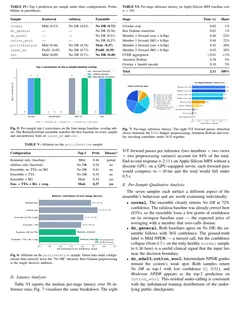
Eight M.Tech and M.E. projects, each with working software, a report or thesis and, for most, a paper. Every case study shows the real pages, screens and charts, with student, guide and institute details removed:
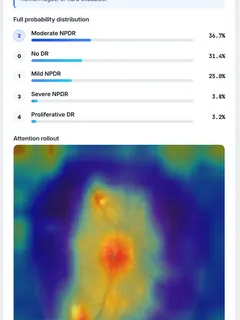
- Diabetic retinopathy detection with a ViT ensemble (M.Tech, medical imaging)
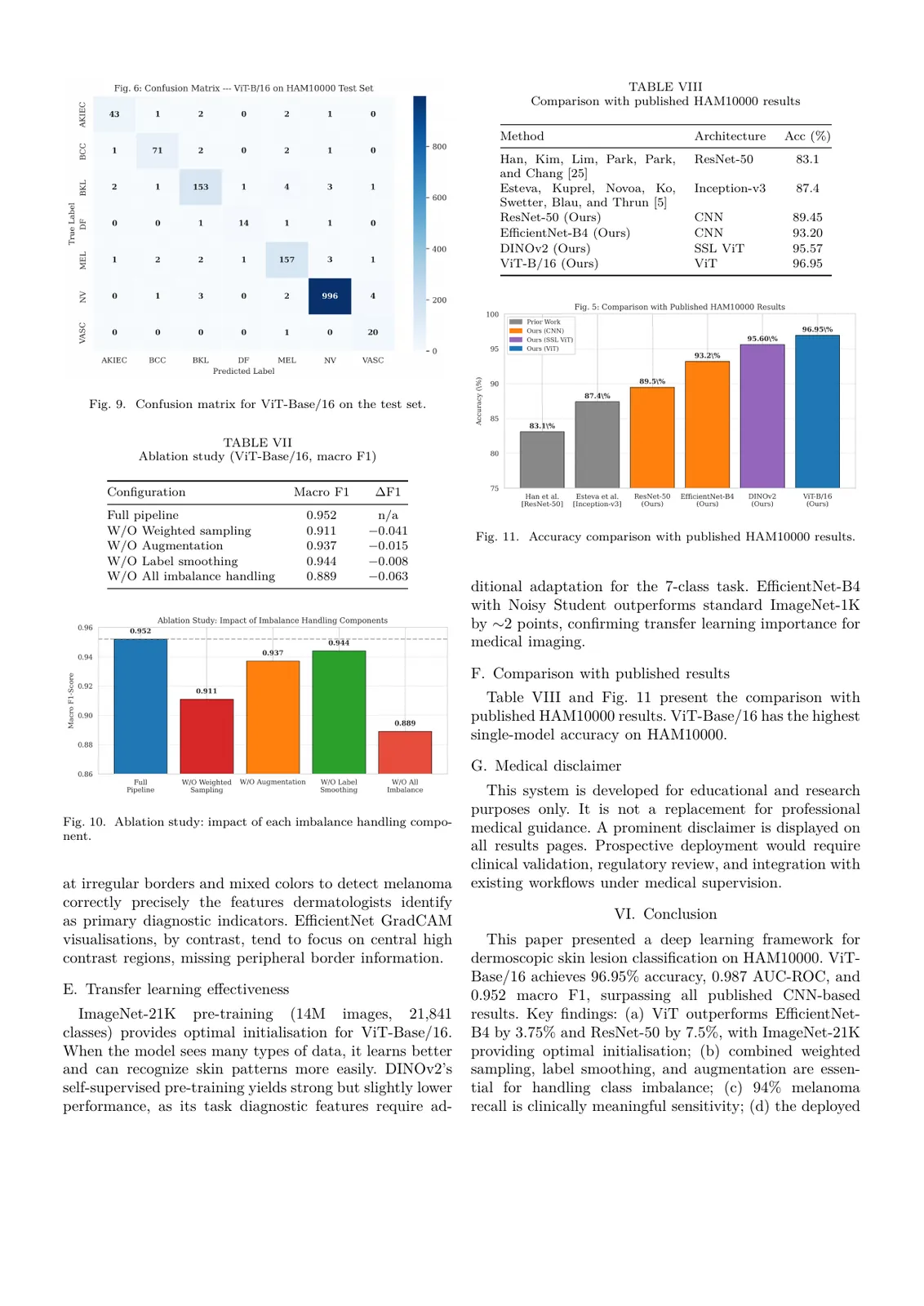
- Skin lesion classification with Vision Transformers (M.Tech, medical imaging)
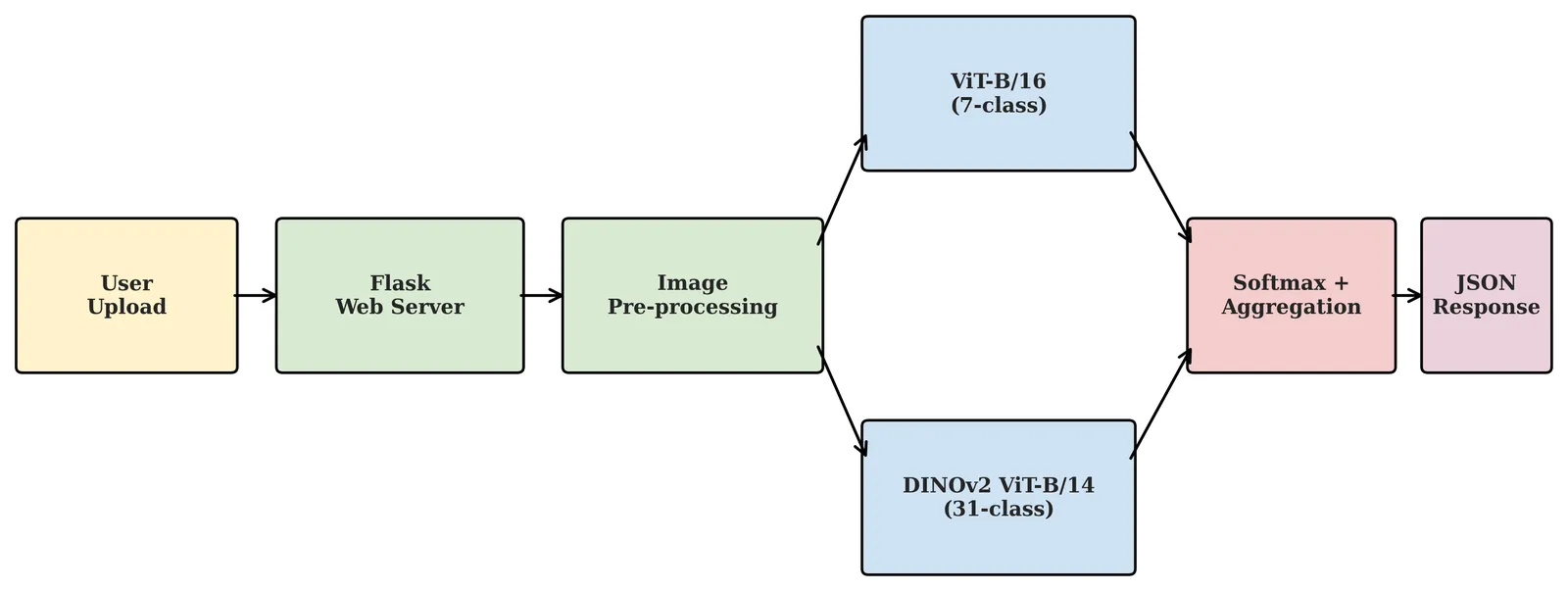
- Skin disease detection in the browser (M.E., in-browser deep learning)
- Parkinson’s disease detection from spiral and wave drawings (M.Tech, explainable AI)
- Network traffic prediction with a Bi-LSTM (M.Tech, deep learning for networks)
- Predictive maintenance using machine learning (M.E. / M.Tech, Stage-I dissertation)
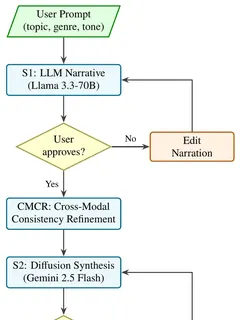
- AI video storyteller: text prompt to narrated video (M.Tech, generative AI)
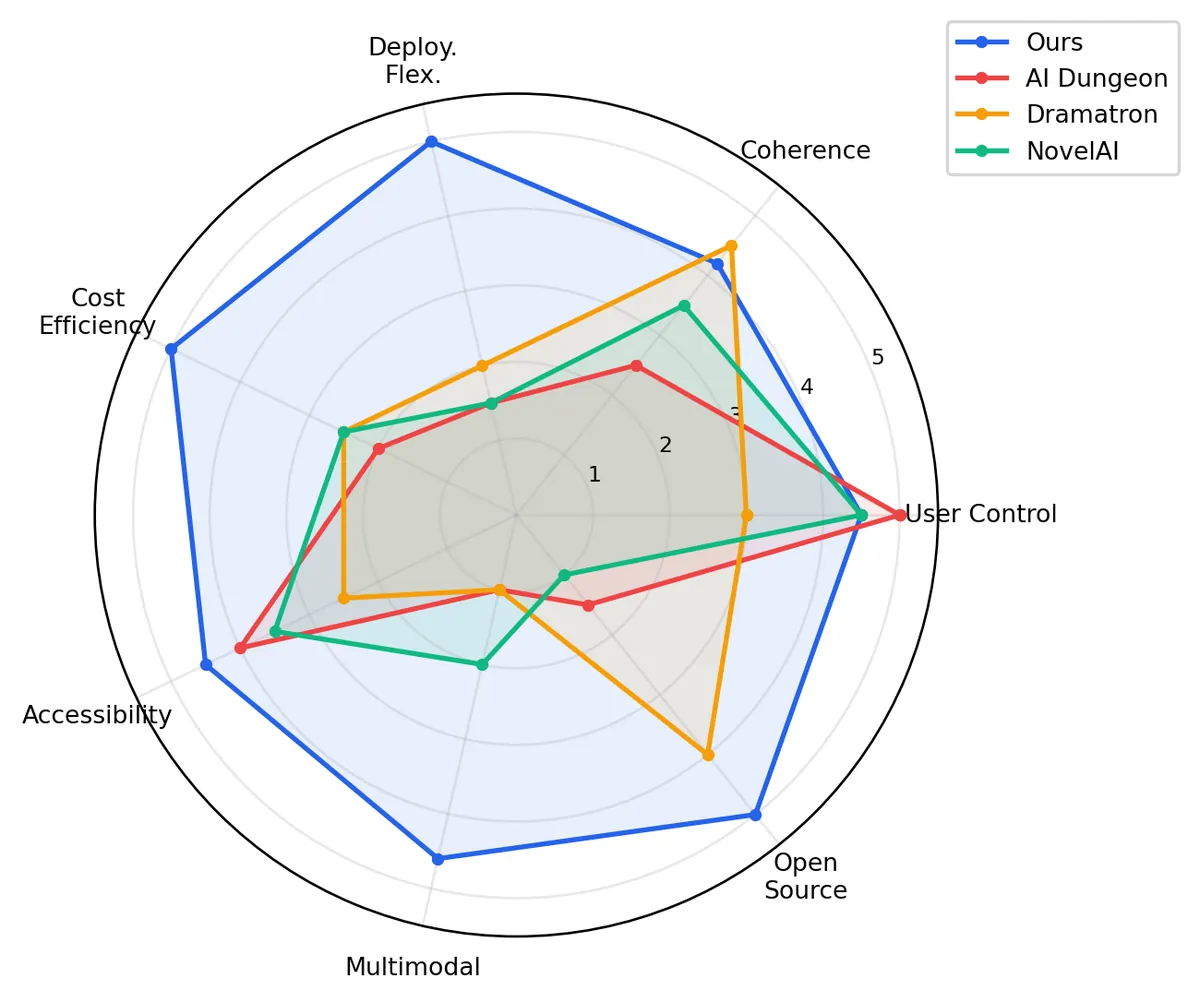
- Interactive storytelling with LLMs, images and narration (M.Tech, generative AI and NLP)
The predictive maintenance project is the closest match to a Dissertation-I: a literature survey, a methodology flowchart and first results, ready for the Semester III presentation. All eight are on our work.
How does it work if you study in Mumbai?
We are based in Chembur, and the project runs over WhatsApp and online, so it works the same whether your college is in Matunga, Andheri, Vile Parle, Bandra or Vidyavihar. Four steps, in this order; nothing is paid before step 2 is agreed.
Free consultation
Share your college, branch, stage, base paper if you have one, and your review calendar.
Plan and fixed quote
Base paper, extension, dataset or toolchain, deliverables and dates in writing, at one fixed price.
Build and review
Code, results and chapters shared as they are ready, timed to each review; your guide’s comments are worked in within the scope.
Handover and viva prep
Final files, then a walkthrough of every result and the questions examiners usually ask.
We are an independent team, not part of or approved by the University of Mumbai, VJTI or any college named here. Our work is building, writing support, guidance and explanation: use it to learn the method and prepare your own submission, cite the base paper, and check what your college allows.
Frequently asked questions
Is there an M.E. or M.Tech project centre near me in Mumbai?
We are based in Chembur, in Mumbai’s eastern suburbs. The consultation, progress updates, code and thesis handover all run over WhatsApp and online, so students at any Mumbai college work with us the same way, without travelling. Message +91 90965 91329 or use the free consultation form.
Do you follow the University of Mumbai M.E. dissertation format?
Yes. The work is planned around the Rev. 2022 M.E. syllabi: a Dissertation-I report and presentation in Semester III, and the full Dissertation-II with validated results in Semester IV. The report follows the University’s guidelines for theses and dissertations, or your college’s own format if it issues one.
Can you help with an M.Tech project at VJTI or another autonomous Mumbai institute?
Yes. Autonomous institutes set their own stages and credits, so the plan follows your institute’s scheme. VJTI’s 2025-26 M.Tech curriculum in Embedded Control Systems, for example, splits the project into four stages across Semesters III and IV, all assessed by continuous in-semester evaluation.
Do I need to publish a paper for my M.E. at the University of Mumbai?
The Rev. 2022 M.E. syllabi say students should publish at least one paper based on the work in a refereed national or international conference or journal of repute. We write the paper from your results in the venue’s template; acceptance is decided by the conference or journal, so it is never guaranteed.
Which M.Tech branches do you cover in Mumbai?
Computer engineering and IT, AI and data science, electronics and telecommunication (EXTC or ECE), VLSI design and embedded systems. If a topic is outside what we do well, we say so in the consultation.
How much does an M.Tech project cost in Mumbai?
There is no fixed price list, because the cost depends on your branch, the deliverables and your review dates. After the free consultation you get one fixed quote in writing before any work starts, and payment can be split into milestones.