Searching for PhD help near you in Mumbai? This page sets out the University of Mumbai’s own PhD steps, each linked to the University’s document, then what we help with at each one and where we draw the line. Your guide stays your guide of record, and the research decisions stay yours.
What are the PhD stages at the University of Mumbai?
Since January 2026 the University’s Ph.D. Regulations 2025 replace its earlier PhD ordinances. They take a scholar from the Pre-Entrance Test (PET) through topic approval by the Research and Recognition Committee (RRC), coursework and six-monthly reviews by the Research Advisory Committee (RAC), to the synopsis, the thesis and an open defence:
| Stage | What the regulations ask for | Clause |
|---|---|---|
| PET and admission | The PET is a qualifying test with 50% to pass (45% for reserved categories); NET/JRF, SET/SLET, GATE and M.Phil. holders and some others are exempt. Departments then select by interview, as in a 2025-26 department notice | R.PhD.5(6), R.PhD.6 |
| RAC | Formed within three months of admission: the head of the research centre, your supervisor and at least one external expert. It reviews the proposal and finalises the topic | R.PhD.10(1)–(3) |
| Topic approval and registration | The research proposal goes to the subject’s RRC, which may approve it or ask for changes; registration starts only after the RRC approves it. In Science and Technology the proposal follows a prescribed format with 13 headings | R.PhD.11(5), R.PhD.12(1); proposal format |
| Coursework | At least 12 credits (180 hours), with at least four credits in research methodology; it must be complete before the synopsis | R.PhD.13(2), (5), (6) |
| Progress reviews | A six-monthly progress report through your supervisor, and a presentation before the RAC once in six months | R.PhD.10 |
| Publications | By the synopsis: at least one paper from the doctoral work in a Scopus, Web of Science or (where applicable) ABDC journal, and two conference or seminar presentations, or one presentation and a published patent | R.PhD.17(2) |
| Pre-synopsis and synopsis | A pre-synopsis presentation before the RAC with invited experts from inside and outside the research centre; the synopsis, in three hard copies, within two months of it and at least two months before the thesis | R.PhD.15(7), R.PhD.16(1) |
| Thesis and plagiarism check | Submitted two to six months after the synopsis, with a plagiarism check report from software prescribed by the UGC or the University, countersigned by your supervisor. Up to 10% similarity carries no penalty; above 10% to 40% means a revised script | R.PhD.19(3)–(5), R.PhD.31 |
| Evaluation and viva | Two external referees appointed by the University; the viva is an online open defence, held only after both recommend the thesis, with you and your supervisor at the research centre | R.PhD.20, R.PhD.23 |
Source: the University of Mumbai’s Ph.D. Regulations 2025 (Management Council, 29 November 2025; circular of 1 January 2026), which follow the UGC’s Ph.D. Regulations, 2022. Clause numbers are from that document. The University’s older Ph.D. checklist asked for the synopsis no earlier than 34 months after admission; if you were admitted before 2026, confirm with your research centre which rules apply to you.
The thesis layout itself, from margins and fonts to the certificate pages, follows the University’s guidelines for theses, dissertations and reports (if the University’s archive server does not respond, a copy is hosted by SPCE, Mumbai); our PhD thesis format guide walks through the same rules alongside other universities’.
Which other Mumbai universities do our PhD scholars come from?
Mumbai has several PhD-granting universities and institutes besides the University of Mumbai, and each publishes its own rules. What their documents say about the steps scholars most often ask about:
| Institution | What its document says |
|---|---|
| IIT Bombay | An Annual Progress Report and Annual Progress Seminar to the research progress committee every year from joining until the pre-synopsis (Ph.D. rules, 2026-27, R.8.2) |
| HBNI, Anushaktinagar | An Oral General Comprehensive Examination, and work published in approved peer-reviewed journals, in numbers set by the Academic Council (Academic Ordinances) |
| TIFR | Registration within two years of joining, and the thesis within six months of the synopsis seminar (academic procedures) |
| SNDT Women’s University | A PET of 100 multiple-choice marks, 50 in research methodology and 50 subject-specific, with 50% to pass in each (45% for reserved categories), then an interview (PET 2025 notification) |
| Somaiya Vidyavihar University | Two first-author or corresponding-author journal papers indexed in Scopus, UGC-CARE or Web of Science before the synopsis and thesis (Ph.D. regulations, clause 13) |
| NMIMS (School of Business Management) | A Comprehensive Qualifying Examination after coursework; the viva is held only after the publication requirement is met (PhD operating procedures, 2025) |
| D.Y. Patil, Navi Mumbai | A PhD Entrance Test and interview, with NET, SET, JRF and M.Phil. holders exempt from the test (PhD in Psychology page) |
Scholars also come from ICT Mumbai, Amity University Mumbai and University of Mumbai research centres in affiliated colleges. Rules differ by programme and change between batches, so the plan always starts from your own institution’s current documents; send them in the consultation with your guide’s comments.
What can we help with at each PhD stage?
You choose the stages you need. Each one has its own deliverable and date, worked back from your RAC, synopsis or submission date.
| Stage | What we help with | Read more |
|---|---|---|
| Topic | A shortlist of candidate topics, each with notes on novelty, data and feasibility, to choose from with your guide | PhD research topics |
| Proposal for topic approval | The proposal under the University’s 13 headings, or your institute’s format, with every source cited, and a short deck for the RAC | PhD research proposal |
| Literature review | A literature matrix (method, data, result, limitation) and a written review that ends in a clearly stated gap | PhD guidance |
| Papers | A paper from your results, in the journal’s or IEEE template, with venues checked for current indexing and replies to reviewers | Research papers, Scopus journals, UGC-CARE list |
| Progress reviews | Six-monthly progress reports and RAC slides, with a rehearsal of likely questions | Reports and PPTs |
| Synopsis | The synopsis from your work and papers, in your university’s format | PhD synopsis format |
| Thesis chapters and formatting | A chapter plan, drafting and editing from your results, figures, references and the final template, with a similarity report on request | PhD thesis writing, PhD thesis format |
| Pre-submission and viva | The seminar deck and chapter-by-chapter walkthroughs, with the questions examiners usually ask | Viva preparation |
The quote lists each stage you choose, with a date for each. Experiments and analysis, in Python or MATLAB with a run guide, can be added where the research needs them.
RAC review or synopsis date coming up?
Send your university, your stage, your guide’s latest comments and the date. You get a written plan for that stage and a fixed quote, after a free consultation.
What don’t we do, and what do we never promise?
PhD assistance only helps if the research, and the ability to defend it, stay with you. These are the lines we keep for every scholar:
- No guaranteed publication. We write and revise papers and check venues, but acceptance is the journal’s or conference’s decision.
- No promised approvals. Your guide, the RAC, the examiners and the University decide on the topic, the synopsis and the thesis.
- No invented data or results. Every chapter is written from your experiments, papers and notes.
- No coursework, exams or entrance tests taken for you, and no one attends a review or viva in your place.
- No promised similarity percentage. Text is written fresh with every source cited, and your university’s own check is the one that counts.
The test we use: you must be able to explain and defend every chapter in your pre-submission seminar and viva. The walkthroughs exist for exactly that.
We are an independent team, not part of or approved by the University of Mumbai, IIT Bombay, SNDT or any other university or institute named here. The rules above are summarised from the linked documents; your research centre’s current version always comes first.
How does PhD assistance work for scholars in Mumbai?
We are based in Chembur, and the whole process runs over WhatsApp and online, so it works the same whether your research centre is in Powai, Matunga, Vile Parle, Kalina or Navi Mumbai. Part-time and working scholars can share files and comments when it suits them. More about the team is on our About page and our project centre in Mumbai page.
Free consultation
Share your university, your stage, your guide’s expectations and your next RAC, synopsis or submission date.
Plan and fixed quote
The stages you want, each with a date, and one fixed price in writing before any work starts.
Draft and review
Drafts arrive stage by stage; you and your guide review each one, and comments within the scope are worked in.
Handover and rehearsal
Final files, then walkthroughs and a rehearsal for your RAC review, pre-submission seminar or viva.
Our work is writing support, guidance and explanation. Keep the research and conclusions your own, disclose help where your university asks you to, and check what your institution allows.
What does our delivered research work look like?
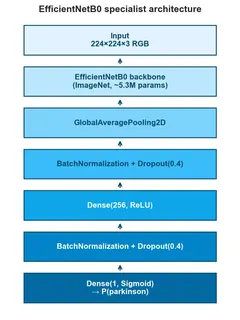
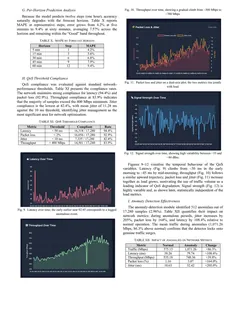
Our case studies are M.Tech and M.E. projects, not PhD theses, but they show the standard of papers, method figures and results we bring to a thesis chapter. Each has the real pages and charts, with student, guide and institute details removed:
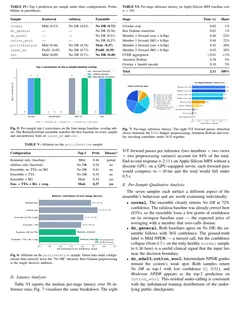
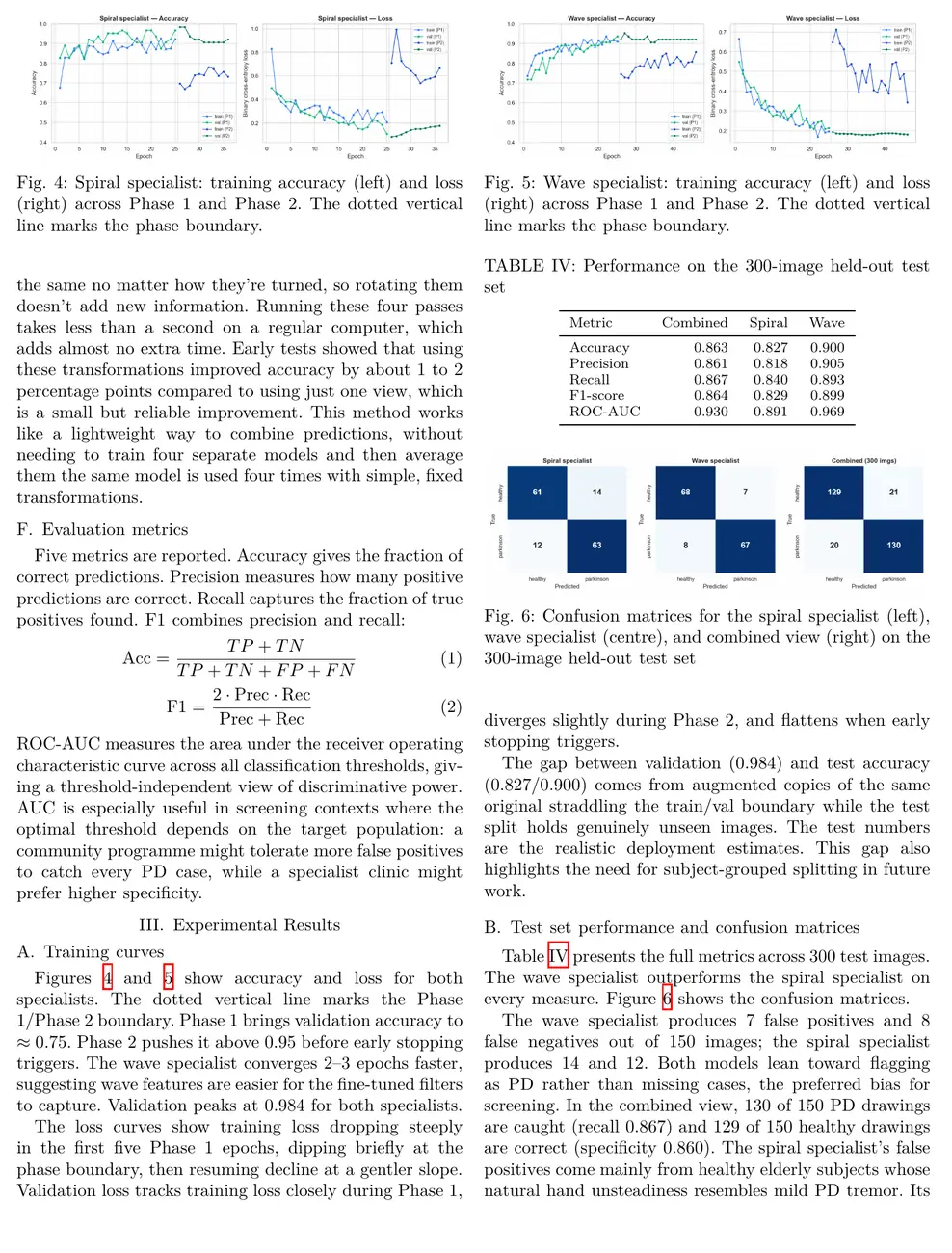
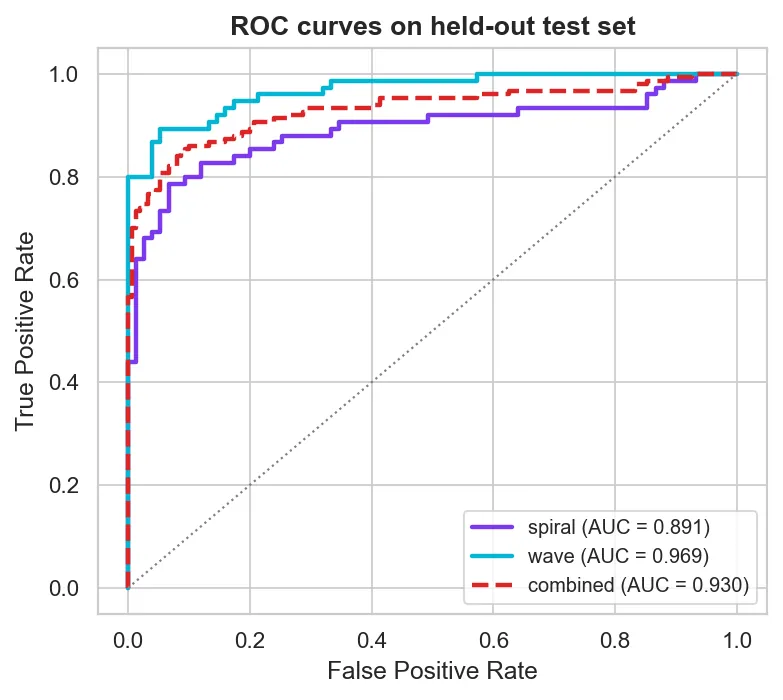
- Parkinson’s disease detection from spiral and wave drawings: an explainable-AI model written up as an IEEE-format paper, with ROC curves and an ablation study.
- Network traffic prediction with a Bi-LSTM: forecasts stated against error metrics, from the paper’s results page.
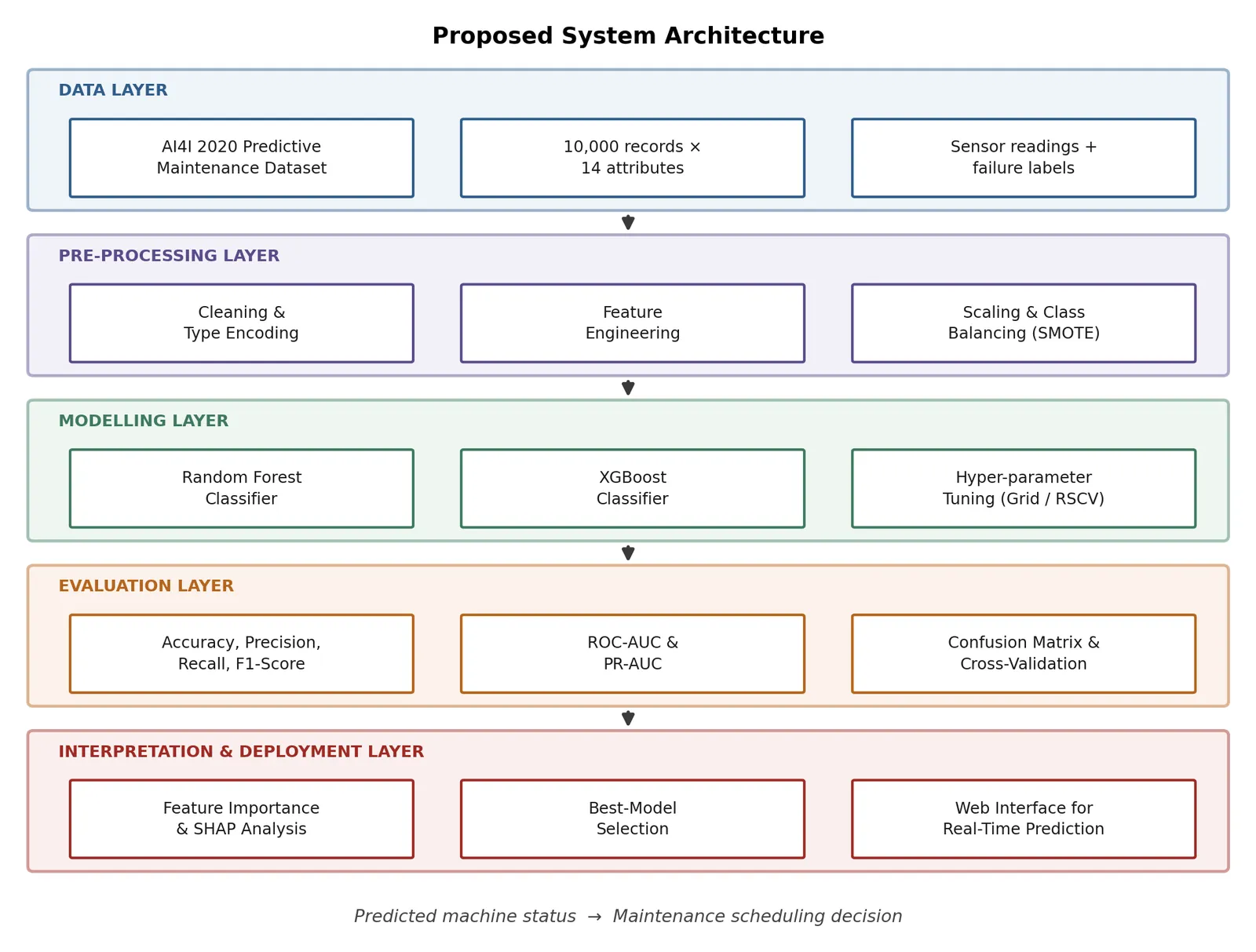
- Predictive maintenance using machine learning: a Stage-I dissertation with a methodology flowchart from raw data to the chosen model.
All eight are on our work.
Frequently asked questions
Where are you based, and do I need to visit for PhD assistance in Mumbai?
We are based in Chembur, in Mumbai’s eastern suburbs. The consultation, drafts, review comments and handover all run over WhatsApp and online, so scholars anywhere in Mumbai, Thane or Navi Mumbai work with us the same way, without travelling. Message +91 90965 91329 or use the free consultation form.
When can I submit my PhD synopsis at the University of Mumbai?
Under the University’s Ph.D. Regulations 2025, after your coursework and a pre-synopsis presentation before your RAC with invited experts: the synopsis goes in within two months of that presentation and at least two months before the thesis. By then you need at least one paper from the doctoral work in a Scopus, Web of Science or ABDC journal where applicable, and two conference or seminar presentations, or one and a published patent. Confirm with your research centre which rules apply to your batch.
Can you help me publish a paper in a Scopus-indexed or UGC-approved journal?
We write the paper from your results in the journal’s template, help you shortlist venues and check that each one is currently indexed, and revise it after reviewer comments. Acceptance is the journal’s decision, so publication is never guaranteed. See research paper writing and publication.
Do you help scholars from IIT Bombay, ICT, SNDT and other Mumbai universities?
Yes. The stages are similar everywhere, but each university or institute publishes its own PhD rules, forms and thesis template; Somaiya Vidyavihar University, for example, asks for two indexed journal papers before the synopsis. The plan starts from your institution’s current documents and your guide’s expectations, not from the University of Mumbai’s.
Do you guarantee that my synopsis, thesis or viva will be approved?
No. Approval is decided by your guide, your Research Advisory Committee, the examiners and the university. We promise the agreed work by the agreed dates, a similarity report on request, and preparation so that you can explain and defend every chapter yourself.
How much does PhD assistance in Mumbai cost?
There is no flat price, because one scholar needs a single proposal and another needs help from the topic to the viva. After the free consultation you get one fixed quote in writing for the stages you choose, before any work starts, and payment can be split into milestones.