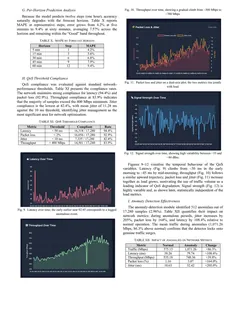
Below: what a review paper is, what IEEE’s own pages say about its format, the sections in order, how to write the review method and build the comparison table, the lengths IEEE journals allow, a worked outline on one engineering topic, where to publish and why reviews get rejected. The free Word template at the top of this page has every section with guidance on what to write, in two IEEE-style columns.
- A review paper compares published work. It reports no new experiments of your own.
- IEEE has no separate review template. Use the normal template of your conference or journal; that journal’s rules for reviews decide the content.
- State the type and the scope in the abstract and again in the introduction: “This article reviews … published from 2021 to 2026”.
- Show how you found the papers: databases, search string, inclusion and exclusion criteria and, for a systematic review, a PRISMA-style flow diagram.
- The comparison table and the open challenges carry the paper. Never put a number in the table that the paper did not report.
What is a review paper, and how is it different from a research paper?
A review paper, also called a survey paper, collects the published research on one topic, groups it, compares it and says what is still unsolved. Its contribution is synthesis: conclusions that no single paper shows on its own. A research paper’s contribution is an experiment: your own method, tested and measured.
| Part | Research paper | Review paper |
|---|---|---|
| Main question | Does my method solve the problem better? | What does the published work show, and what is still missing? |
| Core sections | Proposed method, experimental setup, results | Review method, taxonomy, comparison table, open challenges |
| Numbers | Your own measured results | No new results; only numbers the reviewed papers report |
| References | Enough to place your work | Every paper you reviewed, because the papers are your data |
| Starts from | A base paper and your extension of it | A literature survey, such as the one in your Stage-I report |
Journals name the types differently. IEEE Access separates a Survey, a review with a defined framework for selecting and excluding papers, such as a systematic literature review, from a Topical Review of an emerging area and a Tutorial that teaches a topic. Proceedings of the IEEE says a survey should cover a technology from its beginning, while a review covers one or more of its most important aspects in depth. Find the type your target journal uses and write to its definition.
Does IEEE have a separate review paper format?
No. We checked IEEE’s own author pages in November 2026, and none offers a separate template or layout for review papers:
- The IEEE Author Center’s Structure your article page describes one structure for a journal article (introduction, methodology, results, discussion, conclusion) and does not list reviews as a separate type. It limits the abstract to one paragraph of up to 250 words.
- Its types of IEEE conference papers page lists abstracts, extended abstracts, short papers and full papers, with no review category, and leaves page limits to each conference’s website.
- Proceedings of the IEEE, which publishes surveys, reviews and tutorials, says authors can use the standard transactions template.
- IEEE Access asks for every manuscript in double columns in its required IEEE Access template, whatever the article type.
A Penn State University Libraries FAQ gives the same answer: IEEE has no specific format for literature reviews. So the format of a review paper is the format of your venue: IEEE’s two-column template, IEEE headings and IEEE references, as set out in our IEEE paper format guide. What IEEE journals do set is the content a review must have:
| Journal | What it asks for |
|---|---|
| IEEE Access (Survey) | Why the survey is needed compared with recent ones; specific research questions, goals, scope and inclusion and exclusion criteria; an explanation of the search and screening; a comparison of methods on defined technical criteria; conclusions the individual papers cannot give; and evidence-based future directions. It says a paper that lists publications one by one, or reports bibliometrics without synthesis, is not a survey. |
| IEEE Communications Surveys & Tutorials | State the article type in the abstract and again in the introduction, and state the scope, in the form “This article surveys the literature over the period 1990–2001 on turbo codes as they apply to wireless communications.” Surveys should have comprehensive references. |
| IEEE Open Journal of Vehicular Technology | Justify in the cover letter how you chose the papers you cite; including everything published in a period is not reasonable. |
| Proceedings of the IEEE | A cover letter that names the type of coverage (survey, review or tutorial) and explains why the topic matters to a broad audience. |
Sources, checked November 2026: IEEE Access submission guidelines, IEEE Communications Surveys & Tutorials policies and guidelines, IEEE OJVT paper submission and Proceedings of the IEEE: preparing your paper. Journals revise these pages, so read your target journal’s current guidelines before you start.
What sections does a review paper have?
This is a common order for engineering review papers, and the order of the free template. Rename the sections to suit your topic, but keep the job each one does.
| Section | What to write | Reviewers check |
|---|---|---|
| Title | The topic, plus the word review, survey or systematic review | That it says what kind of paper it is |
| Abstract | The type, the scope and years, how papers were selected and how many, the taxonomy, the main findings and the open challenges, in one paragraph | A finding, not only “this paper reviews …” |
| I. Introduction | Background, why a review is needed now, the existing reviews and what yours adds, a one-sentence scope statement, a list of contributions and the organisation of the paper | What is new compared with existing reviews |
| II. Review method | Research questions, databases, the search string and date, inclusion and exclusion criteria, the selection flow with numbers, and what you recorded from each paper | That someone else could repeat the search |
| III. Background (optional) | The terms, problem setting and metrics a reader needs | Short, and only what later sections use |
| IV. Taxonomy | The reviewed papers grouped into categories, drawn as a tree, one sub-section per category | That every reviewed paper fits somewhere |
| V. Comparison | A table of method, dataset, metric and limitation for each paper, and what the table shows | Numbers copied correctly, like compared with like |
| VI. Discussion | Trends, agreements and contradictions, and an answer to each research question | Conclusions that no single paper gives |
| VII. Open challenges and research gaps | Three to five challenges, each with evidence from the papers and a research direction | Gaps that come from the review, not general wishes |
| VIII. Conclusion | What the review found for each research question; no new material | That it matches the abstract |
| References | Every reviewed paper, numbered in the order of first citation, in IEEE style | One style, complete details, no predatory journals |
How do you write the review method section?
- Research questions. Two to four questions the review answers, such as “Which deep learning models are used for intrusion detection in IoT networks, and on which datasets are they tested?”
- Databases. Name them, such as IEEE Xplore, Scopus, the ACM Digital Library, ScienceDirect or SpringerLink, with the date of the search and the years covered.
- Search string. Give it exactly, with AND and OR, so it can be run again: (“intrusion detection” OR “anomaly detection”) AND (“Internet of Things” OR IoT) AND (“deep learning” OR CNN OR LSTM).
- Inclusion and exclusion criteria. Fix them before screening. For example, include peer-reviewed journal and conference papers from the chosen years that report results on a named dataset; exclude papers with no evaluation, duplicates and shorter versions of papers already included.
- Selection flow. Count the papers at each step: records found, duplicates removed, titles and abstracts screened, full texts read and papers included, with the reasons for exclusion at the full-text step.
- Data extraction. Record the same fields for every included paper. They become the columns of your comparison table.
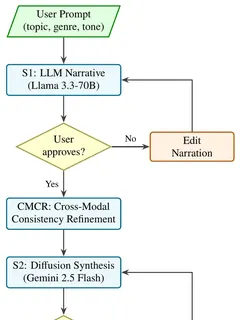
For a systematic review, report the selection as a PRISMA flow diagram. PRISMA is a reporting guideline for systematic reviews, updated in The PRISMA 2020 statement: an updated guideline for reporting systematic reviews, M. J. Page et al., BMJ, 2021. The PRISMA website offers Word templates of the flow diagram for new and updated reviews, which map the number of records identified, included and excluded, and the reasons for exclusion. Engineering reviews use it too: the drone-network review by Ogab et al., listed in the worked example below, follows PRISMA.
A narrative survey does not need the full protocol, but it should still say which sources, years and selection rules it used. IEEE Access asks every Survey to explain its search and screening and to state its inclusion and exclusion criteria.
How do you build the taxonomy?
The taxonomy is the backbone of the paper: a tree that sorts the reviewed papers by one main criterion, then by a second. For a machine learning topic the first level can be the model family; for a hardware topic, the architecture; for a networking topic, the layer or where the system runs. Draw it as a figure, make each branch a sub-section, and check that every paper in your comparison table sits in a branch. A branch with one paper should probably be merged into another; a branch with thirty should be split.
Inside each branch, write by theme, not paper by paper: what the approach is, which papers use it, how they differ and what they share. Our literature survey guide shows how a thematic paragraph is built.
How do you build the comparison table?
- Fix the columns before you read: paper, year, method, dataset, metric and limitation. Add a column only if every paper can fill it.
- Fill one row per paper as you read, from the paper itself, not from another survey.
- Copy each metric exactly as the paper reports it, with its name and the dataset. Write “not reported” rather than guess.
- Take the limitation from the paper, from its own discussion or from what its experiments leave out, such as a single dataset, no timing or no test on new data.
- Group the rows by your taxonomy and sort each group by year.
- Do not rank papers by their numbers unless they used the same dataset, split and metric. Say so in a note under the table.
| Paper | Year | Method | Dataset | Metric (as reported) | Limitation |
|---|---|---|---|---|---|
| [1] Author A et al. | [year] | [e.g. CNN on network flow features] | [public dataset name] | [metric: value from the paper] | [one limitation the paper states or shows] |
| [2] Author B et al. | [year] | [e.g. LSTM on packet sequences] | [dataset name] | [metric: value] | [e.g. tested on one dataset only] |
| [3] Author C et al. | [year] | [e.g. autoencoder, trained without labels] | [dataset name] | [metric: value] | [e.g. no inference time on an IoT device] |
| [4] Author D et al. | [year] | [e.g. federated learning across devices] | [dataset name] | [metric: value] | [e.g. tested only in simulation] |
Every row is a placeholder that shows the format; none is a real paper or result. In the paper itself the caption goes above the table as “TABLE II” with the title in small capitals, and a wide table can span both columns; see the IEEE table format. The free Word template has this table ready to fill.
If you already have a literature survey table from your synopsis or Stage-I report, it is your first draft: the literature survey table format uses nearly the same columns.
How long should a review paper be, and how many references?
It depends on the venue. These are the limits IEEE journals and IEEE’s Author Center state on their own pages, checked November 2026:
| Venue | Length rule |
|---|---|
| IEEE Access | No page limit, but it strongly recommends under 20 pages; longer submissions get an editorial check first and may be returned for shortening or a written justification |
| IEEE Open Journal of Vehicular Technology | Survey and review papers up to 20 pages |
| IEEE Communications Surveys & Tutorials | New manuscripts no longer than 30 double-column pages; under 40 pages after revision |
| Proceedings of the IEEE | A typical paper is 20 to 25 pages in the transactions template; no page limit, but it recommends no more than 35 |
| IEEE conferences | IEEE’s Author Center describes a full conference paper as 6 to 8 pages; each conference sets its own limit and any extra-page fee |
Sources are the pages linked in the section on IEEE’s format above. Other journals and conferences set their own limits, so read the author guidelines or the call for papers of yours.
References. None of these pages sets a number. IEEE Communications Surveys & Tutorials asks surveys for comprehensive references, and the IEEE Open Journal of Vehicular Technology asks you to justify how you chose them. For a sense of scale, the three published IEEE surveys in the worked example below run to 17, 29 and 34 pages and list 95, 146 and 140 references in their Crossref records. A 6 to 8 page conference review has room for far fewer: cite the papers in your comparison table and the background they need, and agree the number with your guide.
What does a review paper outline look like? A worked example
This outline shows the format on one engineering topic. The title, questions and categories are an example to adapt. It contains no results, and every paper you review must be one you have read.
- Title: “Deep Learning for Intrusion Detection in IoT Networks: A Systematic Review of Models, Datasets and Open Challenges”.
- Scope statement: “This article reviews peer-reviewed journal and conference papers published from [2021] to [2026] on deep learning-based intrusion detection for Internet of Things networks.”
- Research questions: RQ1, which deep learning models are used, and how do they compare? RQ2, which datasets and metrics are used to evaluate them? RQ3, what limits their use on IoT devices with little memory and power?
- Review method: IEEE Xplore, Scopus and the ACM Digital Library; the search string shown above; peer-reviewed papers in English that report results on a named dataset; a PRISMA-style flow with the count at each step.
- Taxonomy: first by model family (convolutional networks, recurrent networks such as LSTM and GRU, autoencoders, generative models, attention and transformer models, hybrids), then by where the detector runs (cloud, edge, or federated across devices).
- Comparison table: one row per included paper with the six columns above, grouped by model family.
- Discussion: which model families and datasets the papers use most, how they evaluate, and where they disagree, answering RQ1 to RQ3.
- Open challenges: candidates to look for include class imbalance in attack data, high false-alarm rates, datasets that may not match current traffic, model size on IoT hardware, robustness to adversarial traffic and explainability. Keep only those your reviewed papers support, and cite them.
- Conclusion: the answer to each research question in a few sentences, and the most important open problem.
Before you write, read the published surveys on your topic, both as models of the structure and so your introduction can say what your review adds. Three open-access IEEE examples on this topic, each described from its abstract:
- A Survey of Deep Learning Technologies for Intrusion Detection in Internet of Things, H. Liao et al., IEEE Access, 2024. Compares deep learning models, datasets, feature extraction and classifiers, data preprocessing and experimental design for IoT intrusion detection, then sets out the challenges and recommendations for researchers.
- Generative AI in Intrusion Detection Systems for Internet of Things: A Systematic Literature Review, Z. Deng et al., IEEE Open Journal of the Communications Society, 2025. A systematic review that classifies how generative AI is used in IoT intrusion detection (data augmentation and class balancing, data reconstruction and adversarial attack generation) and outlines the datasets and metrics used.
- Machine Learning-Based Intrusion Detection Systems for the Internet of Drones: A Systematic Literature Review, M. Ogab et al., IEEE Access, 2025. Follows PRISMA, searches six databases including Scopus and IEEE Xplore over 2014 to 2024, narrows 1,909 records to 62 reports, and groups them by drone domain, IDS type, algorithm, dataset and attack type.
The same outline works for any branch: change the topic, the databases if needed and the taxonomy criterion. Looking for a topic close to this one? Our M.Tech cyber security projects list recent base papers in the area.
Where can M.Tech students publish a review paper?
The literature survey in your Stage-I report is the natural starting point: a review paper turns it into an article with a stated method, a taxonomy and a comparison. The usual routes:
- A conference with IEEE or Springer proceedings. A 6 to 8 page review fits a full conference paper. Read the call for papers: if it asks only for original research results, write to the organisers before you submit a review. Our list of Scopus-indexed conferences in India gives dates and proceedings.
- A journal that publishes reviews. Check the article types in the journal’s author guidelines. IEEE Access, for example, accepts Surveys and Topical Reviews but asks authors to show a considerable scholarly background in the area, so write it with your guide as co-author. Our guide to Scopus-indexed journals shows how to confirm that a journal is indexed.
- Your university’s rule first. Whether M.Tech students must publish, and which venues count, varies by university and department, so check your current regulations with your guide.
Our guide on where to publish a research paper compares journals and conferences and lists the free tools for shortlisting them.
How do you spot a predatory journal?
A predatory journal charges a fee and does little or no real peer review. Your university may not accept a paper published there, and once it is out you usually cannot publish the same work elsewhere. Warning signs:
- Acceptance within days, with no reviewer comments or only formatting comments.
- Fees asked before review, or fees that are not listed on the journal’s website.
- Emails that praise your “recent work” and promise fast publication.
- An impact factor you cannot verify, or an indexing claim that the journal’s entry on Scopus Sources does not support.
- A scope that covers every subject, and an editorial board you cannot trace.
Work through the Think. Check. Submit. checklist before you submit: it asks whether you know the journal, whether its peer review and fees are clear, and whether the publisher belongs to a recognised body such as COPE, with open access journals listed in DOAJ. Watch for cloned websites of real journals too; our Scopus guide shows how to spot a hijacked journal. In India, UGC discontinued the UGC-CARE journal list by a public notice of 11 February 2025 and published suggestive parameters for choosing peer-reviewed journals instead (checked November 2026). Our UGC-CARE list guide explains what to check now.
Why do review papers get rejected?
- No clear scope or research questions. The paper reviews “machine learning in healthcare” without saying which problem, which years or which questions it answers.
- A list, not a review. One paragraph per paper (“Author A did X. Author B did Y.”) with no grouping or comparison. IEEE Access states that listing publications one by one does not make a survey.
- Nothing new beside existing surveys. A recent survey already covers the topic and the paper does not say what it adds. IEEE Access asks surveys to show why they are needed compared with recent ones.
- No method. No databases, search string or inclusion criteria, so the reader cannot tell why these papers were chosen and not others.
- Out-of-date coverage. The newest paper reviewed is several years old in a field that moves every year.
- A misleading comparison. Numbers from different datasets, splits or metrics ranked as if they were comparable, or numbers the papers never reported.
- Vague open challenges. “More research is needed” instead of specific gaps with evidence and a direction. IEEE Access asks for evidence-based future directions.
- Copied text. Abstracts pasted in or lightly reworded give a high similarity score. Summarise in your own words and cite every source.
- Wrong format. Not the venue’s template, references in mixed styles, or over the page limit. Our guide covers why research papers get rejected in general.
What should you check before submitting a review paper?
- The title and the abstract say it is a review, survey or systematic review.
- The introduction has a one-sentence scope with years, and says what the paper adds to existing reviews.
- The databases, search string, search date and inclusion and exclusion criteria are stated.
- For a systematic review, the numbers in the flow diagram add up at every step.
- Every reviewed paper appears in the taxonomy and in the comparison table.
- Every number in the table matches the paper it came from, with its dataset and metric.
- Each open challenge cites the papers that show it.
- The text is in the venue’s official template, within its page limit, with references in one IEEE style.
- The journal or conference has been checked with Think. Check. Submit. and its indexing confirmed.
Writing a review alongside your thesis? Our M.Tech thesis format guide shows where the literature survey chapter sits, and our research paper writing and publication service helps with the search, the comparison table, the draft in IEEE format and the journal shortlist, after a free consultation.
Frequently asked questions
Is there a separate IEEE format for review papers?
No. IEEE’s author pages describe one article structure and offer no separate review template: you use the template of your journal or conference. What changes is the content: journals such as IEEE Access ask a survey to state its research questions, its inclusion and exclusion criteria and how the papers were screened. Our IEEE paper format guide covers the template itself.
What is the difference between a review paper and a research paper?
A research paper reports your own method and measured results. A review paper reports no new experiments: it searches, groups and compares published papers and ends with open challenges. Both use the same template, but the review replaces the method and results sections with a review method, a taxonomy and a comparison. See how to write a research paper.
How many references should a review paper have?
The IEEE pages we checked set no number. IEEE Communications Surveys & Tutorials asks surveys for comprehensive references, and the three published IEEE surveys named on this page list between 95 and 146. A 6 to 8 page conference review has room for far fewer, so cite the papers in your comparison table and the background they need, and agree the number with your guide.
Is a systematic review the same as a survey paper?
A systematic review is a survey with a stated, repeatable method: research questions, databases, a search string, inclusion and exclusion criteria and the number of papers kept at each step, often shown as a PRISMA flow diagram. A narrative survey covers the field without that full protocol. Our literature survey guide shows the search steps for a thesis chapter.
Can an M.Tech student publish a review paper?
Yes. The literature survey in your Stage-I report is a good starting point. Check that the conference or journal accepts review papers, write it with your guide, and verify the venue before you pay any fee. Our guide on where to publish a research paper compares the options.
Can The Ultimate Project World help with a review paper?
Yes. Send your topic, the papers you have collected and your target conference or journal in the free consultation. We help you plan the search, the taxonomy and the comparison table, write the draft in IEEE format with you and your guide, and shortlist venues with indexing and fees checked. No one can guarantee acceptance. See our research paper writing service.